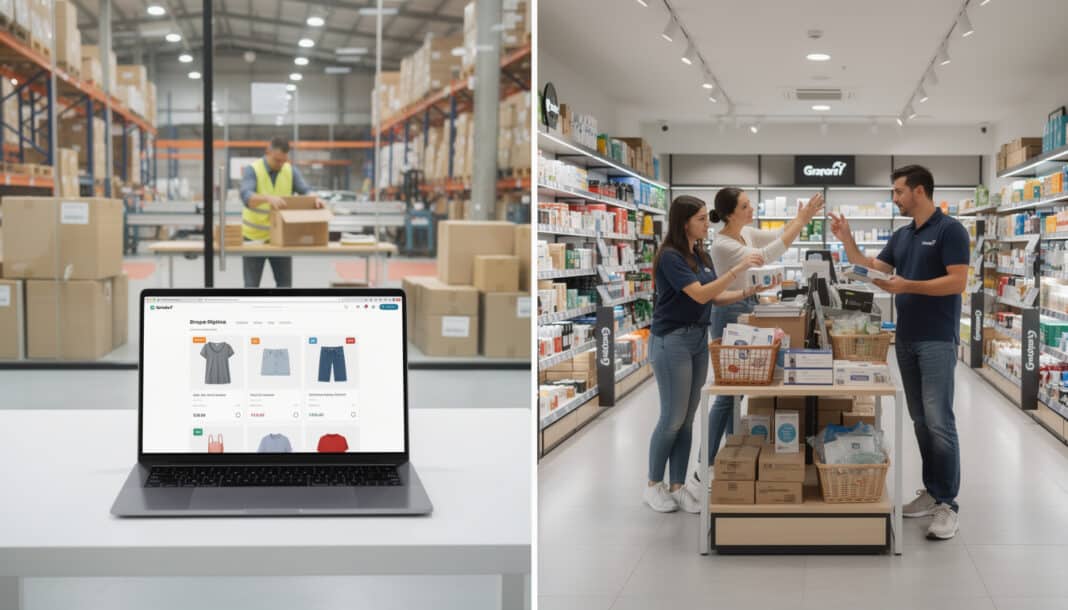
Summary: Dropshipping and traditional e-commerce represent two radically different business models in online selling. While dropshipping removes inventory management and allows a quick launch, traditional e-commerce offers full control over products and better profit margins. For consumers, these differences directly affect delivery times, prices and the quality of service.
Key takeaways: 📌 Dropshipping limits initial investments but increases delivery times — 📌 Traditional e-commerce ensures better quality control and more attractive margins — 📌 Supplier-customer relationships differ significantly between the two models — 📌 User experience varies depending on the model chosen by the seller — 📌 Consumers should understand these nuances to make informed choices.
Understanding dropshipping: an inventory-free model
Dropshipping works on a simple principle: you sell products without physically owning them. When a customer places an order on your online store, the supplier (or manufacturer) prepares and ships the package directly to the recipient. 🚀 You act as a commercial intermediary, collecting the difference between the selling price and the purchase cost from the supplier.
This approach revolutionizes access to digital entrepreneurship. A young entrepreneur can launch a store with minimal capital, without renting a warehouse or buying initial stock. Discover how dropshipping really works to grasp the full scope of this revolutionary model.
The advantages of dropshipping for sellers
The lack of inventory management is the primary major advantage. 💡 You don't invest in products that might not sell, drastically reducing financial risks. At the same time, you avoid warehousing, inventory insurance and handling costs that burden margins for traditional merchants.
Scalability also becomes much simpler. If your online store experiences a surge in sales, you don't have to quickly restock a warehouse or manage chronic stockouts. The supplier absorbs these fluctuations.
Drawbacks for the user experience
However, dropshipping strongly affects the consumer experience. 📦 Delivery times lengthen considerably: products often come directly from Asia, with shipping times sometimes reaching 3 to 4 weeks. For a customer used to receiving their order in 48 hours, this is a major frustration.
Quality control is also problematic. Without checking products before shipment, the risk of receiving damaged or defective items increases. Supplier-customer relationships suffer, with unhappy customers who are unlikely to return.
Traditional e-commerce: full control and guaranteed quality
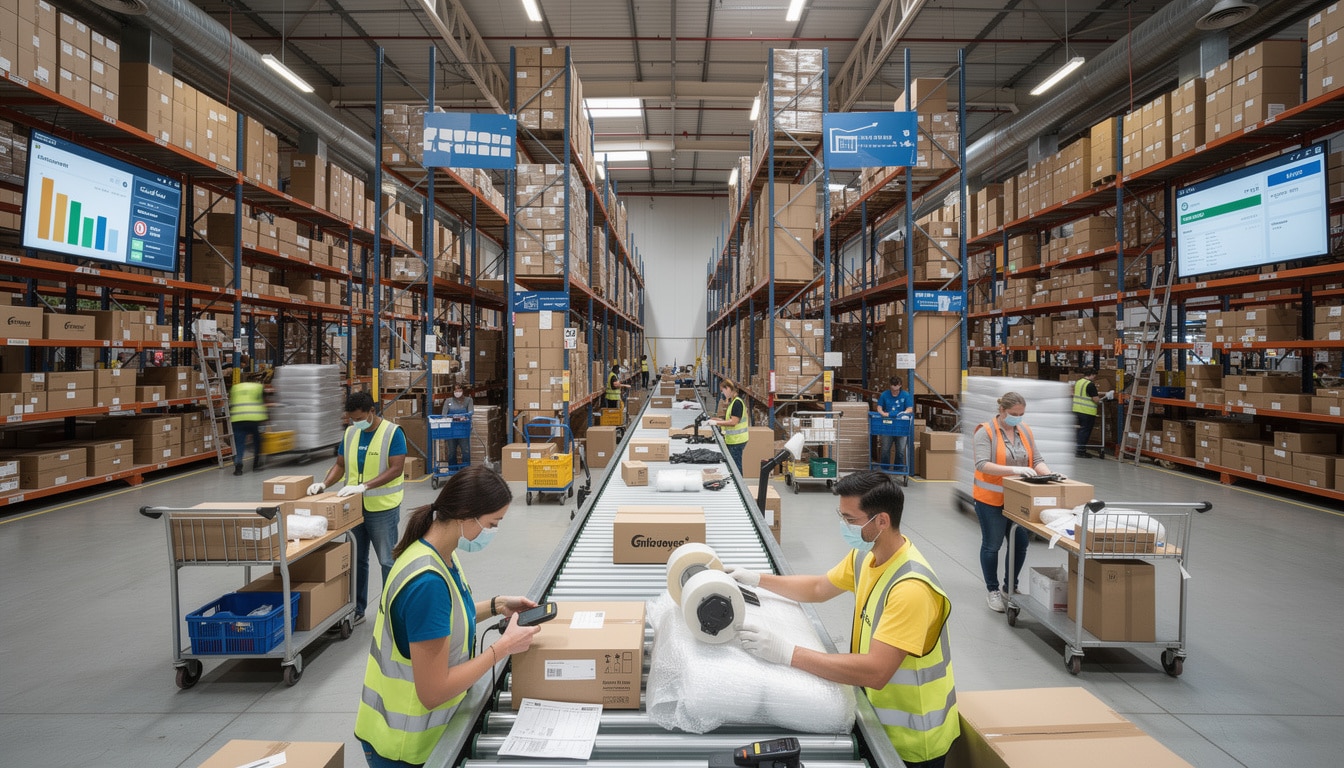
By contrast, traditional e-commerce is based on a model where the seller physically holds the inventory. 🏪 You buy products in bulk from suppliers, store them in a warehouse or small premises, then ship them yourself to customers. This traditional model remains dominant in France and across Western Europe.
This system guarantees total control of the logistics chain. You know your inventory exactly, can check quality before shipping, and organize your delivery times. Optimizing e-commerce logistics becomes a strategic question directly related to your competitiveness.
Profit margins in traditional e-commerce
Profit margins are generally higher than in dropshipping. 💰 You buy in volume and benefit from volume discounts. A bottle of wine bought for 5 euros wholesale can be resold for 15 euros, which allows covering storage, logistics and marketing costs while generating a comfortable profit.
Unlike dropshipping where margins remain limited (often 20-30%), traditional e-commerce can generate 50 to 100% gross margin depending on the sector. This economic advantage attracts serious entrepreneurs willing to invest.
Logistical and financial challenges
The downside? Initial investments are substantial. 📊 You must buy stock, rent a space, potentially hire staff for order preparation. An entrepreneur will have to spend several thousand euros before selling the first product.
Inventory management also becomes a complex science. Ordering too little risks stockouts and lost sales; ordering too much creates unsold items that tie up your cash flow. That's why improving conversion rate and operational efficiency becomes crucial to make these investments profitable.
Impact on the consumer experience: the real difference
For the end customer, these two models create radically different experiences. 👥 In dropshipping, waiting often becomes frustrating. You clicked “Buy” on Monday night, but your product won't arrive until three weeks later. In the meantime, you may have found an alternative elsewhere.
Conversely, traditional e-commerce generally offers express delivery. Amazon Prime customers have learned this: delivery speed dictates satisfaction and loyalty. When you receive your order in 48 hours, you forget the price paid and return to the store.
Service quality and customer support
The quality of the product received also varies drastically. 🎁 In dropshipping, many sellers have never handled their own products. They don't know if the color really matches the photo, if the fabric itches, or if the packaging is damaged upon opening.
With traditional e-commerce, the merchant has inspected their stock and can answer questions precisely: “How thick is the fabric?”, “Is there a risk of color fading?”. This product knowledge strengthens trust and improves the overall user experience.
Returns and customer satisfaction
Return policies also differ. 🔄 In dropshipping, if a customer wants to return an item, the process drags on. The seller must coordinate with the supplier, often located on the other side of the world, which can take several additional weeks.
Traditional e-commerce handles returns in a few days. A dissatisfied customer can exchange or get a refund quickly, which encourages future purchases and builds long-term loyalty.
Business model: who really wins?
Financially, the two models don't play on the same field. 💼 Dropshipping attracts those who want to minimize risks: entrepreneurs without capital, concept testers, or adventurous spirits. You can launch a store with 200 euros and try your luck.
However, becoming rich with dropshipping remains a dream for many. Limited margins mean that to generate 10,000 euros in monthly revenue, you must sell a huge volume of products.
Traditional e-commerce: a calculated investment
Traditional e-commerce requires thinking before acting. 📈 You will study the market, calculate your costs precisely, and assess your ability to secure financing. But once this stage is passed, growth possibilities are far greater.
A well-managed store can generate significant profits. You control your supply chain, can negotiate with your suppliers, and create competitive advantages that dropshipping does not allow.
Facilitating platforms and tools
Today, understanding how Shopify and similar platforms work is essential for both models. These tools lower technical barriers: even a beginner can create a professional store without programming expertise.
Nevertheless, the real question remains the commercial strategy. A tool does not replace good business management and a clear understanding of your finances.
Supplier-customer relationships: the key difference
The nature of the relationship between seller and customer fundamentally differs depending on the chosen model. 🤝 In dropshipping, the customer buys from you, but receives their package from an unknown third party. They don't really know who fulfilled their order, where it came from, or who is responsible in case of a problem.
This creates a psychological distance. Even if technically you are legally responsible, the customer feels it less. The brand they remember may not be yours, but that of the supplier visible on the packaging.
Building a real customer relationship
Traditional e-commerce allows building a genuine relationship. 💌 You include a personal note in the package, you pack with care, you create a recognizable visual identity. The customer feels they purchased from a real company, not an intermediary.
This relationship can be monetized. Loyal customers spend more, return more often, and leave positive feedback. That's why premium brands, even online, choose traditional e-commerce.
Legal responsibility and warranties
Legally, the dropshipper remains responsible to the consumer, even if the product does not come from them. 📋 This responsibility can become heavy: returns to manage, disputes to resolve, warranties to honor. Opening a business account becomes a necessity to properly structure this legal and financial responsibility.
With traditional e-commerce, you control every step, which simplifies dispute management and strengthens customer trust in your company.
Which approach to choose for your goals?
The question is not which approach is best in absolute terms, but which fits your situation. 🎯 If you have a limited budget, want to test an idea quickly, or lack experience, dropshipping offers an accessible entry to e-commerce.
If you aim for sustainable profitability, want to differentiate your brand, or have capital to invest, traditional e-commerce builds more solid foundations. Many entrepreneurs start with dropshipping to validate their concept, then switch to the traditional model once ready.
Hybridization: the best of both worlds?
Some entrepreneurs try a hybrid approach: they keep stock of their best-selling products while using dropshipping for more niche or seasonal items. ⚖️ This strategy minimizes the risk of holding large stock while ensuring fast delivery for essentials.
This hybridization requires more complex management, but it can offer the desired flexibility without sacrificing the customer experience. Understanding business strategies in e-commerce helps evaluate whether this intermediate approach fits your vision.
Understanding these two models also helps better decode online sellers' practices. When a delivery takes three weeks, you'll probably know it's dropshipping. When it arrives in two days, it's a real stocked e-commerce. For the savvy consumer, this knowledge transforms the online shopping experience.
Profil de l'auteur
Derniers articles
 Electricity, Gas & Energy14 September 2026Gaz et électricité : ce que la hausse des tarifs va changer sur votre facture
- Agency, Webmarketing & SEO12 September 2026Fusion Omnicom-IPG : ce que la plus grande agence de publicité au monde change pour les marques
- Retirement & Senior Living10 September 2026Carte Avantage Senior SNCF : comment voyager moins cher en train après 60 ans
- Tech & Multimedia8 September 2026Objets connectés : la fin de la 2G et le nouveau Data Act vont rebattre les cartes




Table of Contents