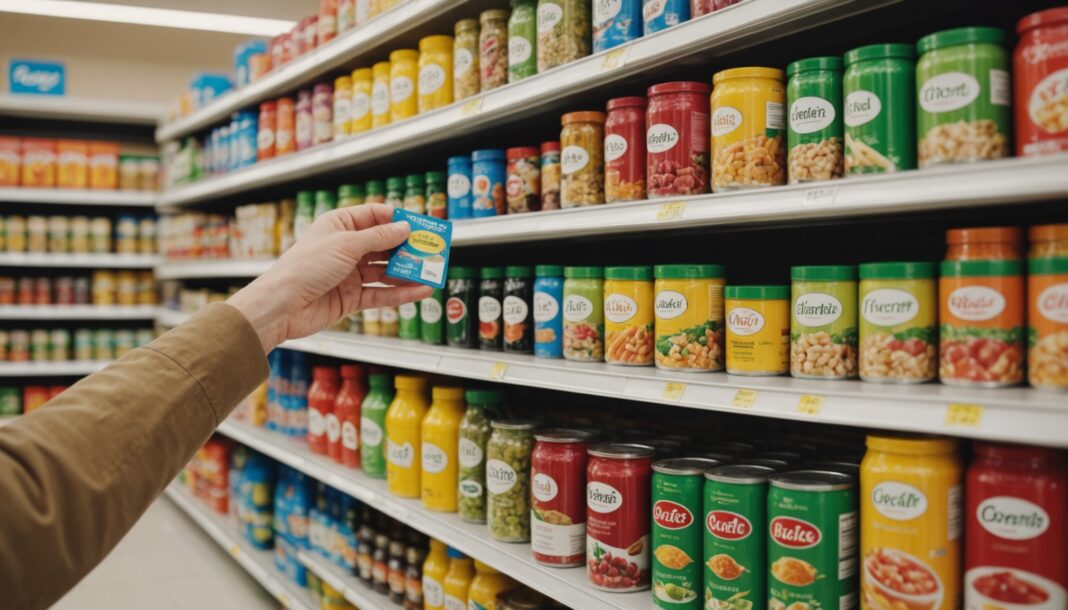
Since the decree that came into force in March 2025, the calculation of the Nutri-Score has changed for good: between 30 and 40% of processed products change letter according to Open Food Facts data. But a year and a half later, its display is still optional for manufacturers, despite a new parliamentary attempt in spring 2026.
A new algorithm stricter on sugar and salt
The reform tightens the assessment of sweet and salty products in particular, while better valuing certain beneficial fats. Concretely, the water remains the only beverage rated A, whereas sweetened sodas, previously rated B, now fall between C and E. Conversely, vegetable oils rich in good fatty acids and some oily fish see their rating improve. Brands have about two years to update their packaging: old and new logos will therefore continue to coexist on shelves until 2027, which can cause confusion for consumers comparing two similar products.
Why the display is still not mandatory
The logo remains, to date, affixed solely on a voluntary basis by brands. An attempt to make it mandatory was included in the 2026 Social Security financing bill, debated between October and November 2025: the National Assembly had voted for it, before the Senate rejected it. The text provided for a 5% turnover tax for companies refusing to display the score, with an exemption for products under Label Rouge, AOP or IGP. In a new reading, the measure ultimately failed narrowly in the National Assembly, by 120 votes to 117.
A new cross-party proposal in 2026
In response to this budgetary failure, a cross-party bill was tabled in March 2026 to impose the Nutri-Score on packaging and advertising media, using the same exemption logic for products under official quality signs. The text has not yet succeeded, but observers do not rule out its return to the 2027 budget debate.
What this means for grocery shopping
- Two versions of the logo can coexist on comparable products until 2027: checking the label's update date remains useful.
- A B score obtained before the reform no longer guarantees the same nutritional quality as a B score calculated with the new algorithm.
- Many brands still display no Nutri-Score, for lack of a legal obligation.
- Products under Label Rouge, AOP or IGP would remain exempt even if display became mandatory.
To delve deeper into health issues related to food, our section Health & Medicine and our everyday practical advice on Practical Life & Society round out this report.
Frequently asked questions
Is the Nutri-Score mandatory in France?
No. Its display remains voluntary for manufacturers. A bill tabled in March 2026 aims to make it mandatory, but it has not yet been adopted.
Why has the score of some products changed?
The decree that came into force in March 2025 modified the calculation algorithm: sugar and salt are now penalized more heavily, while certain good fats are better valued. Between 30 and 40% of products thus change letter.
How long will the old logo be seen in stores?
Brands have about two years to update their packaging, which means the old and the new Nutri-Score can coexist on shelves until 2027.
Sources
- Que Choisir : Nutri-Score, it still doesn't pass the 2026 budget
- New Nutri-Score: what changes in the shopping cart
- Open Food Facts: green light for the new Nutri-Score in France
Profil de l'auteur
Derniers articles
 Retirement & Senior Living7 October 2026Landline switch-off: what it will mean for homes that still rely on the copper network
- Ecology & Environment25 September 2026Household recycling has stalled at 44.5%: what is changing in your bins
- Dog, Cat & Animals30 August 2026Dogs and cats : Europe imposes new welfare and traceability rules
- Retirement & Senior Living29 August 2026Active seniors : the new face of retirement in France




This article was written with the help of artificial intelligence. Editorial policy
Table of Contents