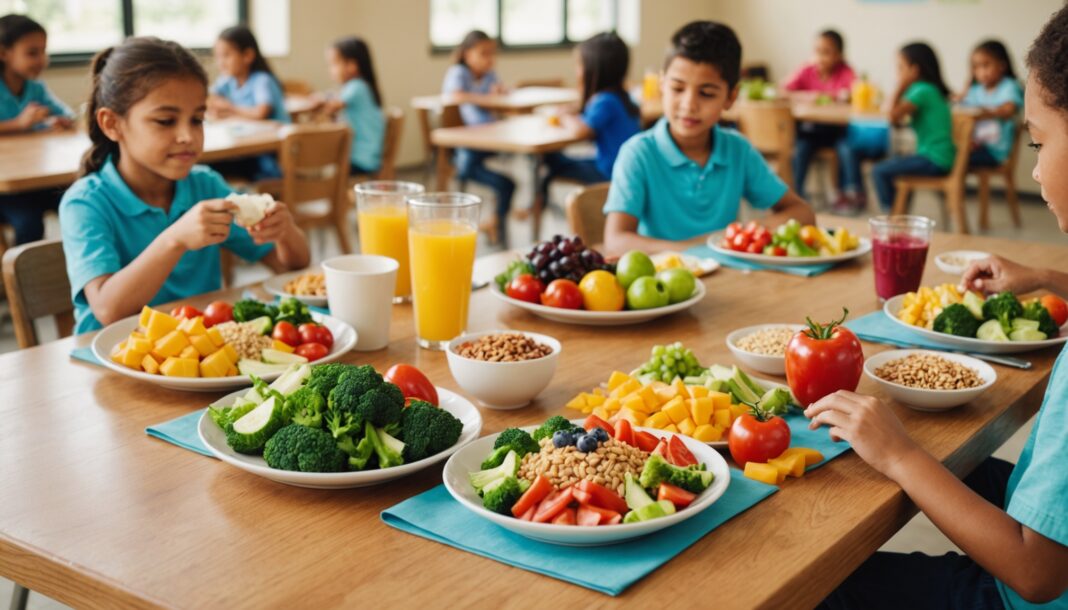
Food education at school will enter the curricula starting in the 2026 school year. A national trial, voted by deputies and linked to the new 5th National Nutrition Health Program (PNNS 5), will allow willing primary schools, middle schools and high schools to offer their students regular sessions dedicated to food. The goal: teach children to eat better, early, to limit the overweight and obesity that have been increasing for several decades.
A trial voted by the National Assembly
On 16 February 2026, deputies voted to launch a three-year trial in volunteer academies. Concretely, regular food education sessions will be integrated into the timetables of primary schools, middle schools and high schools, on the model of what already exists for sex education or road safety education. The idea is not to turn students into nutritionists, but to give them simple reference points: the composition of a balanced plate, how to read a label, the role of sugar and salt in everyday products.
PNNS 5, the roadmap through 2030
This school trial is part of a broader framework: the 5th National Nutrition Health Program (PNNS 5), launched on 8 April 2026 in Lyon during the One Health Summit, which sets the course for French nutrition policy through 2030. The program is organized around three axes and about twenty concrete measures:
- Reduce overweight and obesity by 30% among children and adolescents by 2030, and by 20% in the most disadvantaged populations
- Strengthen the rollout of the Nutri-Score and better integrate climate and environmental issues into labeling
- Further regulate food advertising aimed at children and reduce the sugar content of certain products
- Make businesses and schools true agents of public health
According to government announcements, prevention of pediatric obesity must even become a declared priority by 2030: the earlier obesity sets in during childhood, the higher the risk that it will persist into adulthood.
A concern that goes beyond French borders
France is not acting alone. At the end of January 2026, the World Health Organization called on schools worldwide to promote healthy eating for children, reminding that school remains one of the few places where an entire age group can be reached equally, regardless of social or family background. This observation reinforces the logic of the French trial: relying on school to establish habits that will follow children throughout their lives.
What this concretely changes for families
For parents, it is not a new graded subject that appears in the school diary, but dedicated times, led depending on the establishments by trained teachers, school nurses or external contributors. Volunteer academies will be identified in the coming weeks, before a gradual rollout over the three years of the trial. Families who wish to extend the approach at home can already rely on existing nutritional guidelines, available through public health organizations, without waiting for their school to be selected.
This dynamic also ties into broader concerns related to family life and children's schooling, two topics on which parents' expectations remain strong. More widely, it aligns with the health issues that public authorities have been closely monitoring in recent years.
Frequently asked questions
When does the trial start?
The rollout is gradual starting from the 2026 school year, in the volunteer academies identified by the ministry, for a total duration of three years.
Are all schools included?
No. Only voluntary primary schools, middle schools and high schools, located in academies that are themselves voluntary, participate in this phase of the trial before any possible generalization.
What is the connection with Nutri-Score?
PNNS 5, which frames this trial, provides for a strengthening of the Nutri-Score rollout, without making it mandatory at the national level, as a complement to the food education provided in class.
Sources
- Obésité France — Launch of the 5th National Nutrition Health Program 2026-2030
- World Health Organization — Schools urged to promote healthy eating
- Réseau national nutrition santé — National Nutrition Health Program
Profil de l'auteur
Derniers articles
 Retirement & Senior Living7 October 2026Landline switch-off: what it will mean for homes that still rely on the copper network
- Ecology & Environment25 September 2026Household recycling has stalled at 44.5%: what is changing in your bins
- Dog, Cat & Animals30 August 2026Dogs and cats : Europe imposes new welfare and traceability rules
- Retirement & Senior Living29 August 2026Active seniors : the new face of retirement in France




This article was written with the help of artificial intelligence. Editorial policy
Table of Contents