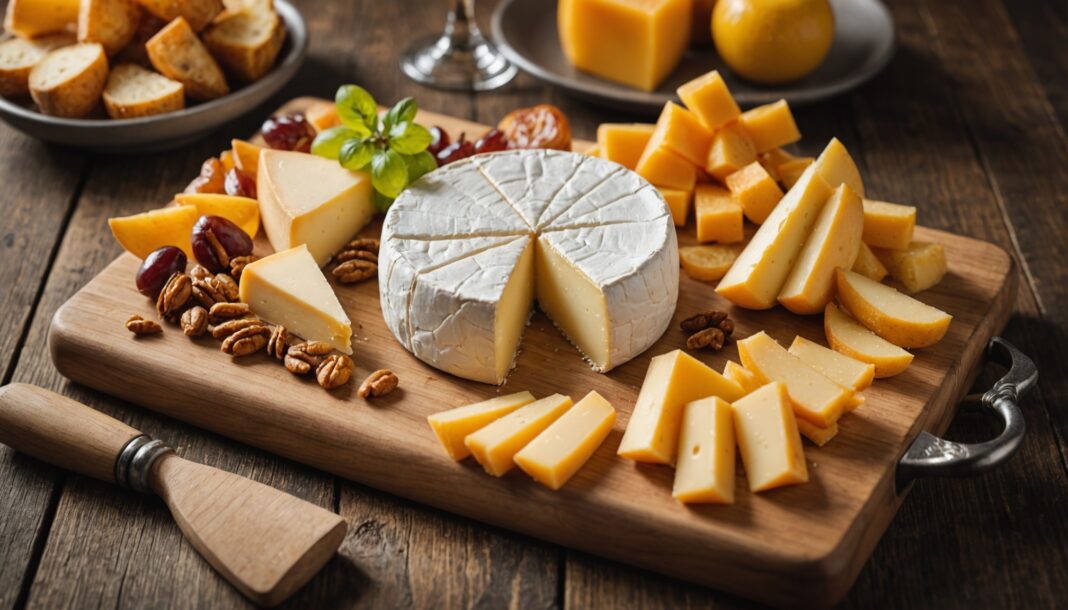
Regularly eating full-fat cheese could be associated with a reduced risk of dementia, according to a study published in the scientific journal Neurology, edited by the American Academy of Neurology. Conducted on nearly 27,670 participants followed for 25 years in Sweden, this research revives the debate about the role of dairy fats in brain aging.
A long-term Swedish study
The researchers relied on the Malmö Diet and Cancer cohort, one of the largest prospective observational studies on diet in Europe. Participants who reported consuming more than 50 grams of cheese with over 20% fat per day — varieties like cheddar, brie, or gouda — had a 13% lower risk of all-cause dementia compared with those who consumed less than 15 grams daily.
Notably: this association is not found with reduced-fat dairy products. Low-fat cheese, reduced-fat cream, or other standard dairy products showed no significant link with dementia risk in the same cohort.
Association does not mean causation
The authors of the study, reported by the journals Neurology Today and by the international scientific press, stress an essential point: this is a statistical association, not proof that cheese prevents dementia. Other lifestyle factors, overall diet, or the socio-economic status of high cheese consumers could explain part of the result.
The researchers also remind that excessive consumption of saturated fats remains associated with other well-documented risks, notably cardiovascular — a point that a previous study on full-fat dairy and cholesterol had already detailed. Balance is therefore necessary: no single food protects the brain on its own.
What is otherwise known about brain health
This finding adds to a body of work showing that the brain retains the ability to adapt at any age: a study of nearly 4,000 adults recently confirmed that certain cognitive functions can continue to improve throughout life, provided one regularly stimulates their abilities. Diet is thus only one factor among others, alongside physical activity, sleep, and social interactions.
- Favor a varied diet rather than a single “miracle” food.
- Combine moderate consumption of full-fat cheeses with regular physical activity.
- Monitor your lipid profile if you consume large amounts of cheese daily.
- Keep in mind that this study concerns a Swedish population; French eating habits differ significantly.
For the generation of active seniors, increasingly attentive to preventing cognitive decline, these results offer an additional avenue to integrate cautiously into an overall lifestyle, without replacing individualized medical advice.
Frequently asked questions
What type of cheese would be associated with a reduced risk of dementia?
Cheeses with more than 20% fat, such as cheddar, brie, or gouda, consumed at more than 50 grams per day in the Swedish study. Reduced-fat dairy products showed no similar association.
Does this study prove that cheese prevents dementia?
No. This is an association observed in a large cohort followed for 25 years, not proof of causation. Other lifestyle factors may influence this result.
Should one increase cheese consumption to protect the brain?
Researchers recommend caution: a high intake of saturated fats also carries known cardiovascular risks. Overall dietary balance remains the best approach.
Sources
- Neurology — High- and Low-Fat Dairy Consumption and Long-Term Risk of Dementia
- ScienceDaily — Study links full-fat cheese to lower dementia risk
- Santé log — Brain health: cheese against dementia?
Profil de l'auteur
Derniers articles
 Referrals & Promo Codes13 September 2026Parrainage bancaire : code partageable ou invitation, la vraie différence
- Law, Legal Services & Justice11 September 2026Crédit à la consommation : la réforme européenne qui va changer les règles du jeu
- Psychology8 September 2026Éducation : pourquoi la cohérence compte plus que la sévérité d'une punition
- Development, Digital Marketing & SEO8 September 2026Llms.txt : le fichier qui veut devenir le sésame des sites face à l'IA




This article was written with the help of artificial intelligence. Editorial policy
Table of Contents