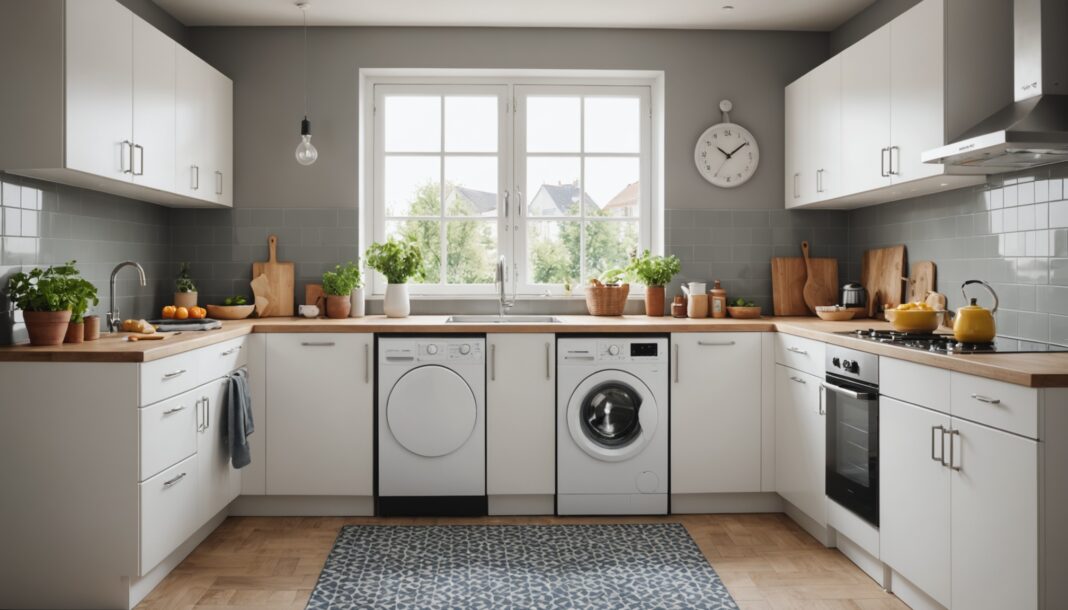
The French home appliances market fell by 1.6% in value in 2025, to €30.3 billion, according to NielsenIQ and Xerfi data compiled by the French National Home Appliances Council (CNEF). In this gloomy context, one alternative is slowly gaining ground in consumer habits: refurbished home appliances. However, an OpinionWay survey conducted for the Nantes-based start-up Underdog reveals a paradox: while 41% of buyers say they are ready to take the plunge, only 1% actually have.
A two-speed market for home appliances
Behind the overall decline, the 2025 figures tell a mixed story. Small appliances (PEM) grew by 2.7%, driven by categories with strong increases such as portable vacuum-washers (+140%), ice-cream makers and yogurt makers (+90%), and robot window cleaners (+77%). By contrast, large appliances (GEM) fell by 4.5%, with households postponing purchases of new refrigerators, washing machines, or dishwashers. It is precisely in this large-equipment segment that refurbished products are trying to carve out a place.
Why so few French people take the plunge
The OpinionWay survey, conducted among 801 people who bought an appliance in the past year, sheds light on this paradox. More than half of purchases (51%) are triggered by a breakdown, in an emergency: 31% of buyers make their decision in less than a week, a timeframe considered too short to explore the refurbished offering. Potential buyers also set specific conditions before being convinced: 79% expect a warranty of at least 24 months and 74% hope for a discount of at least 30% compared with the price of a new one.
- 51% of purchases are triggered by a breakdown, in an emergency
- 79% of potential buyers demand a minimum warranty of 24 months
- 74% expect a price reduction of at least 30% compared with new
- 64% cite price as the main argument in favor of refurbished products
A strong environmental argument
Beyond price, environmental impact is beginning to carry weight in the decision: 32% of buyers open to refurbished mention it as a motivation. According to data provided by Underdog, a new washing machine represents about 300 kg CO2 equivalent over its manufacturing cycle, versus 18 kg for a refurbished model, i.e., nearly 282 kg of CO2 avoided per appliance. An argument that retailers specializing in online retail and commerce are increasingly highlighting in their product pages.
How to take the step with confidence
For households tempted by the experience, a few habits limit unpleasant surprises: check the length of the warranty offered (ideally 12 to 24 months), favor platforms that test each appliance before resale, and compare the listed price to that of a new one to ensure a significant markdown. Anticipating the purchase rather than waiting for a breakdown remains the best way to take the time to compare offers, a principle that also applies to repair and maintenance actions in daily life. Households concerned about environmental impact can also refer to resources on ecology and the environment to compare the carbon footprint of different options.
Frequently asked questions
Is a refurbished appliance as reliable as a new one?
It depends on the refurbisher: serious platforms test and bring each appliance up to standard before resale and offer a warranty, generally between 12 and 24 months depending on the retailer.
Why are large appliances falling more than small ones?
Purchases of large appliances (refrigerators, washing machines, dishwashers) involve higher amounts and are more easily postponed by households, whereas small appliances benefit from more frequent, pleasure-driven purchases that are less expensive.
What CO2 savings can be expected from a refurbished appliance?
According to data provided by Underdog, a refurbished washing machine would avoid about 282 kg of CO2 compared with an equivalent new appliance, mainly thanks to the absence of manufacturing a new unit.
Sources
Breizh-info (OpinionWay survey / Underdog), Exaronews (NielsenIQ / Xerfi / CNEF data).
Profil de l'auteur
Derniers articles
 E-commerce, Shopping & Stores12 October 2026Lost, late or left on the doorstep: your parcel delivery rights
- Tech & Multimedia2 October 2026Mid-contract price rises: why pounds and pence can cost you more
- Electricity, Gas & Energy22 September 2026Standing charges: what you pay before using a single unit of energy
- Nutrition, Diet & Weight Loss31 August 2026Full-fat cheese : the surprising link to a reduced risk of dementia




This article was written with the help of artificial intelligence. Editorial policy
Table of Contents