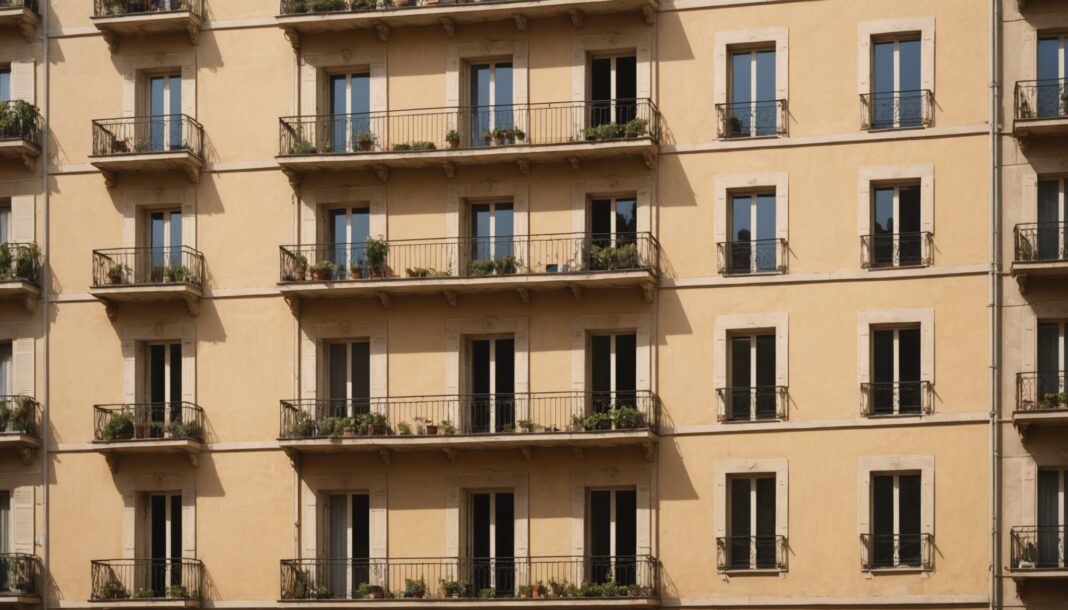
Shutters closed in the middle of the day, sleeping on the balcony, apartments turned into ovens: the summer of 2026 reminded the French that heat is no longer a mere temporary inconvenience. In the Ariane district of Nice, in the Alpes-Maritimes, there was an orange heatwave warning with temperatures recorded up to 36°C inside dwellings. This kind of testimony, increasingly frequent, reflects a broader phenomenon: the heatwave is progressively imposing itself as a standalone criterion for moving for a growing part of the population.
One in three French people ready to consider moving
According to the most recent data, one in three French people could today consider moving because of heatwaves: 7% are already seriously thinking about it, while 27% could decide to if heatwave episodes were to worsen. This shift does not yet mean a mass exodus, but a gradual change in how households envision their place of residence in the medium term.
The study « Canicule & Immobilier » devoted to this subject is clear on one point: the French are not yet moving en masse because of the climate, but they are beginning to choose their future home because of it. Heat is no longer perceived as a one-off episode, but as a structural factor to be integrated into a residential project, on the same level as price or size.
New criteria examined during viewings
This shift is concretely reflected during housing searches. Property exposure, floor level, presence of effective shutters, airflow, existence of a shaded outdoor space or nearby trees: all criteria now scrutinized by candidates for a move, whereas they were previously secondary compared with price or location. Summer comfort is becoming a selling point in its own right, on the same level as brightness or proximity to transport.
- Orientation and exposure of the dwelling (north/south, overlooking)
- Floor level and exposure to thermal impacts from roofs
- Presence of shutters, brise-soleil or effective blinds
- Possibility of cross-ventilation
- Vegetation and shading around the building
A risk of new territorial inequalities
This new climate reflex has consequences for the balance of the housing market. More and more French people associate the coolest territories with better financial accessibility, a perception that has increased by about 7 points in one year. A movement that could, in the long term, redraw the map of residential attractiveness in France, between regions sought for their relative coolness and areas that will have to adapt to remain attractive despite increasingly harsh summers.
This shift in criteria takes place in a context where the real estate market is already under strain, and where issues related to climate adaptation are gaining ground in everyday decisions. For moving professionals, this translates into a demand for more detailed information about the local climate even before the signing of a lease or a sales agreement.
Frequently asked questions
Is the heatwave already pushing the French to move en masse?
Not yet on a large scale. Current studies mainly show a change in choice criteria for new residential projects, rather than a generalized exodus from the hottest areas.
Which criteria are becoming priorities in the face of heat?
The exposure of the dwelling, the floor level, the presence of effective shutters, the possibility of cross-ventilation, and vegetation around the building are the elements most cited by prospective buyers or tenants.
Could this phenomenon create inequalities between territories?
Yes, some French people already perceive the coolest regions as more financially accessible, which could accentuate differences in attractiveness between territories in the years to come.
Sources
Profil de l'auteur

Derniers articles
 Dog, Cat & Animals9 October 2026Fireworks and pets: how to get your dog or cat through Bonfire Night
- Business & Startups28 September 2026Side hustle or newly self-employed? Why 5 October matters to HMRC
- Development, Digital Marketing & SEO29 August 2026SEO : Google suspends its sanctions against the SEO parasite in Europe
- Weddings & Special Occasions29 August 2026Destination wedding: why French couples stay at home




This article was written with the help of artificial intelligence. Editorial policy
Table of Contents