📍 In short
Setting off to travel is not just a question of courage or budget—it's above all an intimate transformation that no one truly anticipates. Between the moment you buy your ticket and the moment you close your home door for the last time, something invisible happens: a reordering of priorities, a learning of lightness, an encounter with the unknown that changes far more than our geographical landmarks. What remains hidden in travel stories is the weight of silent doubts, the beauty of the void to be filled, and that gradual discovery that you travel first to lose yourself.
🌍 The big departure: far more than an escape, it's a quest
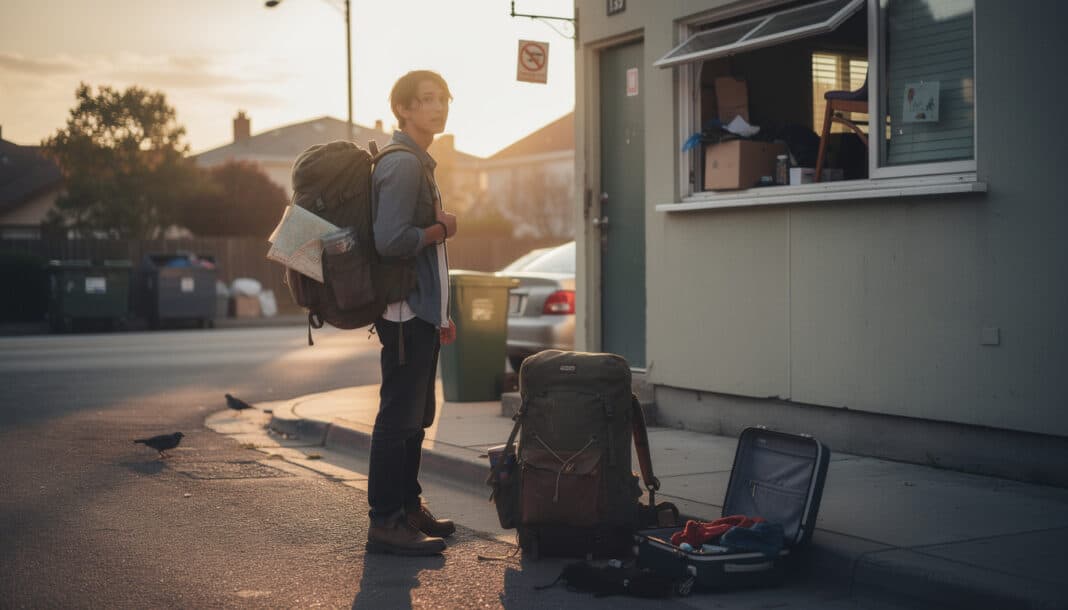
When you decide to leave everything to travel, you often imagine a dramatic escape, a clean break with daily life. Yet the real change happens long before boarding. It begins in the small decisions that pile up: selling the house, packing belongings into a few suitcases, redefining what truly matters. That moment when you hold your essential possessions in your hands and ask yourself: “Did I need all of that?”
Many travelers' paths reveal a constant: the adventure begins well before leaving the ground. Some, like the woman who decided to walk away at 56, first visited more than 50 countries on short vacations, then gradually realized those flash trips left an unfinished taste. It wasn't the departure that was missing, it was the depth of the discovery. To discover is also to give time to what you meet—people, landscapes, yourself in this new environment.
The true freedom of travel lies in this permission you finally give yourself: to stop, to observe, to respirar to the rhythm of a place rather than to conquer it. It's a form of slow travel that transforms travel into a continuous meditation, where each moment becomes a lesson about yourself.
💭 What travel guides forget to say
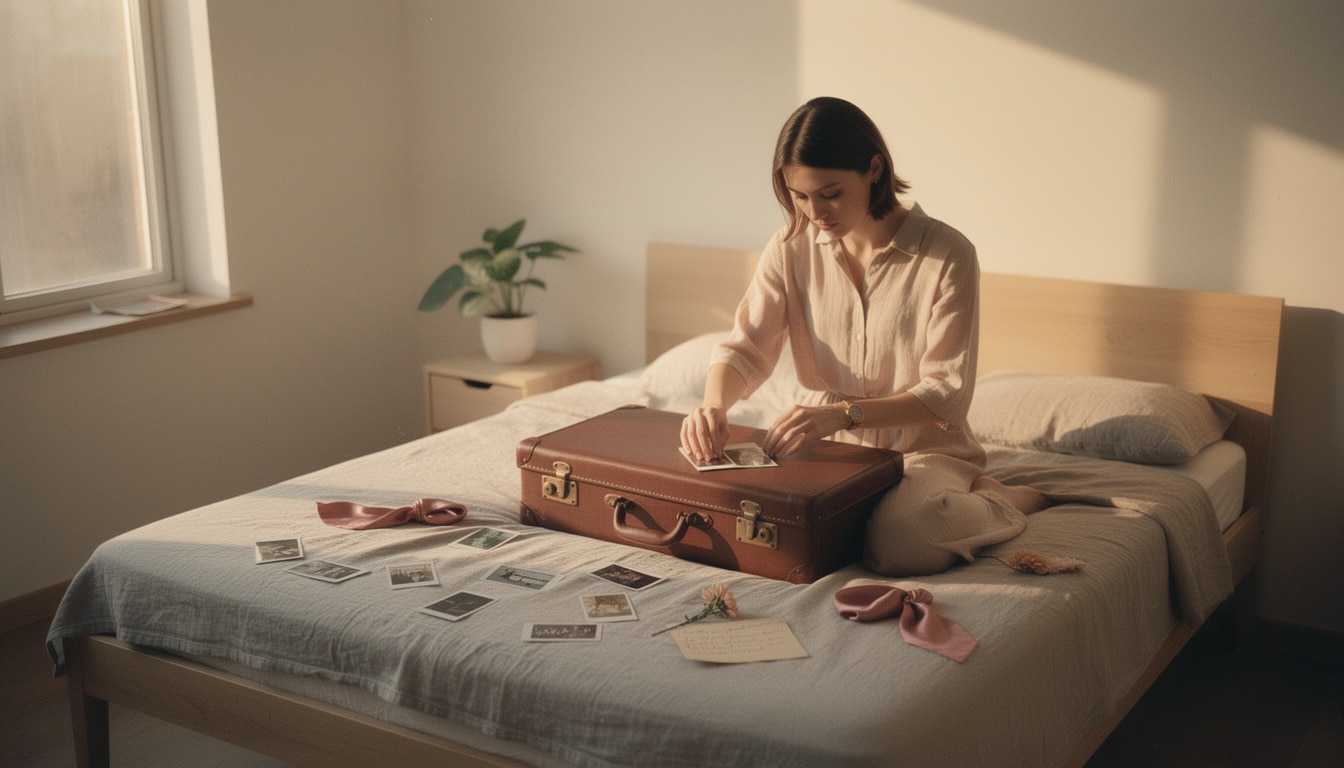
There is what you read on travel blogs, and then there is what actually happens when you are alone facing the unexpected. The most honest emotion is not the Instagram sunset, it's the doubt that seizes you at 3 a.m. in a foreign room. It's the melancholic weight of solitude, even in the middle of a crowd. It is also, oddly, the feeling of finally being at home nowhere and everywhere at once.
Those who have truly taken the step—and not just for a sabbatical—share a common experience: returning to ordinary life becomes harder than leaving. After tasting that material lightness, that different pace, the thrill of adventure, reintegrating into a world of consumption and routine can feel suffocating. That's why so many travelers constantly think about leaving again, as if travel had become a necessary drug for life.
Travel journals never mention this precise moment: when you realize that the emotion is not in the destination, but in the transformation it works in you. Why leaving an established life to travel often reveals surprising answers, as if travel were a mirror where you truly discover yourself.
🧳 Material lightness and the weight of memories
Reducing your life to a few belongings forces a strange clarity. When everything belongs to you but everything fits in two suitcases, you finally understand the difference between owning and living. This revelation—that the superfluous was ultimately just noise—changes the way you inhabit the world forever. Minimalist travel is learning to appreciate the emptiness you fill with sensations and encounters rather than objects.
Three months in one place is what allows that alchemy. Long enough to let go of first impressions, short enough to never really get bored. It's the duration imposed by slow travel, that forgotten philosophy of attentive travel. You no longer visit countries; you inhabit them, you understand them, you belong to them for a moment.
🌏 When the world becomes less a destination than a school
What remains invisible in travel hashtags is the deep learning that comes through meeting others. Going to meet peoples living off the beaten path, in harmony with nature, with intact traditions—it's a form of humility our era has forgotten. These encounters are not made in three days with a camera. They happen by sharing meals, accepting that you don't understand everything, simply listening.
Some travelers dream precisely of that: finding a form of self-sufficiency and wisdom that has been lost. The Khampa in Tibet, the Hmong in Thailand, the Moken of Myanmar—these names are not lines on an itinerary; they are gateways to worlds where time flows differently. Traveling like this is a political and spiritual act: refusing mass tourism in favor of slowness and authenticity.
The courage required for this is not that of braving the unknown, but of staying still long enough to understand it. It's also the courage to admit you learn more by listening than by exploring, more by letting yourself be surprised than by following a guide.
🚲 The practicality of slow travel: toward a light footprint
Slow travel is not just a philosophy; it's also a concrete commitment. Preferring a bike to a taxi, renting accommodation for a month instead of a week, using local transport—these seemingly simple gestures completely reshape your experience. You are no longer a passing shadow; you become a temporary resident, someone who learns street names, market hours, neighbors' customs.
It's also a quiet response to our era: traveling as a responsible traveler means reducing your carbon impact while enriching your encounter with the world. Every transport choice, every length of stay, every interaction becomes a thoughtful act rather than a tourist reflex.
⚓ The reality of the departure: February 2021, when the dream meets life
Imagine the scene: February 2021. The world is still suspended because of a pandemic. A woman and her partner, formerly employees, find themselves with a few weeks before being evicted from their Quebec housing. Their meager pre-retirement incomes are no longer enough to pay Montreal rent. The travel dream—planned for years—suddenly collides with economic reality.
This is where the big departure becomes a test of authenticity. No comfortable Plan B, no safety net, just suitcases and a deadline imposed by the economy. Then, luck or effect of the health crisis: the prices of 4-star hotels in Dubai plummet. The budget suddenly becomes possible. In less than a week, documents are ready, the car is rented for the airport, and they're on a 12-hour flight into the unknown.
Here is what is never told: departure is not always a freely chosen moment. Sometimes life itself pushes you into it. And curiously, it's often when you have no choice that you finally discover your true freedom. Leaving everything to travel at 56 shows how a departure can be as much a necessity as an aspiration.
✈️ The first hours: between ripping away and relief
When you finally find yourself seated on that plane, joy is not what you feel first. It's a kind of strangling—like leaving something tangible to plunge into a luminous void. The last images of Canada disappear beneath the clouds. There is no turning back. Some ride that irreversibility like a victory; others feel it as a mourning.
And then, gradually, in the hours that follow, something unravels. Shoulders drop. Breathing slows. It's the moment when the emotion of leaving gives way to the emotion of setting off. The two are not the same. One looks back at what you abandon; the other toward what you will discover. It's this transition—invisible but decisive—that no one describes in blogs.
🔮 What no one prepares you to face
There are predictable challenges: jet lag fatigue, culture shock, moments of loneliness. But there are more insidious challenges you only see once you're in them. For example, that strange sensation of total freedom that can sometimes feel like emptiness. When you've spent years telling yourself “one day I'll leave,” and you've finally left, what remains? You have to reinvent your mental structure, find a new meaning for your days.
There is also the gentle but persistent isolation of being foreign. Even surrounded by people, even in a guesthouse full of travelers, you can feel profoundly alone. This solitude is not necessarily painful; it can be meditative, productive, generative. But it surprises those who thought traveling would be a constant spectacle.
And then there is the recurring financial doubt: “Did I make the right choice? Will my money last long enough?” This doubt, contrary to what you might imagine, does not fade with time. It becomes a traveling companion you learn to negotiate with, to respect, without letting it take charge.
💚 The invisible joys of long-term travel
But here is what travelers also forget to say: there are joys you can only taste after three months in the same place. The moment the baker recognizes you. When you find your favorite corner and it truly becomes yours. Those moments when the local language finally starts to sound familiar to your ear. Those accidental discoveries—a street, a restaurant, a person—that would never have crossed your path if you had rushed from one tourist site to another.
Slow travel offers a rarely named luxury: the possibility of getting a little bored. And in that boredom, finding a forgotten creativity. It's where you really write, really think, really know yourself. The slow pace is an antidote to the relentless noise of our era.
After exploring more than fifty countries in quick trips, some realize that it was precisely that slowness they were missing. The unexpected doesn't happen when you run; it reveals itself when you stay. And it's often in those static moments that travel becomes truly transformative.
🌱 Minimalism, new values and rebirth
Living for a few years with few belongings restructures not only your relationship to things, but also to life itself. You realize that minimalism is not deprivation, it's liberation. Every possession must justify its weight. Every euro spent must serve an experience, not an object.
What happens here is almost spiritual: a gradual redefinition of what constitutes happiness. Consumption ceases to be a form of comfort or identity. In its place grows a different satisfaction: that of thinking differently, living differently, rejecting what you thought were absolute necessities.
Priorities change too. After sharing a simple meal with a family in a remote village, high-end restaurants lose their appeal. After sleeping in basic and serene rooms, hotel luxury seems superfluous. It's a kind of joyful asceticism, where you discover you owned less when you owned more.
🌿 Encounter: the forgotten horizon of touristic travel
Leaving to truly soak up a culture—really soak up—requires a listening you no longer cultivate. You must drop judgment, accept difference not as an exotic curiosity but as an equal legitimacy. When you rent a place for a month in a local, non-touristy neighborhood, take public transport, eat in small restaurants frequented by residents, you enter a different relationship with a place.
This is especially true when you aim for regions off the beaten path. The ethnic minorities of Tibet, Thailand, Laos are not living museums; they are peoples with their own challenges, evolutions, contradictions. Meeting them without pretending to understand, simply presenting and sharing—is a form of respect that rapid tourism never allows.
This authentic discovery requires time, vulnerability, and the ability to feel foreign without experiencing it as a threat. It's also an opportunity to transform: by learning how others live, you begin to see your own habits as cultural constructions, not universal truths.
📖 The absence of conclusion: travel as permanent opening
What remains after leaving everything is that feeling of deliberate incompletion. You don't return from a trip with definitive answers. You return transformed but still questioning. And that's precisely what distinguishes a true journey from a simple excursion.
The first days after a departure, doubt reigns. A few weeks later, adaptation begins. A few months later, it has become normal. But this new normality never erases the memory of the other normality. It's as if you live with two parallel lives in your memory.
And when the irresistible urge to leave again arrives—and it does—you understand that the true journey is never finished. It returns regularly, like a hunger, like a signature of what you have become. For leaving is never really a single act; it's the beginning of a way of living, a philosophy where adventure ceases to be a parentheses and becomes the text itself.
Perhaps the secret no one says is that what changes the most is never at the destination, but in the act of leaving itself. This freedom you finally taste—that of choosing yourself rather than letting yourself be chosen by expectations—is a fruit that never stops ripening once you've taken the first bite.
Profil de l'auteur
Derniers articles
 Smartphones & Mobile Phones14 October 2026The loyalty penalty on your mobile bill: why staying put costs you more
- Family, Babies & Children5 October 2026Airline family seating fees: what the planned ban will change for parents
- Everyday Life & Society23 September 2026Consumer confidence index: what the monthly mood check on British households really measures
- Agency, Webmarketing & SEO31 August 2026SEO : a Google bug skews visibility statistics in AI results




Table of Contents