📦 In short — The scandal of free returns reveals a forgotten reality: behind every returned package are massive costs, dubious practices and a considerable environmental impact. Once a pillar of customer loyalty, free returns are gradually becoming paid among the largest retailers. La Maison Simons, H&M, Urban Outfitters and even Amazon are adjusting their policy. But why this reversal? What are the real reasons? And above all, what really happens to these millions of returned packages each year?
Key points of this article:
- 🚨 The end of a promise: free returns are gradually disappearing from online commerce
- 💰 Hidden costs: transportation, inspection, storage and lost business opportunities
- 🌍 The ecological emergency: millions of packages end up in landfills due to lack of profitability
- 🛍️ Consumer abuses: buying multiple sizes or items to keep only one
- 🔍 Emerging solutions: technology and innovative practices to reduce returns
🚨 The gradual disappearance of free returns: how a promise becomes an unsustainable cost
For years, free returns were the symbol of a trust-based relationship between retailers and customers. La Maison Simons, a Quebec retailer founded in 1840, even made it part of its DNA: “Total satisfaction or your money back”. Until September 2023, this promise was proudly displayed across all communication channels. Then, without warning, the policy shifted.
Now, returning an item by mail costs $9.99 at La Maison Simons, except for members of the loyalty program. This turnaround is not isolated. Across Canada and the United States, a growing number of retailers are imposing fees: H&M ($4.99), Ardene ($5), Urban Outfitters ($5), Foot Locker ($6.99) and Sports Experts ($10). Even the giant Amazon, which had made free returns its commercial signature, now charges $1 for parcels handed to UPS in the United States.
In the United States, 41% of retailers charged fees for postal returns in 2022, compared with 33% in 2021. This acceleration reflects a harsh realization: free returns are not economically sustainable. Yet, according to a Canada Post survey, 48% of consumers returned at least one online purchase in 2022, and free returns rank as the second-most important criterion when choosing a retailer, just after free shipping.
The real numbers hidden behind each return
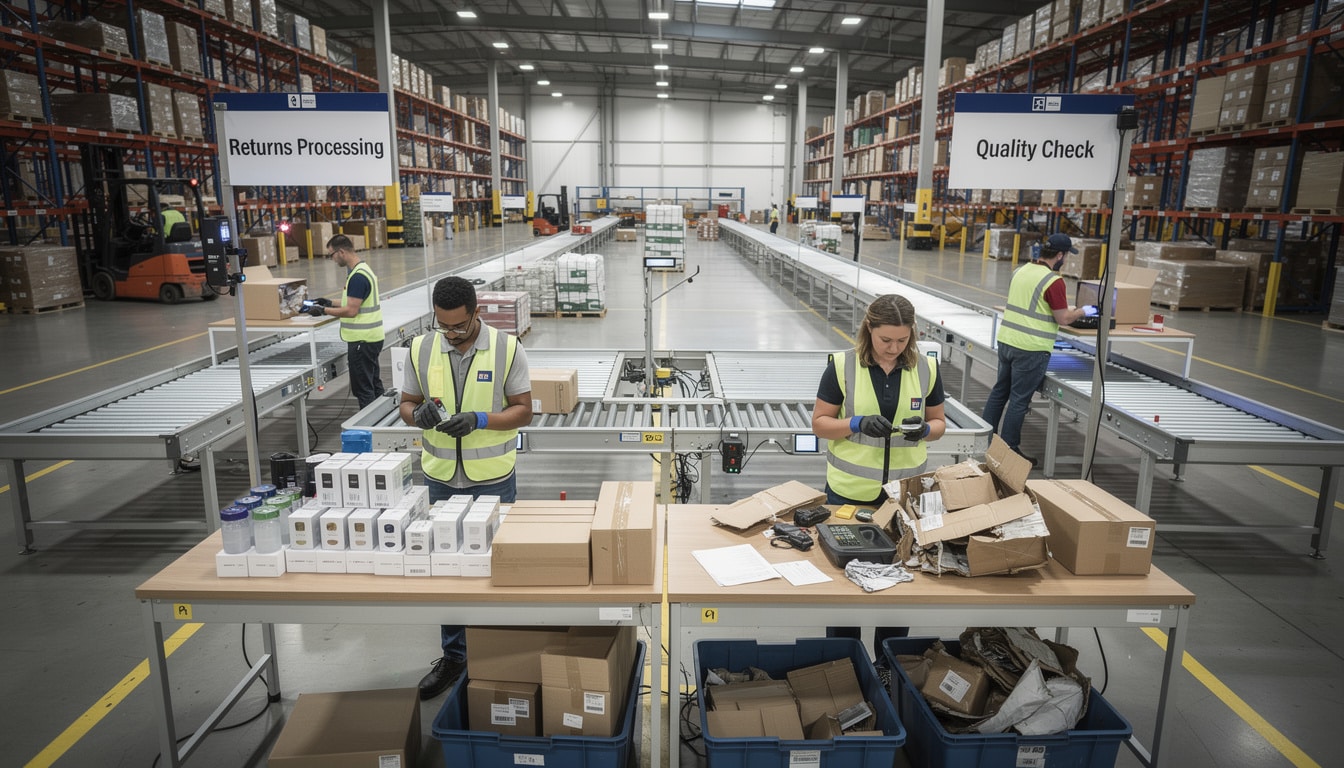
Why this sudden shift? The reasons are simple but relentless. Each return represents a cascade of expenses: transportation costs to bring the product back to the warehouse, wages for employees who inspect the items, storage and reconditioning costs. Altitude Sports, a Quebec-based platform, charges $11.99 per return precisely for this reason.
But there is an invisible expense, that of “missed opportunities”. Imagine a winter coat bought at the end of November and returned in January. Can it be resold at full price? No. The retailer loses an in-season sale, and the product gradually becomes unsellable. This lost opportunity sometimes represents more than the logistical cost itself.
💰 Hidden abuses: when trust turns into strategy
Free returns have created a perverse behavior that retailers are now trying to curb. Michel Rochette, president of the Conseil canadien du commerce de détail for Quebec, points out that “a large number of consumers have developed behaviors that increase the volume of returns”. The most glaring example? Ordering three sizes of the same garment, trying them on at home and returning the two that don't fit.
This phenomenon, trivial on the surface, creates a market distortion. Companies subsidize a practice that should be exceptional but has become commonplace. Data show that free returns do indeed increase customers' spending, but not necessarily profitably for merchants.
This situation has pushed some retailers to act upstream rather than downstream. Altitude Sports, for example, improves its product pages by displaying previous customers' feedback along with their measurements. This transparency helps buyers choose better from the start, drastically reducing return rates. According to co-CEO Maxime Dubois, this approach works much better than simply charging for returns.
False claims and return fraud
Beyond justified multiple purchases, the return fraud represents a growing problem. Some consumers return intentionally damaged products, others claim they never received the item but request a refund. Others still send back empty parcels or parcels containing different items.
These dishonest practices partially justify the shift toward paid returns. According to industry players, charging for returns discourages fraudulent attempts while making the return practice more intentional and responsible. Customers think twice before sending back an item if it costs them $5 or $10.
🌍 The silent environmental impact: the scandal no one sees
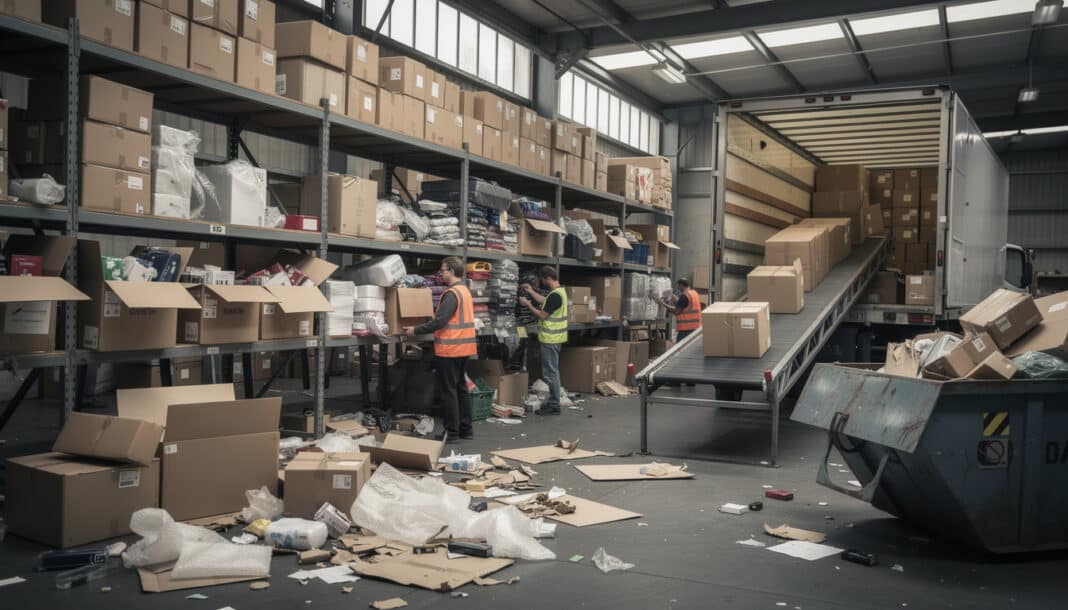
The true scandal of free returns is not measured in dollars, but in carbon. The environmental impact of parcel returns in e-commerce is devastating. Every returned item entails a new logistical trip, a new handling, and often, an unexpected final destination: the landfill.
In 2023, about one in four parcels ordered online was returned. Multiplying this figure by the billions of orders placed worldwide yields a frightening picture: hundreds of millions of returns per year, overloaded trucks, massive carbon emissions. All this for items that, often, will never be resold.
Where do returned parcels really end up?
That's the question every customer should ask. The hidden side of Amazon product returns reveals that, for cost-saving reasons, a growing number of parcels simply end up in landfills. Why? Because reconditioning, inspection and resale costs often exceed the residual value of the item.
Imagine a $15 item returned three months after purchase. Collection, transport, inspection and storage fees can reach $8 to $10. If the item shows the slightest wear or is slightly damaged, its resale on the new-goods market is compromised. The retailer then shifts it to liquidations, consignment stores, or directly to the trash. This practice, invisible to the consumer, generates mountains of avoidable waste.
Clothing accounts for the majority of this waste. A returned shirt cannot be sold “as new” if it has been tried on at home, even without visible defects. It drops a quality tier and becomes markedly less profitable. Faced with this reality, some retailers prefer to destroy rather than deal with the complexities of reconditioning.
🔍 What companies are doing to reduce returns without charging for them
Faced with this impasse, a new generation of merchants is adopting smarter strategies. Rather than simply charging, they use technology and data to anticipate returns before they occur.
Artificial intelligence plays an increasing role. Recommendation and predictive sizing systems help customers order the right size from the start. Product pages enriched with videos, 360° photos and verified reviews reduce unpleasant surprises. Some companies go further by offering virtual try-ons via augmented reality.
Altitude Sports has also implemented a trust scoring system for customers. Those who rarely return their items benefit from more favorable conditions, while excessive returns are flagged and may lead to restrictions. It's a behavioral rather than purely financial approach that rewards responsibility.
Logistics alternatives to explore
Alternatives to free returns in reverse logistics are multiplying. Some brands are testing physical drop-off points to encourage in-store returns rather than by mail, thus reducing transport costs. Others offer store credits instead of direct refunds, keeping the customer's money within the commercial ecosystem.
The model of conditional returns is also emerging: free if the item is returned in perfect condition within 7 days, otherwise paid. This approach aligns the interests of the customer and the retailer: both are incentivized to act quickly and responsibly.
📊 The numbers that change the game: why retailers have no choice anymore
The statistics are relentless. One quarter of all items ordered online are returned. Of that quarter, a significant proportion will never be resold at full price. For a retailer operating with margins of 20 to 30%, returns can quickly become a source of net loss.
In 2022-2023, several large chains published reports showing that returns accounted for up to 3-4% of their revenue in direct costs. Add indirect costs (managerial time, warehouse wear and tear, management software) and that figure rises. For SMEs operating with tighter margins, it's unsustainable.
That's why the trend is irreversible. Michel Rochette of the CCCD confirms it: “Practically all competitors now charge return fees”. What was an exception in 2021 has become the norm in 2024-2025.
Customer experience facing the new reality
But what is the impact on the consumer? According to a TF1 report, free parcel returns are reaching their limits in the eyes of customers too. Some consumers acknowledge that paid returns encourage them to think more carefully about their purchases, reducing impulsiveness.
However, the commercial appeal of free returns remains powerful. Data show that free returns rank as the second-most influential factor in choosing a retailer, just behind free shipping. Retailers that completely abandon this service risk losing customers to less strict competitors.
Hence the middle-ground strategy: offer free in-store returns (where logistical costs are nil) while factoring in costs for mail returns. It's a balanced solution that reduces costs while maintaining a certain level of customer service.
🛍️ Questions every online shopper should ask themselves
Faced with this evolution, consumers must adapt their behavior. Before clicking “order” in three different sizes or several colors, ask yourself: am I ready to bear the cost of the return if it's not what I need?
This shared responsibility is, ironically, better for everyone. Customers who think before ordering will generate fewer returns, retailers will reduce their costs and be able to maintain margins that allow for innovation. Free returns have become a real e-commerce issue, not for moral reasons, but for raw economic reasons.
Modern returns management requires active collaboration among all parties: responsible customers, transparent retailers, and innovative logisticians. It's this synergy that will reduce waste while preserving an acceptable shopping experience.
🚀 The future: towards a fairer and more sustainable returns logistics
Where are we going? What really happens to returned products will depend on the choices made today. Companies pioneering responsible returns management will become tomorrow's leaders.
Some brands are starting to offer carbon credits or discounts for each avoided return. Others are investing in world-class reconditioning centers capable of turning returns into certified refurbished products sold at low prices, thereby reducing waste.
The real revolution will be when returning an item becomes such a transparent and well-managed process that the customer exactly understands where their return goes and how it will be valorized. No landfill, no unnecessary destruction, but a real second life. Online commerce: the end of free returns is only the start of a deeper transformation of the sector.
In the meantime, the scandal persists silently: millions of returned parcels disappear every year without the average consumer knowing their fate. It is this opacity that must first be clarified.
Profil de l'auteur
Derniers articles
 Electricity, Gas & Energy14 September 2026Gaz et électricité : ce que la hausse des tarifs va changer sur votre facture
- Agency, Webmarketing & SEO12 September 2026Fusion Omnicom-IPG : ce que la plus grande agence de publicité au monde change pour les marques
- Retirement & Senior Living10 September 2026Carte Avantage Senior SNCF : comment voyager moins cher en train après 60 ans
- Tech & Multimedia8 September 2026Objets connectés : la fin de la 2G et le nouveau Data Act vont rebattre les cartes




Table of Contents