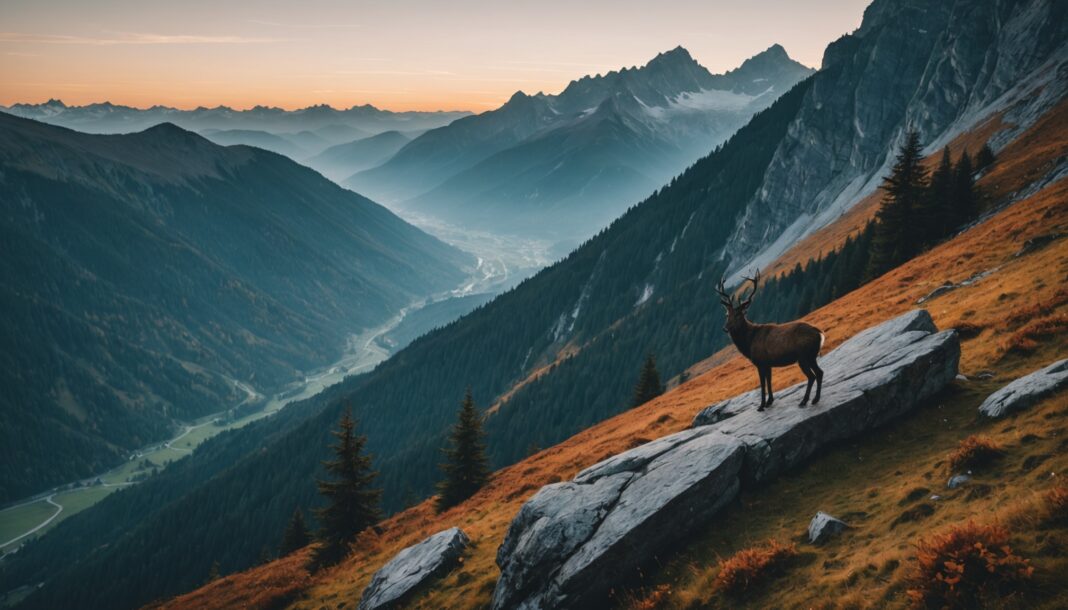
The 2026-2027 season brings several concrete changes for hunters, livestock farmers, and biodiversity advocates in France. The wolf culling quota is rising, two new mountain species are coming under protection, and drive hunts for chamois and mouflon are now allowed nationwide. A set of decisions that reshapes the balance between hunting activity, livestock protection, and wildlife conservation.
Wolf culling cap raised to 21% of the population
A ministerial order dated February 23, 2026, published in the Official Journal the following day, raises the wolf destruction cap to 21% of the estimated average population, up from 19% the previous season. Based on the latest winter survey by the French Office for Biodiversity (l'Office français de la biodiversité), which counts 1,082 individuals nationwide, this allows for the culling of 227 wolves in 2026. The order even includes an escalation mechanism: if the 21% threshold is reached before the end of the calendar year, the cap can be raised by two additional points, up to 23%.
Several wildlife protection associations have announced legal challenges against this order, arguing that this level of destruction is incompatible with the sustainable maintenance of the population. On the livestock farmers' side, this increase responds to the constant pressure of attacks on herds, particularly in mountain areas where tensions between farmers and wolf advocates remain high.
Western capercaillie and rock ptarmigan: two species now protected
For small mountain game, the season introduces a sharp tightening of harvest limits. The western capercaillie can no longer be hunted, a ban set for five years, and the rock ptarmigan also joins the list of protected species. Two other species remain huntable but under a maximum authorized harvest (prélèvement maximum autorisé, or PMA) set at the departmental level: 50 individuals for the mountain hare, and 20 birds for the hazel grouse. These caps, decided federation by federation, aim to slow the decline of populations already weakened by the loss of their natural habitat.
Chamois and mouflon: drive hunts allowed, but not everywhere applied
Another notable change: drive hunting for chamois and mouflon is now permitted nationwide, whereas it had until now remained limited to stalking and still hunting in most mountain ranges in France. Some departmental federations, such as that of Isère, have nevertheless chosen to retain the traditional hunting methods for these two species, considered more selective on steep terrain. The final choice therefore rests with each departmental hunting management plan.
On the ground, the pressure of wild boar damage
Alongside these regulatory decisions, several departments are reporting very concrete tensions. In both Haute-Vienne and Haute-Marne, the rise in damage caused by wild boars to crops has put pressure on the relationship between farmers and hunters, with each side blaming the other for the lack of population control. A reminder that wildlife management isn't limited to texts published in the Official Journal: it also plays out, every week, in the fields.
To learn more about this season's changes, DirectMag has already detailed the full schedule for the opening of the hunting season in France and the reclassification of the western capercaillie and rock ptarmigan as protected species. On the livestock farmers' side, health pressure adds to the tensions over game, as shown in our report on the bovine tuberculosis weighing on French exports.
More broadly, these decisions are part of ongoing debates over the coexistence between rural activities and environmental protection, a topic we follow closely in our agriculture, livestock, hunting & fishing section.
Frequently Asked Questions
Why is the wolf culling quota increasing this year?
The order of February 23, 2026 raises the cap to 21% of the estimated average wolf population, up from 19% previously, in response to the pressure of attacks on herds. With a population of 1,082 individuals, this allows for the culling of 227 wolves, with the possibility of raising the threshold further to 23% during the year.
Which species are newly protected this season?
The western capercaillie, banned from hunting for five years, and the rock ptarmigan join the list of protected species. The mountain hare and the hazel grouse remain huntable, but under a maximum authorized harvest set department by department.
Does the chamois and mouflon drive hunt apply in every department?
No. The national rule now allows drive hunting for these two species, but each departmental federation can choose to retain stalking or still hunting: Isère, for example, has kept these traditional methods, considered more selective in the mountains.
Sources
- News Tank Agro — Wolf: destruction permitted up to 21% of the average population
- Vert — The government raises the wolf culling quota
- Isère Hunters' Federation — Opening of the hunting season: what's changing this season
Profil de l'auteur
Derniers articles
 DIY & Troubleshooting18 November 2026Dexter Sander Recall 2026: What Leroy Merlin and Weldom Customers Need to Know Before Using It
- Restaurants, Drinks & Food18 November 2026Flexitarianism in France: Less Meat on the Plate, but Not for the Reasons You'd Think
- Home Appliances & Equipment18 November 2026Washing Machine, Oven, Dishwasher: Which Brand to Choose for Appliances That Last?
- Nutrition, Diet & Weight Loss18 November 2026Pancreatic Fat: The Diet That May Help Reduce It




Trending now on legal streaming
FilmThe Odyssey
SeriesGhosts
This article was written with the help of artificial intelligence. Editorial policy
Table of Contents