



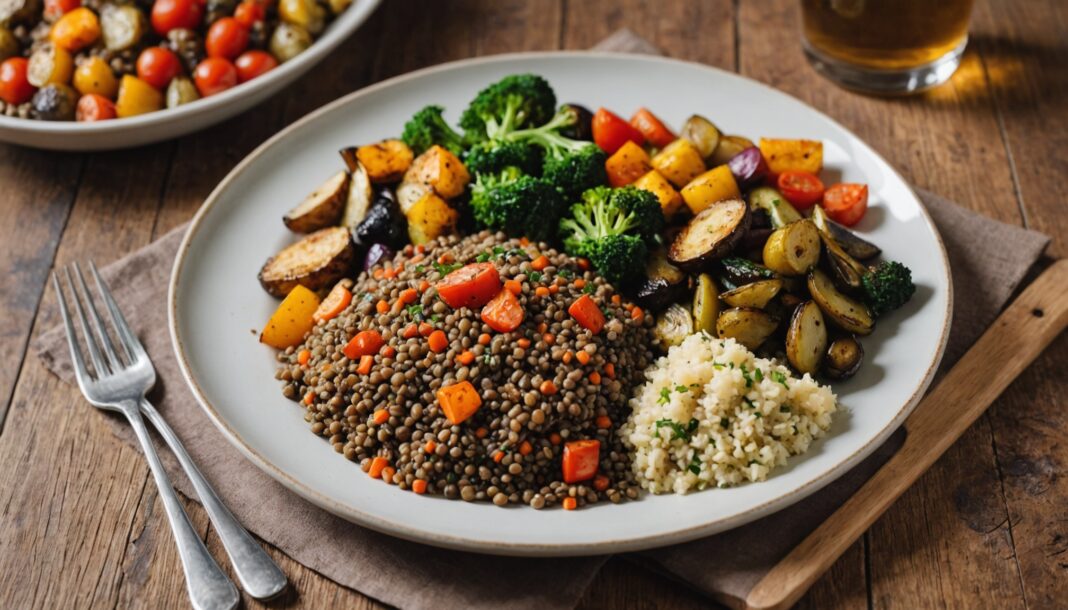
One in four French people now describe themselves as flexitarian, according to a survey by Ifop (a French polling institute) conducted for FranceAgriMer (the French agency for agriculture and seafood products), while another barometer, published by Ademe (France's ecological transition agency) and GreenFlex, puts the figure as high as 37%. Studies keep piling up to tell the same story: less meat on French plates. But behind this appealing environmental narrative, the numbers mainly tell a different story—one tied much more to people's wallets than to environmental awareness.
A Real Trend, but More Modest Than It Appears
On the ground, when it comes to actual purchases, the decline is real but limited: in the first quarter of 2026, household meat purchases for at-home consumption fell by 3.2% compared to the same period in 2025. The share of regular meat or fish consumers, meanwhile, dropped from 61% to 51% over five years, according to the Ademe-GreenFlex barometer. A gradual shift, then, but far from the massive tipping point suggested by some headlines about a “flexitarian boom.”
The Real Reason: Price, Not the Planet
This is where the Ifop survey for FranceAgriMer offers the most interesting information—and the one least picked up by the mainstream press: when asked about their motivations, French people who are cutting back on meat cite economic reasons first, at 65%—far ahead of health (45%), the environment (38%), and animal welfare (32%). In other words, for two out of three flexitarians, eating less meat is primarily a way to save money on a product whose price remains structurally high, rather than an activist choice.
- 24% of French people describe themselves as flexitarian according to the Ifop/FranceAgriMer survey, rising to 37% under the broader definition used by the Ademe-GreenFlex barometer
- A 3.2% drop in household meat purchases in the first quarter of 2026 compared to 2025
- 65% of flexitarians cite savings as their top motivation, far ahead of the environment (38%)
- Only half of self-described flexitarians actually maintain consistent habits day to day
A Labeling Effect That Blurs Comparisons
Another key takeaway: the very definition of “flexitarianism” varies from one study to another, which explains the gap between the 24% and 37% figures cited. For Ademe and GreenFlex, a household is flexitarian if it limits its meat or fish consumption to a maximum of two servings per week; for the FranceAgriMer survey, simply declaring an intention to cut back is enough, with no precise threshold. This statistical fuzziness feeds the image of a France massively turning away from meat, when actual behavior is changing more slowly, and primarily for budgetary reasons.
For households looking for concrete ways to lighten their grocery bill, this trend translates into a growing place for legumes, whole grains, and seasonal vegetables on the menu, with meat becoming an occasional ingredient rather than a daily reflex—a shift worth watching in upcoming consumption barometers.
Frequently Asked Questions
How many French people describe themselves as flexitarian?
Between 24%, according to the Ifop survey for FranceAgriMer, and 37%, according to the 2026 Ademe-GreenFlex barometer, with the gap coming from different definitions of flexitarianism.
Why are French people cutting back on meat?
Primarily for economic reasons (65%), followed by health (45%), the environment (38%), and animal welfare (32%), according to the FranceAgriMer survey.
Have meat purchases really declined?
Yes, but moderately: down 3.2% in the first quarter of 2026 compared to 2025—a gradual decline rather than a sharp break.
Sources
Réussir — Ifop survey for FranceAgriMer on flexitarianism
Linéaires — breakdown of flexitarians' motivations
Ademe — GreenFlex-Ademe Responsible Consumption Barometer 2026
Also worth reading in our nutrition, diet, and weight loss, practical living and society, and agriculture, livestock, hunting, and fishing sections to keep up with the evolving eating habits of the French.
Profil de l'auteur
Derniers articles
 DIY & Troubleshooting18 November 2026Dexter Sander Recall 2026: What Leroy Merlin and Weldom Customers Need to Know Before Using It
- Restaurants, Drinks & Food18 November 2026Flexitarianism in France: Less Meat on the Plate, but Not for the Reasons You'd Think
- Home Appliances & Equipment18 November 2026Washing Machine, Oven, Dishwasher: Which Brand to Choose for Appliances That Last?
- Nutrition, Diet & Weight Loss18 November 2026Pancreatic Fat: The Diet That May Help Reduce It




Trending now on legal streaming
FilmThe Hunger Games
SeriesVisionQuest
This article was written with the help of artificial intelligence. Editorial policy
Table of Contents

 outweighs the environment in this choice.)