Living in the North or the South of France doesn't carry the same health risk, and the gap comes down first to what's on the plate. A study presented on November 4, 2026, at the Journées francophones de nutrition (French-speaking Nutrition Days) in Lille, by Juhui Wang and her team from the UMR Physiologie de la nutrition et du comportement alimentaire (a joint Inrae-AgroParisTech research unit), quantifies for the first time the real weight of regional diet in the gaps in illness and mortality observed between French regions.
Four Dietary Profiles, Two Opposing Frances
Drawing on data from the large-scale Inca3 consumption survey, researchers identified four regional groups with distinct eating habits, then measured their impact on 24 metabolic diseases and cancers, also accounting for physical activity, alcohol, and tobacco use. The result: in southern regions, a favorable dietary profile explains 51% of the lower mortality and 57% of the lower morbidity observed relative to the national average. Conversely, in some northern regions, an unfavorable dietary profile accounts for 65% of the excess mortality and 64% of the excess morbidity observed.
The research team also quantified the gains in life expectancy associated with a change in diet: up to 12.1 additional years for women aged 15 to 19, and 8.1 years for men aged 45 to 49, if they permanently adopted the most favorable dietary profile identified in the study.
What the Most Favored Regions Eat
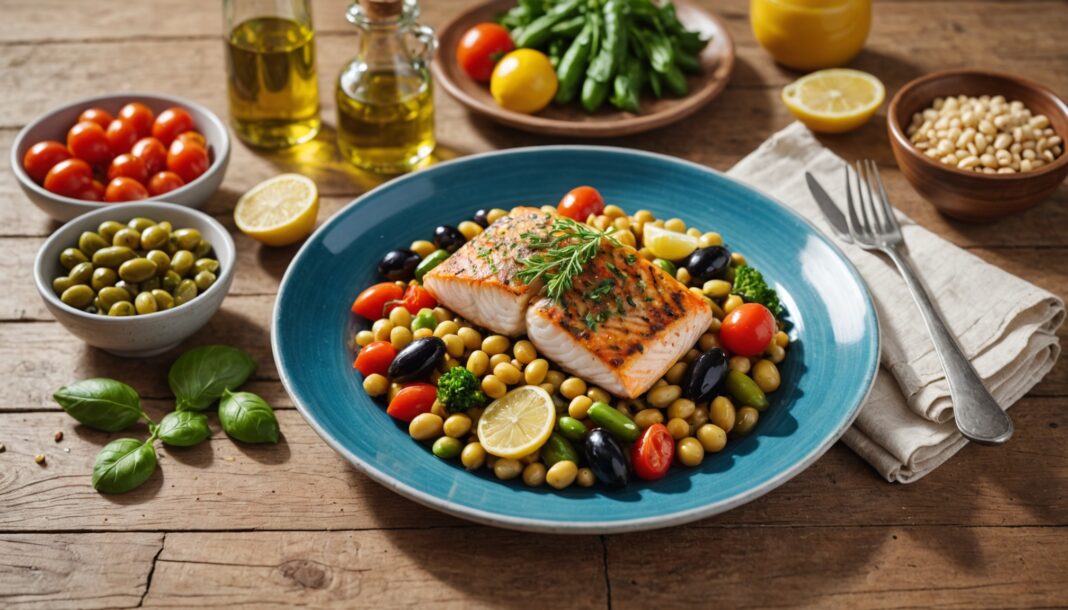
The dietary profile associated with the best outcomes closely resembles the Mediterranean pattern: more vegetables, legumes, fish, and olive oil, less processed meat and ultra-processed products. This logic aligns with the results obtained with the Nordic diet among 64,000 Swedes, which already showed that an eating pattern rich in vegetables and low in processed products reduced mortality, regardless of participants' region of origin.
For households looking to move closer to this profile without changing everything at once, a few levers come up repeatedly in recent studies:
- Increase dietary fiber intake (vegetables, legumes, whole grains): only 10% of men and 4% of women in France reach the 30 grams per day recommended by Anses (the French agency for food, environmental, and occupational health safety).
- Cut back on processed meat and ready-made meals in favor of fish and olive oil.
- Maintain regular physical activity, which amplifies the protective effect of diet according to the same research.
A Public Health Issue, Not Just a Personal One
This study confirms that health gaps between French regions aren't simply a matter of genetic chance or access to care alone: regional diet carries real weight, and it remains largely changeable at the household level. The nutrition barometer from Santé publique France (the French public health agency) had already pointed to gaps in eating practices across different areas; this new study gives them, for the first time, a weight measured in years of life gained or lost.
No need to wait for a national program to take action at your own level: approaches to personalized nutrition without calorie counting show that gradually adjusting the quality of one's diet, rather than just its quantity, is often enough to kick off a lasting, measurable change over several years.
Frequently Asked Questions
Why does diet vary so much from one French region to another?
Regional eating habits stem from culinary traditions, the availability of local products, and socio-economic differences, which translate into distinct consumption profiles recorded in the Inca3 survey.
Is the dietary profile of the South really more protective for health?
According to the study presented in Lille, southern regions show lower mortality and lower morbidity partly attributable to their dietary profile, close to the Mediterranean pattern, but other factors such as physical activity also play a role in this outcome.
Can you really improve your life expectancy by changing your diet?
Researchers put potential gains at up to 12.1 years for certain age groups when adopting the most favorable dietary profile, which illustrates the scale of the effect at the population level, even though it is not an individual guarantee.
Sources
Profil de l'auteur
Derniers articles
 Agency, Webmarketing & SEO19 November 2026Search Console API: Three New Features for SEO Agencies
- DIY & Troubleshooting18 November 2026Dexter Sander Recall 2026: What Leroy Merlin and Weldom Customers Need to Know Before Using It
- Restaurants, Drinks & Food18 November 2026Flexitarianism in France: Less Meat on the Plate, but Not for the Reasons You'd Think
- Home Appliances & Equipment18 November 2026Washing Machine, Oven, Dishwasher: Which Brand to Choose for Appliances That Last?




Trending now on legal streaming
FilmHope
SeriesMobLand
This article was written with the help of artificial intelligence. Editorial policy
Table of Contents