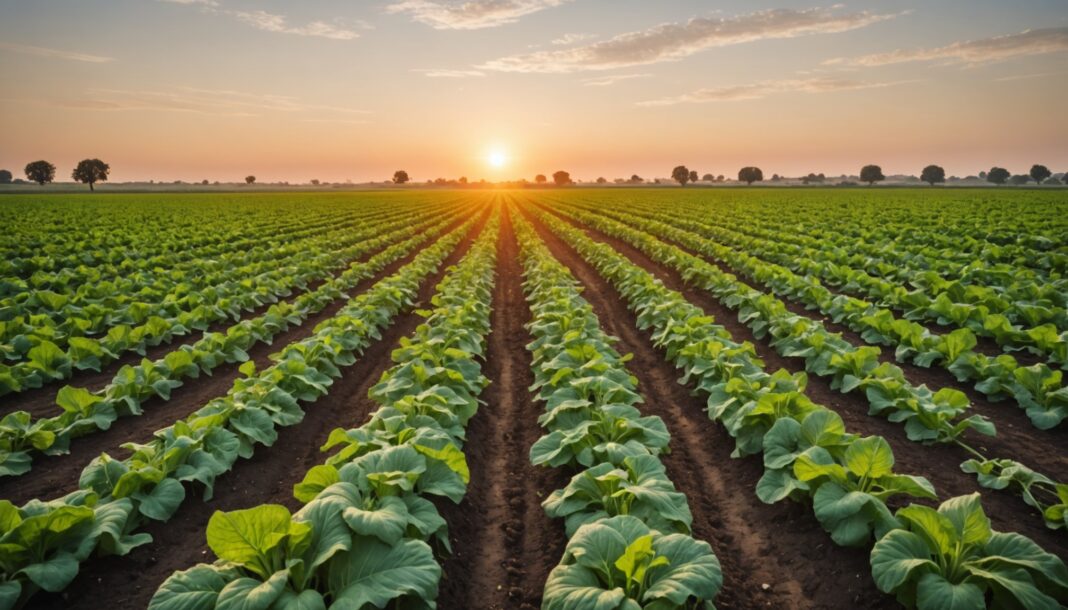
The fruits and vegetables department has never weighed so heavily on French household budgets. After a summer marked by repeated heatwaves and a drought deemed « unprecedented » by professionals, prices are soaring on the shelves, while some harvests are suffering spectacular losses. An analysis of a crisis that directly affects consumers' wallets.
Double-digit price increases
According to the price observatory of Familles Rurales, vegetable prices have risen by 10 % in one year for conventional products and by 7 % for organic. Some emblematic summer products are rising particularly sharply: courgettes are up +32 %, tomatoes +31 % and green beans +24 %. Over ten years, the increase even exceeds doubling for many items. Only two vegetables escape the trend: the onion (-23 %) and the potato (-13 %), driven by stocks more abundant than average.
In the long run, the price surge did not start this summer: since 2015, fresh fruit has increased by 54 % and fresh vegetables by 62 %, compared with 21 % for general inflation. The gap has widened further with repeated drought episodes since 2022.
Harvests weakened by drought
In the field, vegetable growers report losses ranging from 20 to 70 % depending on the farms and crops. According to several field reports relayed by the regional press, some Breton broccoli and artichoke productions were completely lost, while garden peas from the Grand Ouest have declined by around 30 %. Overall, professionals estimate the average loss on fruits and vegetables this season at 25 %.
Livestock farmers are not spared: milk production is also falling sharply in several western basins, where the heat weighs on the health and productivity of herds. The agricultural sector as a whole is calling for increased financial support in the face of a situation that several professional organizations judge more severe than the 2022 crisis.
How consumers can adapt
- Favor season varieties that are still abundant, such as onions or potatoes, to limit the bill.
- Turn to short supply chains and local markets, where prices sometimes reflect speculation less than in large-scale retail.
- Plan grouped shopping or home preservation (jars, freezing) when occasional promotions appear on abundant products.
- Follow publications from consumer associations, which regularly update their price observatories.
This situation illustrates how French agriculture remains exposed to climatic hazards, with direct repercussions on the daily lives of the French. To follow practical files related to household budgets, head to our section Vie Pratique & Société, or our section Agriculture, Élevage, Chasse & Pêche for current agricultural news. Broader climate issues are also covered in our section Écologie & Environnement.
Frequently Asked Questions
Why are fruit and vegetable prices rising so much in 2026?
The combination of repeated droughts and heatwaves since spring has reduced yields of many crops, sometimes by 20 to 70 % depending on the farms, which mechanically weighs on shelf prices.
Which products are most affected by the increase?
Courgettes, tomatoes and green beans show the largest increases, whereas onions and potatoes see their prices fall thanks to more favorable stocks.
Are there solutions to limit the impact on household budgets?
Favouring still-abundant seasonal products, short supply chains and home preservation helps reduce the bill, alongside following price observatories published by consumer associations.
Sources
- France Info — Les prix des légumes ont augmenté de 10 % en un an
- ICI — Sécheresse et canicule : les agriculteurs français inquiets
- Bon Pote — Canicules : le monde paysan face à l'effondrement des récoltes
Profil de l'auteur

Derniers articles
 Health & Medicine19 October 2026NHS winter jabs: who is eligible for the flu, COVID and RSV vaccines
- Dog, Cat & Animals9 October 2026Fireworks and pets: how to get your dog or cat through Bonfire Night
- Business & Startups28 September 2026Side hustle or newly self-employed? Why 5 October matters to HMRC
- Development, Digital Marketing & SEO29 August 2026SEO : Google suspends its sanctions against the SEO parasite in Europe




This article was written with the help of artificial intelligence. Editorial policy
Table of Contents