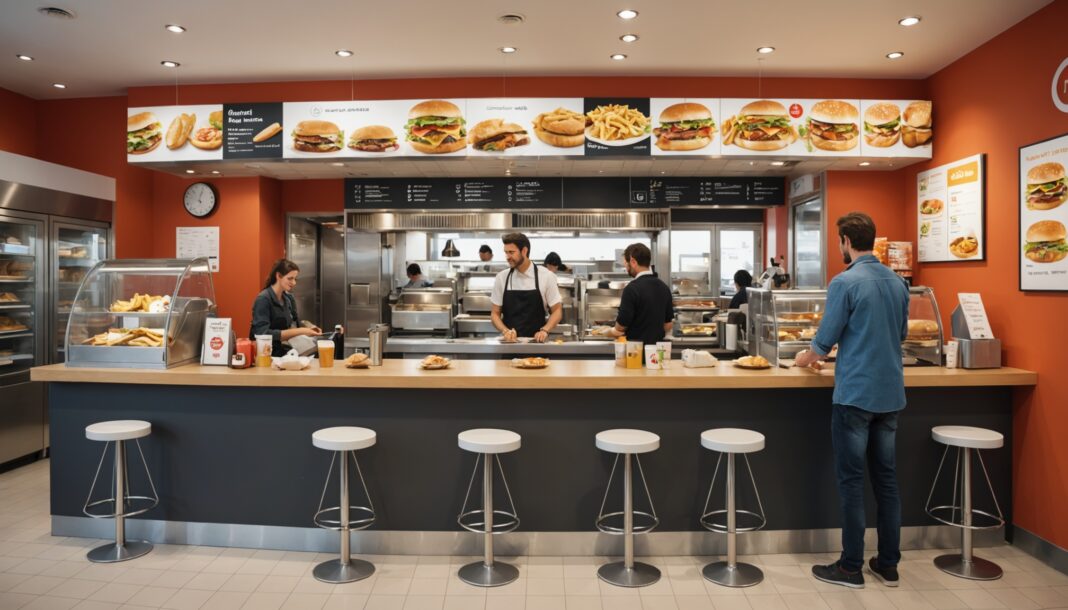
The fast-food chain Quick celebrated on November 2, at an event held in Paris, passing the 200-restaurant mark in France. It's a symbolic milestone for a chain that, just a few years ago, was closing locations one after another, and that now boasts one of the fastest growth rates in the industry.
This comeback was built over four years: nearly 100 openings have taken place since the recovery plan launched in 2022, including about 30 in 2026 alone, among them a new location that opened in Lannion in October.
Growth That Stands Out in a Stagnant Market
The most striking figure comes from the comparison with the rest of the industry. While the French chain fast-food market shrank by 2% in 2026, Quick posted growth of 8% over the same period. The chain also announced its move to “société à mission” status (a French legal status for mission-driven companies), a framework that commits it to social and environmental goals beyond profitability alone.
With revenue estimated at around 600 million euros in 2025, Quick now ranks as the country's 4th-largest fast-food chain, behind McDonald's (more than 1,600 restaurants), Burger King (about 620), and KFC (about 400 restaurants), but ahead of smaller chains.
150 Restaurants and 7,500 Jobs Announced by 2030
Quick's management used the event to lay out its ambitions for the rest of the decade: 150 additional restaurants are set to open by 2030, bringing the network to about 350 locations. This plan comes with an announced investment of more than 500 million euros and the creation of 7,500 jobs over five years, mainly for the new locations and their kitchen and front-of-house teams.
This hiring push comes at a time when finding the right channels for job searches, especially in major cities, remains a task that requires a methodical approach, both for candidates and for chains recruiting on a large scale.
On the Restaurant Operators' and Consumers' Side
For franchisees, Quick's expansion also illustrates the very concrete challenges of running a restaurant location, from managing kitchen equipment, such as a grease trap required in every professional kitchen, to managing costs. This is all the more sensitive given that household food budgets remain under pressure: a recent study noted that eating a balanced diet now costs noticeably more than it did a few years ago, pushing some people in France toward fast-food offerings seen as more affordable.
The chain is counting on this repositioning, between affordability and a new image of more responsible business development, to keep growing in an industry where competition remains fierce.
Frequently Asked Questions
How many Quick restaurants are there in France today?
The chain passed the 200-restaurant mark in France in early November 2026, after opening nearly 100 additional locations over four years.
What are Quick's goals by 2030?
The chain plans to open 150 additional restaurants by 2030, bringing its total to about 350 locations, with an announced investment of more than 500 million euros and the creation of 7,500 jobs.
Where does Quick rank among fast-food chains in France?
With about 600 million euros in revenue in 2025, Quick ranks as the 4th-largest chain in the French market, behind McDonald's, Burger King, and KFC.
Sources
- LSA Conso — Quick Makes a Strong Comeback in France
- Stratégies — Quick Passes the 200-Restaurant Mark and Becomes a Mission-Driven Company
Profil de l'auteur
Derniers articles
 DIY & Troubleshooting18 November 2026Dexter Sander Recall 2026: What Leroy Merlin and Weldom Customers Need to Know Before Using It
- Restaurants, Drinks & Food18 November 2026Flexitarianism in France: Less Meat on the Plate, but Not for the Reasons You'd Think
- Home Appliances & Equipment18 November 2026Washing Machine, Oven, Dishwasher: Which Brand to Choose for Appliances That Last?
- Nutrition, Diet & Weight Loss18 November 2026Pancreatic Fat: The Diet That May Help Reduce It




Trending now on legal streaming
FilmThe Hunger Games: The Ballad of Songbirds & Snakes
SeriesThe Diplomat
This article was written with the help of artificial intelligence. Editorial policy
Table of Contents