Eating well without breaking the bank has become a puzzle. According to the SOFI 2026 report from the United Nations, the cost of a healthy diet has climbed by 25% in five years worldwide. In France, the summer of 2026 confirms the trend: vegetables are soaring while fruits hold up. An analysis of what truly weighs on the shopping basket and levers to continue eating balanced on a controlled budget.
A healthy diet 25% more expensive in five years
The annual report on The State of Food Security and Nutrition in the World (SOFI), co-produced by FAO, WHO, WFP, IFAD and UNICEF, now estimates the average cost of a balanced plate at $4.28 per person per day. A bill up 25% since 2021. Direct consequence: 2.69 billion people, or nearly one in three worldwide, cannot afford it.
The report also points to where the price forms. Animal-origin products and fresh fruits alone concentrate nearly 46% of the expenditure. And the bulk of the cost, between 70% and 75%, is built after the farm: processing, transport, logistics and distribution. So it is not only the field that sets the price, but the entire chain that follows.
In France, vegetables push the bill up
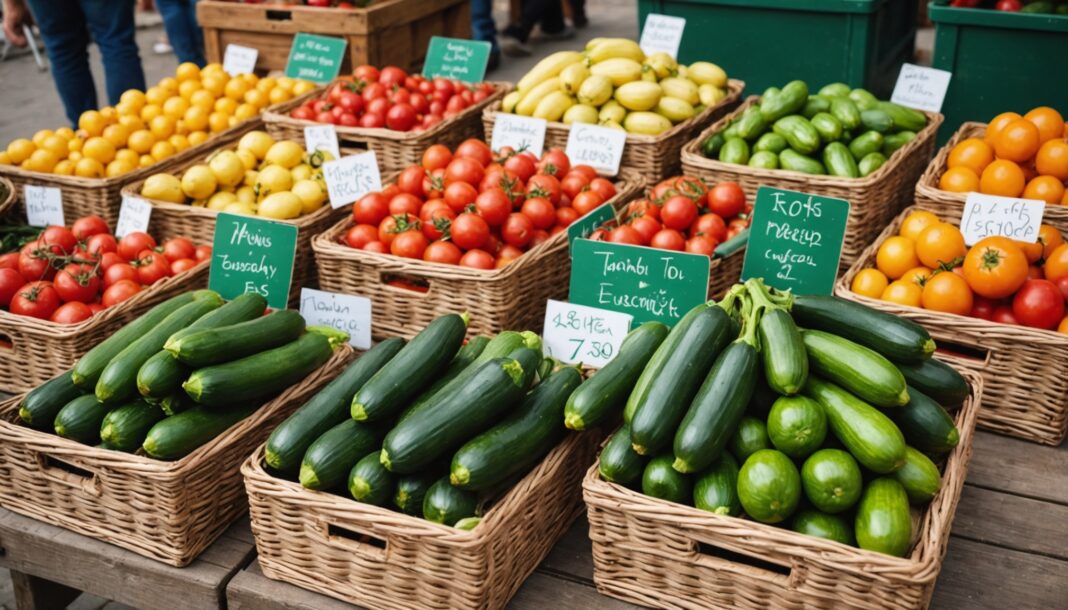
The global finding is confirmed in French aisles. The 20th edition of the Observatory of fruit and vegetable prices from the association Familles Rurales, published in July 2026, reports an average increase in vegetables of 10% year-on-year in conventional produce (+7% in organic). Some summer items are taking off: zucchinis jump 32%, tomatoes 31% and green beans 24%.
Fruits, meanwhile, offer some respite: their prices are almost stable in conventional (-0.2%) and even fall by 10% in organic. Over the long term, the gap with inflation remains striking. Still according to the association, relying on Insee data, the price of fresh vegetables has risen by 62% since 2015, that of fruits by 54%, while general inflation increased by only 21% over the same period. On the organic side, the gap with conventional remains high: around +61% for fruits and +67% for vegetables.
The causes are mainly weather-related. Episodes of heavy rain, cold snaps and then heat peaks have disrupted open-field and greenhouse crops alike. On the household budget side, the bill rises even as overall food inflation remains contained: UFC-Que Choisir places it at around 1.5% year-on-year in July 2026.
What this means in practice for your plate
The experts' message is not to give up fruits and vegetables, pillars of good health, but to adapt purchases. Several habits help limit the damage without sacrificing nutritional balance:
- Favor seasonal produce: in summer, bet on fruits, cheaper this year, rather than on fragile vegetables whose prices are surging.
- Compare outlets: end-of-day markets, greengrocers, direct sales and clearance stores often show significant differences.
- Make use of frozen and canned goods: plain and without added sauce, they retain most nutrients at a low price.
- Cook from raw ingredients: processed products accumulate the downstream costs highlighted by the FAO; starting from simple ingredients remains the best nutrition-to-price ratio.
- Reduce waste: planning meals and using leftovers mechanically lowers the real cost of your daily diet.
Key takeaway: the FAO's figures are an observation, not a forecast. Nothing indicates that the rise will continue at the same pace, especially since fruits show that price easing remains possible when harvests are good.
Frequently asked questions
Why does a healthy diet cost more?
Because the most nutritious foods (fruits, vegetables, fresh and animal-origin products) are also the most sensitive to climate hazards and to processing, transport and distribution costs. According to the FAO, 70 to 75% of the price is formed after the farm.
Is it possible to eat a balanced diet on a tight budget?
Yes. By focusing on seasonal products, legumes, plain frozen foods and home cooking, you can maintain a good nutritional intake at a moderate cost. The challenge is to make smart trade-offs, not to eliminate entire food groups.
Are organic fruits and vegetables worth the extra cost?
Organic remains significantly more expensive (around +61% for fruits, +67% for vegetables according to Familles Rurales). The choice depends on your budget and priorities; alternating seasonal conventional produce and targeted organic purchases is a common compromise.
Sources
- franceinfo — The cost of a healthy diet has increased by 25% in five years, according to the UN
- Familles Rurales — 20th edition of the Observatory of fruit and vegetable prices (July 2026)
- UFC-Que Choisir — Food, hygiene, drugstore: the real inflation figures
Profil de l'auteur

Derniers articles
 DIY & Troubleshooting13 September 2026Le marché du bricolage se stabilise : ce que cela change pour vos travaux
- Home Appliances & Equipment12 September 2026Droit à la réparation électroménager 2026 : la garantie passe à 12 mois
- Nutrition, Diet & Weight Loss12 September 2026Nutrition personnalisée : maigrir sans compter les calories, l'étude qui change la donne en 2026
- Moving & Transport8 September 2026Jours Traincroyables : la méthode pour dénicher des billets de train à moins de 20 euros



Table of Contents