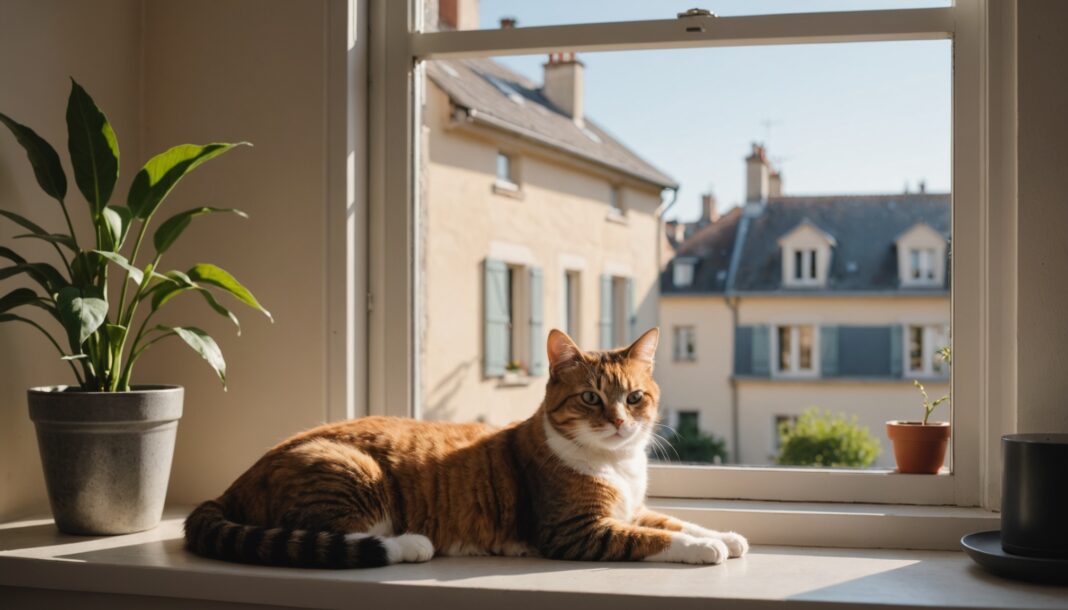
The shift is now confirmed. In 2026, the cat establishes itself as the French people's favorite pet, far ahead of the dog. According to the FACCO/Kantar-Odoxa 2025-2026 barometer unveiled at the end of May, metropolitan France counts 16.6 million cats versus 9.7 million dogs. A reversal of trend that says a lot about our lifestyles, and that raises a less visible question: that of identifying these increasingly numerous felines.
A shift confirmed by the numbers
Felines continue to gain ground. Their population has increased by around 22% in five years, while that of dogs is slightly eroding, with nearly 300,000 fewer individuals since 2024. In total, France hosts 73.4 million companion animals (cats, dogs, fish, birds, rodents…) and six out of ten French people share their home with at least one companion. On the dog side, the 29% threshold of owning households is slowly declining, while the cat becomes the king of interiors.
Why the cat took the lead
Several underlying dynamics explain this lasting reversal of preferences:
- Urbanization and housing size: more autonomous, the cat adapts better to an apartment than a dog that requires walks and space.
- Teleworking and flexible schedules: many households, particularly young professionals, favor an independent companion compatible with busy days.
- Cost: the annual budget for a cat is generally estimated between €800 and €1,000, versus €1,200 to €1,500 for a dog. For food alone, FACCO estimates the average expense at about €339 for a cat, versus €517 for a dog.
- The search for simplicity: autonomy, discretion and discreet attachment appeal to households that value the animal's independence.
The paradox of identification
Here is the lesser-known side of this enthusiasm. Although cats dominate our homes, they remain less well identified than dogs. According to i-CAD's 2026 barometer, the organization that manages the national register, France counted on 31 December 2025 some 18.4 million identified live animals, including 9.39 million dogs but only 8.95 million cats. Over the whole of 2025, 1,584,965 identifications were recorded, down 3.3%, with the microchip now representing 95% of cases.
However, identification is a legal obligation and the main tool for finding a lost animal. In 2025, more than 90,000 animals were reported lost and fewer than 46,000 reported found. The issue is particularly sensitive in summer, a period of departures on holiday when escapes and losses multiply. Having your cat microchipped, keeping your contact details up to date in the register: two simple reflexes that make all the difference.
What this shift changes in practice
For owners, the rise of the cat reshuffles daily life: product offerings, boarding services, veterinary practices and animal health insurance plans adapt to this feline clientele. This evolution also affects the practical life of households, from home layout to the organization of holidays, where finding a suitable care solution becomes a real issue.
Frequently asked questions
How many cats and dogs are there in France in 2026?
According to the FACCO/Kantar-Odoxa 2025-2026 barometer, France counts about 16.6 million cats and 9.7 million dogs. The cat is therefore now the country's primary pet.
Is my cat's identification mandatory?
Yes. Identification, most often by microchip, is a legal obligation. It notably determines the chances of finding a lost animal and must be registered with up-to-date contact details in the national register.
Does a cat really cost less than a dog?
On average, yes. The annual budget for a cat is generally estimated between €800 and €1,000, versus €1,200 to €1,500 for a dog, the gap being explained mainly by food and certain maintenance costs.
Sources
- i-CAD — Baromètre 2026 de l'identification des chiens et des chats
- Planète Grandes Écoles — Pourquoi le chat dépasse le chien en France en 2026
- L'essentiel — La France compte 73,4 millions d'animaux de compagnie
Profil de l'auteur
Derniers articles
 Weddings & Special Occasions13 September 2026Mariage : pourquoi la date choisie peut faire varier la facture de plusieurs milliers d'euros
- Development, Digital Marketing & SEO11 September 2026ChatGPT Ads en libre-service : ce qui change pour les annonceurs français
- Farming & Nature10 September 2026Seuils ICPE en élevage : ce qui change pour les agriculteurs
- Development, Digital Marketing & SEO7 September 2026Vibe coding : créer une application sans savoir coder, jusqu'où peut-on faire confiance à l'IA ?




Table of Contents