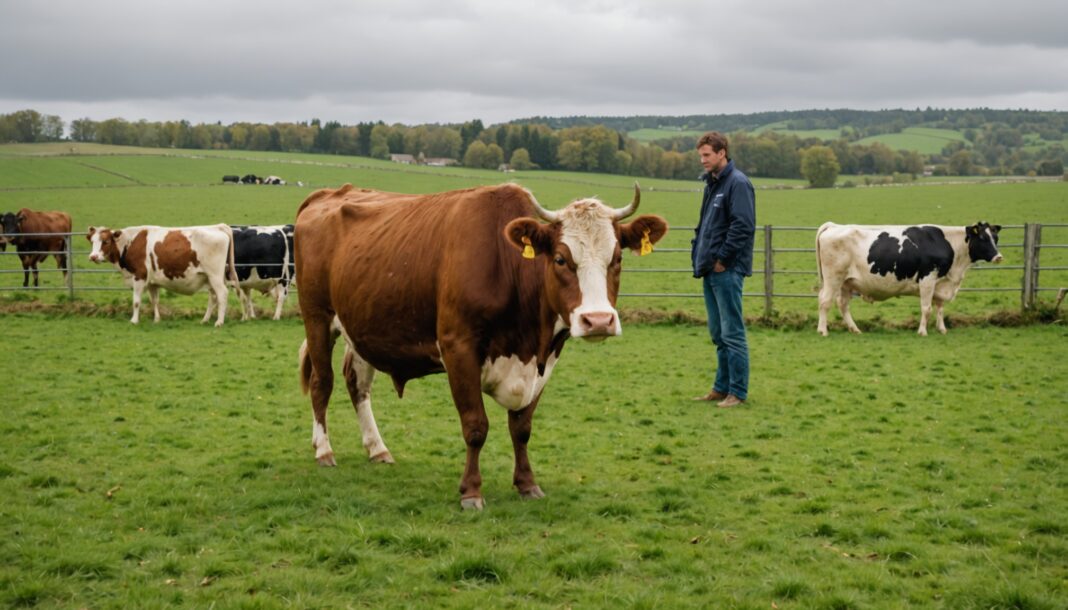
Bovine tuberculosis no longer makes headlines, but it is seriously worrying France's farming sector. At the Sommet de l'Élevage (France's major livestock trade show), industry groups and health authorities sounded the alarm: the disease is quietly spreading in certain livestock regions, to the point of threatening the health status that thousands of farms depend on.
A Quiet Erosion of the Health Status
In 2025, 93 cases of bovine tuberculosis were confirmed across France. The Nouvelle-Aquitaine region accounts for a large share of the outbreaks, with 24 cases recorded in the Pyrénées-Atlantiques and 17 in the Dordogne. The number of cases isn't exploding from one year to the next, but it's the underlying trend that alarms veterinarians: France's cattle herd is shrinking, which mechanically drives up the disease's incidence rate, even though the absolute number of outbreaks remains stable.
That rate is being watched very closely. If the proportion of infected farms were to exceed the 0.1% threshold, France would risk losing its status as an “officially free” country from bovine tuberculosis with European authorities.
Why This Status Matters So Much to Farmers
This health label isn't just an administrative formality: it determines whether French meat and dairy products can access numerous export markets. Losing it would mean tighter controls, added costs, and a loss of competitiveness for an industry already weakened by other difficulties, such as the droughts that are straining farmers' finances.
- Total or partial slaughter of the herd if an outbreak is confirmed, with an immediate economic impact on the farm.
- Herd rebuilding periods that can stretch over several years.
- The risk of tighter export controls if the European threshold is crossed.
- Significant psychological and social strain on farming families facing repeated rounds of testing.
What This Means on the Ground
For farmers in affected areas, detecting an outbreak triggers a series of cleaning and testing operations that can span several prophylaxis campaigns. Industry groups describe a situation that has become barely tolerable for some farms, caught between economic vulnerability and health uncertainty. This reality compounds a reform of animal health funding that will also change what farmers will have to pay for health surveillance of their herds. The regulatory thresholds governing farms, regularly revised, are also helping redefine the day-to-day constraints on operations, as shown by the recent changes to ICPE thresholds (France's classified-installation regulations) in livestock farming.
For now, no national emergency measures have been announced beyond stepped-up testing campaigns in the most exposed areas. But health authorities are keeping a close eye on the issue, noting that France's “disease-free” status remains a fragile achievement, not a permanent guarantee.
Frequently Asked Questions
Is bovine tuberculosis dangerous to humans?
Transmission to humans remains possible but rare in countries with strict health surveillance like France, thanks largely to milk pasteurization and systematic veterinary inspections at slaughterhouses.
Why isn't the number of cases dropping despite the controls?
The disease persists in certain areas with high livestock density, particularly through wildlife reservoirs, which makes complete eradication difficult despite decades of testing campaigns.
What specifically happens to a farmer whose herd is affected?
The farm may face total or partial slaughter of its animals, followed by a sanitation period before any herd rebuilding can take place, with a major economic impact as a result.
Sources
Profil de l'auteur
Derniers articles
 DIY & Troubleshooting18 November 2026Dexter Sander Recall 2026: What Leroy Merlin and Weldom Customers Need to Know Before Using It
- Restaurants, Drinks & Food18 November 2026Flexitarianism in France: Less Meat on the Plate, but Not for the Reasons You'd Think
- Home Appliances & Equipment18 November 2026Washing Machine, Oven, Dishwasher: Which Brand to Choose for Appliances That Last?
- Nutrition, Diet & Weight Loss18 November 2026Pancreatic Fat: The Diet That May Help Reduce It



Trending now on legal streaming
FilmThe Hunger Games: The Ballad of Songbirds & Snakes
SeriesThe Diplomat
This article was written with the help of artificial intelligence. Editorial policy
Table of Contents