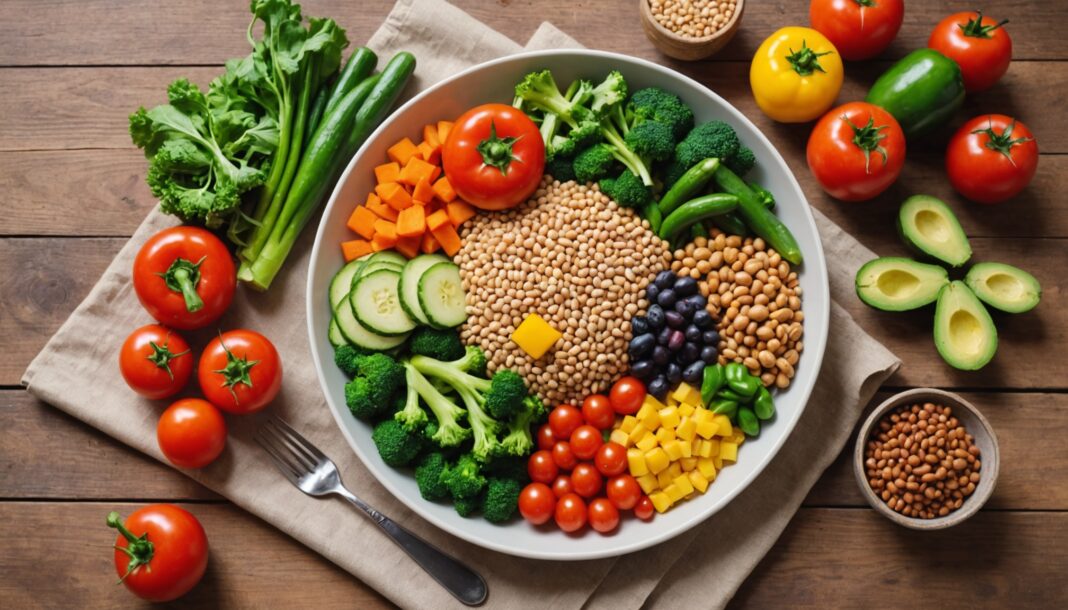
Losing weight without counting calories or reducing portions: that's the promise documented by a new study published in the scientific journal JAMA Network Open. Its secret lies neither in willpower nor in deprivation, but in a simple principle, the energy density of foods on the plate.
A study that challenges conventional ideas about dieting
Led by researcher Hana Kahleova, director of clinical research at the Physicians Committee for Responsible Medicine (PCRM), the analysis is based on a randomized clinical trial conducted over 16 weeks among overweight adults. One group adopted a low-fat vegan diet, based on fruits, vegetables, whole grains and legumes consumed ad libitum, with no restriction instructions. A second, control group made no changes to their usual diet.
Result: among the vegan participants, the dietary energy density fell by 30% on average, without the weight of food consumed decreasing. In other words, they continued to eat similar volumes, but with a significantly lower calorie intake per bite.
Why it works: the role of water and fiber
According to Hana Kahleova, “it's not about willpower or smaller portions, it's about choosing foods that naturally deliver fewer calories per bite.” Fruits, vegetables and legumes owe much of their low energy density to their high water and fiber content, two components that provide a quick feeling of satiety for fewer calories.
Conversely, foods high in fat and low in water, such as ultra-processed or fried products, pack a lot of calories into a small volume: you need to eat only a little to reach a high caloric intake, which promotes overconsumption without a real feeling of satiety.
A different approach from traditional restrictive diets
Unlike classic low-calorie diets, which require consciously reducing portions or counting calories, this approach relies on the choice of foods rather than on quantity. Researchers see it as a more sustainable avenue, because it does not depend on a constant willpower effort but on a gradual change in the composition of the plate.
- Reduction of energy density: -30% in the vegan group
- Duration of the clinical trial: 16 weeks
- Amount of food consumed (by weight): stable between the two groups
- No caloric restriction imposed on participants
This logic aligns with broader recommendations in health and medicine on the importance of a plant-rich diet. To go further on habits that sustainably support fitness, our fitness and well-being section offers other concrete tips, while our tips and tricks help adapt these principles to daily life.
Frequently asked questions
Do you have to become completely vegan to benefit from this effect?
The study tested a strict vegan diet, but the principle of energy density applies as soon as you increase the proportion of fruits, vegetables, legumes and whole grains on the plate, even without completely excluding animal products.
Is this type of diet suitable for everyone?
The trial involved overweight adults without particular pathologies. As with any significant dietary change, medical or dietary advice is recommended in case of chronic disease, pregnancy, or specific nutritional needs.
How long does it take to see results?
In the study, the effects on energy density and weight loss were measured over a period of 16 weeks, roughly four months, with regular monitoring of participants.
Sources
Profil de l'auteur

Derniers articles
 Nutrition, Diet & Weight Loss13 August 2026Vegan diet : why this change on the plate makes you lose weight without depriving yourself
- Farming & Nature11 August 2026Fruit and vegetable prices: why the bill is soaring this summer
- Development, Digital Marketing & SEO11 August 2026AI-generated content and SEO: what Google really penalizes
- Moving & Transport10 August 2026Moving: how to avoid scams by fake professionals


This article was written with the help of artificial intelligence. Editorial policy
Table of Contents