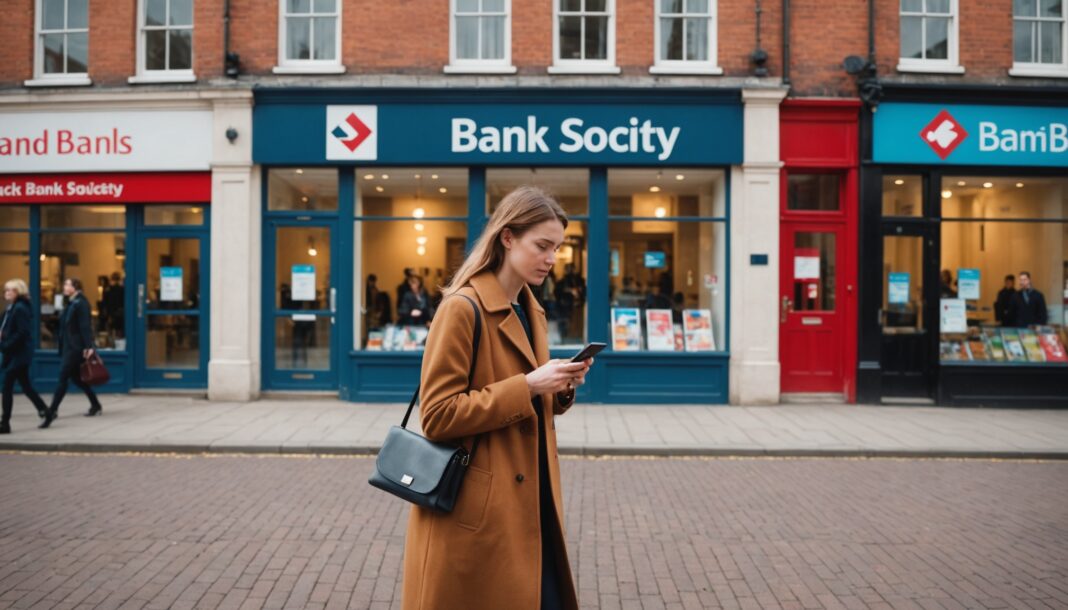
More people are moving their money than at any point in the last three years. Between July and September 2026, 411,384 current accounts were switched through the Current Account Switch Service, the industry-run system that every major UK bank and building society uses. That is the highest quarterly total since 2023, up roughly 42% on the previous three months and about 55% higher than the same quarter a year earlier. More than a million switches have now been recorded across 2026 as a whole.
The numbers matter because bank account switching is one of the few pieces of household admin that pays you to do it. Several banks are dangling three-figure sums at new customers, and the mechanics of moving have become far less frightening than most people assume. But the offers come with conditions, and the cash is not always the most valuable part of the deal.
What the latest figures actually show
The quarterly data points to a clear split between winners and losers. Nationwide came out on top with net gains of 23,636 accounts — more accounts arriving than leaving — while Lloyds Bank recorded net losses of 7,175. Several other familiar high-street names also saw more customers walk out than walk in. The pattern is the same one that shows up in energy, insurance and mobile markets: a minority of people shop around aggressively, and the rest subsidise them by staying put with the same provider year after year.
One figure is worth holding on to: across the quarter, 99% of switches completed inside the seven-working-day guarantee. The fear of a direct debit going missing is, statistically, close to unfounded.
Why so many people are moving
Cash incentives are doing most of the work. At the time of writing, in November 2026, the headline offers run up to around £300, with Barclays at the top of the table, Santander having relaunched a £240 bonus and HSBC UK offering £220. These deals appear and vanish at short notice, so treat any figure you read — including these — as a starting point to check rather than a promise.
Rising awareness plays a part too. Household budgets have been squeezed for long enough that people now treat account charges and avoidable fees as money worth reclaiming rather than background noise.
What a £220 bonus really asks of you
Almost every offer is conditional, and the conditions are where people trip up. HSBC's £220, for example, requires a full switch through the Current Account Switch Service, at least two active direct debits, a deposit of £2,000 and £500 of debit card spending within 60 days. Other banks set similar hurdles with different numbers.
Three things are worth checking before you click:
- It must be a full switch — simply opening an account and moving your salary across usually does not qualify.
- Direct debits must be live, not dormant. A lapsed gym membership will not count.
- Check whether you have claimed before. Most banks exclude customers who have taken a previous bonus from the same group, and banking groups own more brands than their names suggest.
How the seven-day guarantee works
A full switch through the service moves your direct debits, standing orders and incoming payments to the new account within seven working days on a date you choose. Payments still arriving at the old account are redirected for three years, and the Current Account Switch Guarantee commits your new bank to refunding any interest or charges you lose if something goes wrong. Your old account is closed as part of the process.
Savings rates are moving as well
The competition is not confined to current accounts. Nationwide has said it will raise rates on most variable savings accounts from 1 December, with some paying 3.55%. Its Reward Single Access ISA is due to go from 2.80% to 3.05%, and the Reward Saver and Reward ISA from 2.75% to 3%. None of that has taken effect yet — the new rates apply from December, not now.
That gap between an announcement and an actual change is worth watching generally. A rate advertised today may belong to next month, and a bonus advertised today may be gone by then.
A short check-list before you move
- Work out what you pay now: packaged account fees, overdraft interest, non-sterling transaction charges.
- Compare the ongoing offer, not just the bonus — a one-off £220 is poor compensation for a worse overdraft rate if you use one.
- Note any bills you pay by card rather than direct debit; those do not move automatically.
- Remember that the logic here is the same as spreading a bill over twelve months — the convenient default is rarely the cheapest one.
- If your spending is already tight, a bonus is a bandage rather than a fix; the underlying warning signs in a monthly budget deserve attention first.
Frequently asked questions
Will switching bank accounts damage my credit score?
Opening a new current account involves a credit check, which leaves a footprint, and closing a long-held account can shorten your recorded history. The effect is usually small and temporary. If you are about to apply for a mortgage, it is sensible to wait until that is settled.
Can I switch if I have an overdraft?
Often yes, but it is not guaranteed. The new bank decides whether to offer you a matching overdraft, and if it declines you may need to clear the balance first. Ask before you start rather than after.
How long do I have to wait for the bonus?
Typically between a few weeks and three months after you meet all the conditions, depending on the bank. The exact deadline for each requirement — direct debits, deposits, card spending — is set out in the offer terms, and missing one by a day is usually enough to lose the payment.
Sources
- Brit Brief — Current account switches jump 55% to highest quarterly total since 2023
- Which? — Best bank account switching deals
- MoneySavingExpert — Best current account offers
Profil de l'auteur

Derniers articles
 Education, Training & Employment18 November 2026Unfair Dismissal: Why the Two-Year Wait Is About to Become Six Months
- Bank, Finance & Credit9 November 2026Bank account switching hits a three-year high: what the cash offers really ask of you
- Mutual & Insurance28 October 2026Paying insurance monthly: what the hidden interest really costs
- Health & Medicine19 October 2026NHS winter jabs: who is eligible for the flu, COVID and RSV vaccines




Trending now on legal streaming
FilmThe Hunger Games: The Ballad of Songbirds & Snakes
SeriesThe Diplomat
This article was written with the help of artificial intelligence. Editorial policy
Table of Contents