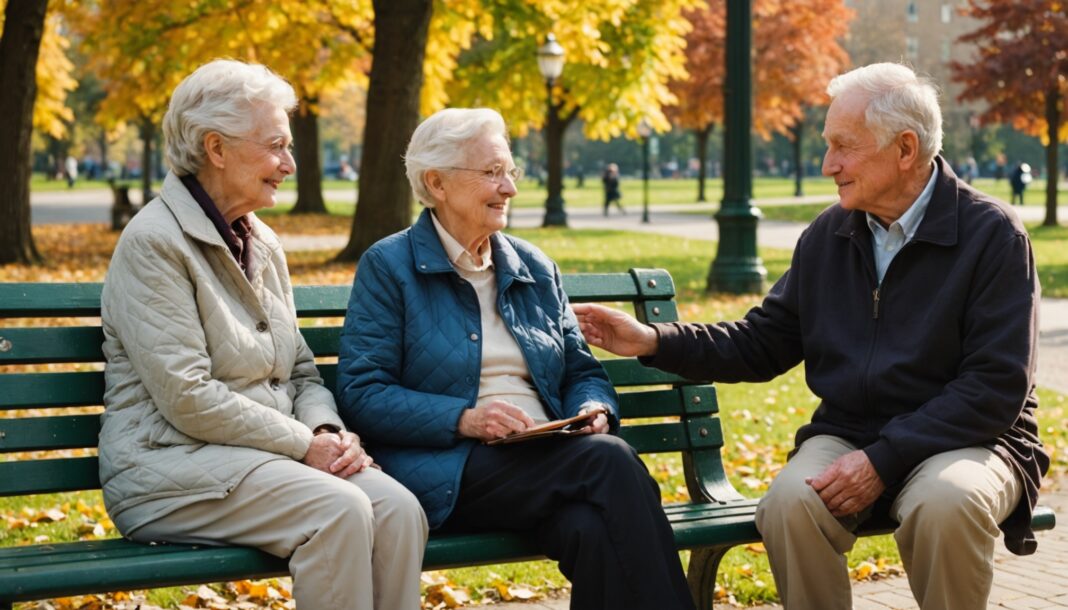
Feeling lonely is not just a passing malaise: it is now identified as a genuine risk factor for dementia, on the same level as hypertension or lack of physical activity. Several recent scientific studies, conducted independently of one another, converge on the same finding: social isolation permanently damages the brain, particularly after the age of 50.
A risk confirmed by several converging studies
Numbers vary according to protocols and populations followed, but all point in the same direction. A study that followed about 12,000 people over ten years, conducted by American researchers, associated chronic loneliness with a 40% increase in the risk of dementia. Other studies published more recently report an increase of up to 60% in risk among people with a poor or strained social network. Conversely, older people who feel genuinely supported by those around them would have a dementia risk more than halved compared with those who say they are dissatisfied with their relationships.
This link would be explained in particular by the cognitive stimulation provided by social interactions: conversing, adapting to an interlocutor, sharing an activity continuously engage working memory and executive functions. Their prolonged absence would deprive the brain of a daily workout essential to its maintenance.
Isolation and loneliness: two concepts to distinguish
Researchers emphasize an important nuance: social isolation (the objective fact of seeing few people) and felt loneliness (the subjective feeling of being alone) do not have exactly the same impact. A person with few social contacts but satisfied with their relationships would generally fare better than a person who is well surrounded but who feels deeply lonely. It is the perceived quality of social connection, more than its mere quantity, that seems decisive for brain health.
The decline related to isolation would not be exclusive to old age either: several geriatric studies place its starting point as early as the fifties, well before retirement. A finding that invites paying attention early to the quality of one's social network rather than waiting for the first signs of frailty. To explore the issues related to aging further, our section Retirement & Seniors offers other practical benchmarks, as does our section Health & Medicine for preventive medical follow-up.
Maintaining your social network: simple, concrete actions
Experts recommend several measures accessible to everyone, without waiting for symptoms to appear :
- Maintain regular group activities (community, sports, cultural) rather than occasional ones ;
- Cultivate intergenerational ties, which often offer a different stimulation than exchanges between peers ;
- Don't neglect neighbors and local shopkeepers, who make up an informal but real sociability network ;
- Seek support from local associations in cases of marked isolation, rather than letting the situation take hold.
For more everyday advice on well-being and relationships, find our section Practical Life & Society.
Frequently asked questions
Does social isolation really increase the risk of dementia?
Yes: several independent studies, conducted on cohorts of several thousand people followed over long periods, establish a statistical link between prolonged social isolation and an increased risk of dementia, with estimates ranging from 30% to 60% depending on the protocols.
At what age does this risk become significant?
Geriatric researchers place the start of this decline as early as age 50, well before the first clinical symptoms, which argues for early prevention.
Isolation and loneliness, is it the same thing?
No. Social isolation refers to a reduced number of contacts, whereas loneliness is the subjective feeling of being alone. A person with few social contacts but satisfied with their ties often fares better than a person who is well surrounded but who feels lonely.
Sources
The Conversation — Isolation increases the risk of dementia in older adults
REISO — Social isolation increases the risk of dementia
Petits Frères des Pauvres — Social isolation seriously harms health
Profil de l'auteur
Derniers articles
 Psychology13 August 2026Social isolation : why it really increases the risk of dementia
- Development, Digital Marketing & SEO12 August 2026NIS2 and loi Résilience : what awaits web agencies and digital service providers
- Weddings & Special Occasions11 August 2026Wedding cancellation insurance: the protection most couples neglect
- Development, Digital Marketing & SEO10 August 2026Advertising on ChatGPT : what's being prepared for French advertisers




This article was written with the help of artificial intelligence. Editorial policy
Table of Contents