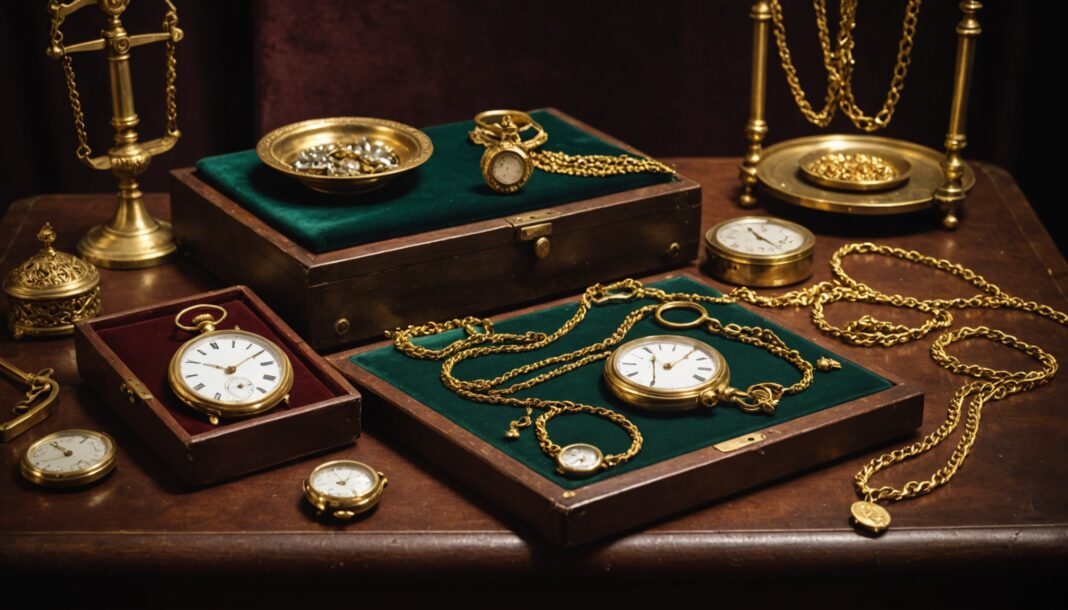
Between November 22 and 26, 2026, several auction houses are reviving the market for antique jewelry and watches: a watch auction of nearly 150 pieces organized by Continental Enchères at the Intercontinental in Bordeaux, followed by two jewelry and watch auctions in Joué-lès-Tours and Nantes. For anyone who inherits an old wedding ring, a grandfather's watch, or a necklace that no longer gets worn, this calendar brings a concrete question back to the table: should you go through an auction house, a jeweler, or a simple gold buyback by weight?
Three Channels, Three Pricing Logics
An antique piece of jewelry doesn't have a single value: it has several, depending on who's appraising it. A gold buyback by weight only pays for the metal, at the day's market rate and according to its fineness (8, 14, 18, or 24 karat). A jeweler specializing in vintage jewelry, on the other hand, can recognize the value of fine craftsmanship or a stone, beyond the simple weight of the material. An auction house, finally, is the only channel where rarity and a maker's signature can drive the price well above the gold rate — though buyer's fees are added on top, generally between 20 and 30 percent of the hammer price, charged to the buyer rather than the seller.
How to Decide Before Selling
Industry professionals recommend three steps, no matter which channel you choose. First, look for a maker's hallmark or a manufacturer's stamp: this is often what sets a collectible piece apart from an ordinary one that's worth only its raw material. Second, never settle for a single estimate: a gold buyer, a jeweler, and an auctioneer don't have the same clientele or the same margins, and the gap between offers can be considerable. Finally, for an antique piece with aesthetic or historical appeal, it's best to get an expert opinion before any buyback by weight: a melted-down piece of jewelry can't be recovered.
For watches, the question plays out differently. An antique mechanical watch, even without a major brand name, often retains a usable and collectible value higher than that of its precious-metal case — which is precisely the point of the specialized watch auctions currently multiplying across France's regions, like the one in Bordeaux. These auctions draw a crowd of collectors willing to pay for a movement or a history, not just for gold or steel.
Context: A Market That Remains Dynamic
This wave of regional auctions comes as the French jewelry and watch market remains sensitive to fluctuations in the price of gold, a factor pushing more individuals to dig jewelry boxes and watches out of their drawers. Auction houses are seeing a wider flow of items than usual, which partly explains the packed calendar of late November. For anyone who would rather sell without waiting for an auction date, specialized jewelers remain an immediate option, offering cash on the spot but a less favorable margin than auctions for sought-after pieces.
The underlying principle is similar to what applies to other valuable goods: as with vehicle auctions, the final price depends as much on the rarity of the item as on the number of interested buyers on the day of the sale — a factor that no buyback by weight can ever offer.
Frequently Asked Questions
Is an Auction Always More Profitable Than a Gold Buyback?
No. For an ordinary piece of jewelry with no maker's signature or notable stone, a buyback by weight often remains the simplest and fastest solution, since auction fees can reduce the financial benefit of putting a low-value item up for sale.
How Do You Know if a Piece of Jewelry Deserves an Appraisal Before Selling?
The presence of a maker's hallmark, a manufacturer's stamp, or a quality stone is a first clue. If in doubt, an expert in antique jewelry or an auctioneer can give an opinion before any decision to sell.
Are Auction Fees Paid by the Seller or the Buyer?
So-called “buyer's fees,” generally 20 to 30 percent of the hammer price, are charged to the buyer. The seller separately pays a seller's commission, which varies by auction house and should be asked about before handing over a piece of jewelry.
Sources
Interencheres — calendar of jewelry and watch auctions
Gazette Drouot — auction calendar
Carnet de Tendances — antique gold buyback, offers to avoid
Profil de l'auteur
Derniers articles
 Weddings & Special Occasions19 November 2026Marriage in France 2026: Civil Ceremonies Now Rival Religious Ones
- Agency, Webmarketing & SEO19 November 2026Search Console API: Three New Features for SEO Agencies
- DIY & Troubleshooting18 November 2026Dexter Sander Recall 2026: What Leroy Merlin and Weldom Customers Need to Know Before Using It
- Restaurants, Drinks & Food18 November 2026Flexitarianism in France: Less Meat on the Plate, but Not for the Reasons You'd Think




Trending now on legal streaming
FilmGodzilla Minus One
SeriesThe Lord of the Rings: The Rings of Power
This article was written with the help of artificial intelligence. Editorial policy
Table of Contents