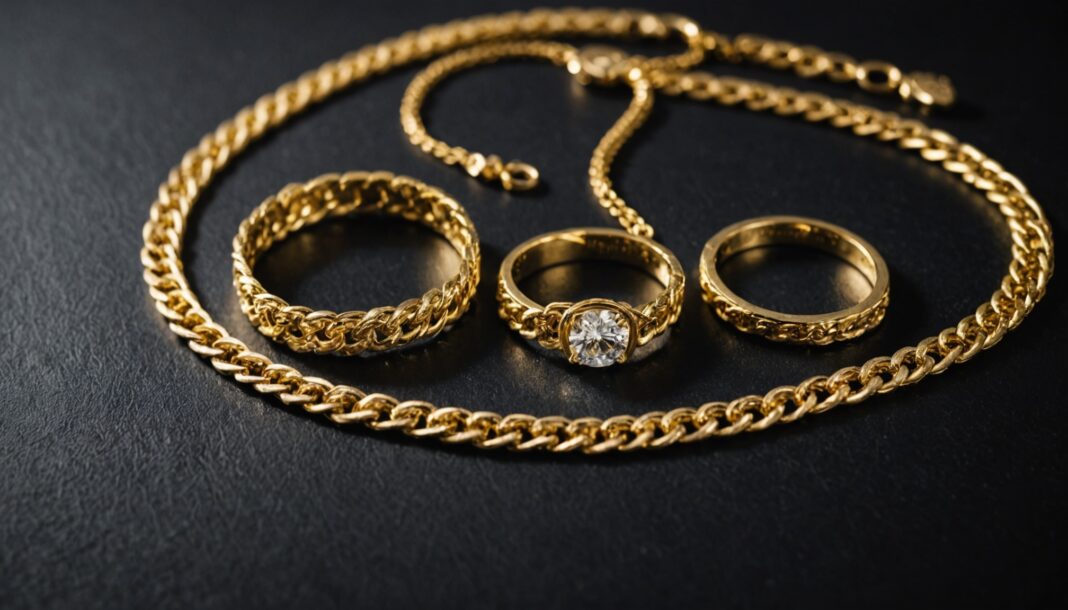
The gold price has experienced dramatic swings since the start of 2026: an all-time high at the end of January, followed by a drop of more than 25% in a few weeks. For private individuals who own gold jewelry inherited, forgotten in a drawer or received as a gift, this yo-yo is not just a stock market statistic: it concretely changes what they can get from reselling it, and what they will pay when buying. Our section Jewelry, Watch & Accessory takes stock.
A market under strain
At the end of January 2026, the gram of pure gold reached a historic high, around €150 at the peak, driven by global economic uncertainty, geopolitical tensions and massive purchases by central banks, which continue to bolster their yellow metal reserves. By mid-2026, it is trading rather around €114, a clear decline but a level that remains very high over the long term. A striking contrast with the start of the year, when the price had, by contrast, hit a low point before taking off sharply.
Selling your jewelry: what has really changed
For an individual considering reselling gold jewelry, the starting point is never the pure gold price shown online: the vast majority of jewelry is 18-carat gold, i.e. only 75% pure metal. With pure gold around €114/g, 18-carat gold is therefore bought back at roughly €75/g, before the margin applied by the professional. Three habits limit losses: have the jewelry weighed separately from any stones (which have no value by gold weight), compare at least three places — jeweler, specialized counter, online platform — and check for the presence of the assay mark, which certifies the actual carat of the piece.
Buying or having repairs done: the other side of the coin
On the buying side, the same surge mechanically increases the price of new jewelry, particularly heavier pieces like wedding bands or thick chains. Several jewelers now offer lighter mountings or mixed alloys to keep the prices shown in-store down. For a gift or a pleasure purchase, comparing the weight in grams indicated on the tag — not just the design — remains the most reliable reflex to avoid budgetary surprises at the checkout.
Good to know before getting started
- Carats: 24 carats = pure gold; 18 carats = 75% gold; 14 carats = 58.5% gold.
- Discount: professionals apply a margin to the buyback price, most often between 10 and 20%.
- Volatility: the same piece of jewelry can be worth noticeably more or less from one week to the next depending on the markets.
- Unlike gold, a regulated savings product like the Livret A remains sheltered from this volatility — see our section Banking, Finance & Credit.
To choose a reliable place, our selection of the best jewelry boutiques remains a good starting point, as does comparing several quotes before any sale.
Frequently asked questions
Does the price shown online correspond to the buyback price?
No: the “spot” price concerns pure gold, at 24 carats. An 18-carat piece is bought back at about three quarters of that price, before the professional's margin is applied.
Should you sell now, after the recent drop in the price?
No one can predict the short-term evolution of the gold price. The only truly reliable benchmark remains the current level compared with your own purchase or inheritance value, not a market forecast.
How can you tell if a piece of jewelry is genuinely gold?
The official hallmark stamped on the piece (eagle's head, scallop shell…) certifies its fineness. If in doubt, a weighing and a test carried out by a certified professional will clear up any ambiguity.
Sources
Le Guide du Bijou — EPO Gold — BDOR
Profil de l'auteur
Derniers articles
 Retirement & Senior Living7 October 2026Landline switch-off: what it will mean for homes that still rely on the copper network
- Ecology & Environment25 September 2026Household recycling has stalled at 44.5%: what is changing in your bins
- Dog, Cat & Animals30 August 2026Dogs and cats : Europe imposes new welfare and traceability rules
- Retirement & Senior Living29 August 2026Active seniors : the new face of retirement in France




This article was written with the help of artificial intelligence. Editorial policy
Table of Contents