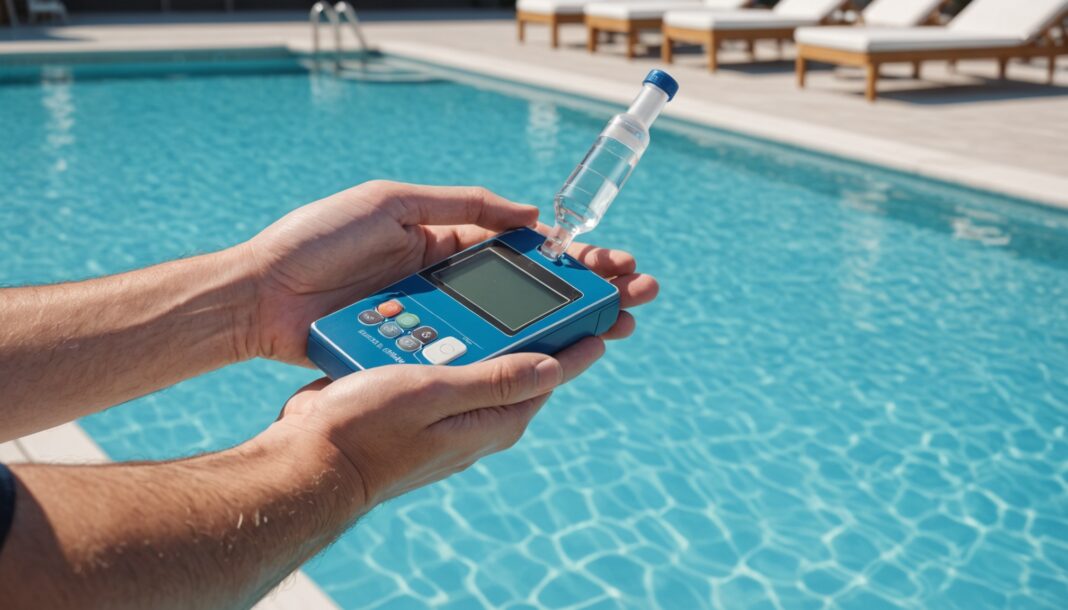
Starting January 1, 2027, the oversight of water quality in shared swimming pools changes under a new regime. A decree and an order published in 2026 transfer this responsibility—and its cost—to the operator of each pool: hotels, campgrounds, residential complexes, condominiums, or municipal pools. But contrary to some shortcuts circulating elsewhere, this reform does not apply to private pools owned by individuals.
Who Is Actually Affected?
The text targets pools classified as “for collective use”: pools at hotels, campgrounds, and tourist residences where multiple guests use the same pool in succession, condominium pools, and municipal facilities. Explicitly excluded are pools at single-family homes, as well as pools at vacation rentals when the tenant has exclusive use of them during their stay. This is an important distinction, since several outlets had implied that owners of private pools would be subject to this new financial burden.
What Actually Changes for Operators
Until now, organizing the required water sampling largely fell to the regional health agencies. From now on, it is the “person responsible for the pool”—the facility's manager—who must:
- Organize the sampling themselves and have it analyzed by an accredited laboratory, at their own expense;
- Follow a testing frequency that varies depending on the type of pool, ranging from an annual analysis to two checks per quarter;
- Have chlorine, pH, temperature, and water turbidity measured daily to weekly;
- Keep an up-to-date health and safety logbook and report any non-compliance to health authorities.
Pools are sorted into several categories based on their expected attendance, which determines how intensive the required monitoring is for each one.
A Timeline Already Set
The shift is scheduled for January 1, 2027, in mainland France, with an extended deadline until 2030 for overseas territories. Until then, managers of pools at campgrounds and hotels still have a few months to sign a contract with an accredited laboratory and set up their health and safety logbook.
Consequences for Residents and Vacationers
By shifting the cost of testing onto operators, the reform could have ripple effects on the fees paid by condominiums with a pool, or on stay rates at certain tourist establishments. Conversely, municipal pools should remain subject to the same budget trade-offs as other public facilities. For the general public, then, the main change remains indirect: more visible health rigor, with no new steps required for anyone who owns a pool at home.
Frequently Asked Questions
Does this reform affect my private, individually owned pool?
No. The text explicitly excludes pools at single-family homes, as well as pools at vacation rentals used exclusively by the tenant. Only collective facilities (hotels, campgrounds, condominiums, municipal pools) are affected.
Who will pay for the new water tests?
The cost of sampling and analysis now falls to the pool's operator, rather than the regional health agency. Depending on the situation, this cost may be passed on through condominium fees or stay rates.
When do these new rules take effect?
The reform takes effect on January 1, 2027, in mainland France. Overseas territories have an extended deadline, until 2030, to comply.
Sources
- Légifrance — Order of June 23, 2026, on the monitoring of pool water
- ARS Île-de-France — The Pool Manager's Role in Addressing Health Risks
- Aqua Proxima — Public Pools: End of ARS Sampling, New Obligations for Operators
Profil de l'auteur
Derniers articles
 Agency, Webmarketing & SEO19 November 2026Search Console API: Three New Features for SEO Agencies
- DIY & Troubleshooting18 November 2026Dexter Sander Recall 2026: What Leroy Merlin and Weldom Customers Need to Know Before Using It
- Restaurants, Drinks & Food18 November 2026Flexitarianism in France: Less Meat on the Plate, but Not for the Reasons You'd Think
- Home Appliances & Equipment18 November 2026Washing Machine, Oven, Dishwasher: Which Brand to Choose for Appliances That Last?




Trending now on legal streaming
FilmThe Hunger Games
SeriesGhosts
This article was written with the help of artificial intelligence. Editorial policy
Table of Contents