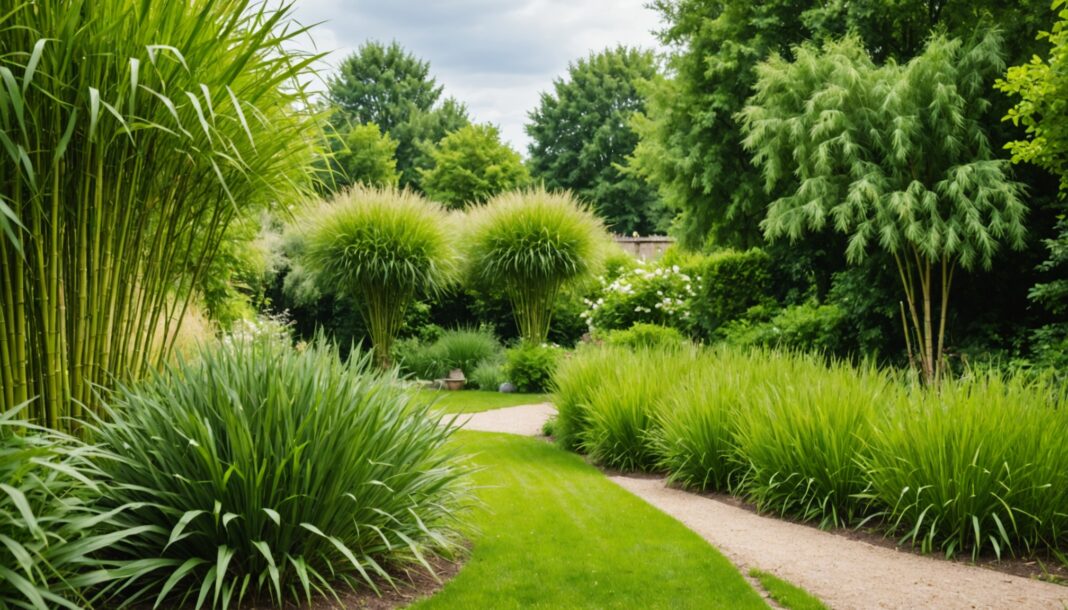
Mowing, propagating, or even simply letting certain garden plants grow can now cost you dearly. The invasive plants banned from gardens are listed on an official roster strengthened by a European regulation that took effect in 2026, and French law provides for penalties that go well beyond a simple warning.
A List That Grows Longer Every Year
French regulations are based on the order of February 14, 2018, regularly updated to incorporate the list of invasive alien species of concern to the European Union. Eight new plant species have joined this list since August 7, 2025, under European implementing regulation 2025/1422: among them, the black wattle, the paper mulberry, and the Cape ragwort. In total, 43 plants are now regulated in France, with a ban on their purchase, sale, transport, and use.
Among the species most common in private gardens are pampas grass, Japanese knotweed, water hyacinth, and butterfly bush — plants often planted without their owners knowing they are now prohibited.
Penalties That Can Be Severe
Article L. 415-3 of the French Environmental Code punishes the introduction, transport, sale, or purchase of a specimen of these species with three years in prison and a fine of 150,000 euros. This level of punishment is aimed primarily at commercial supply chains and sellers, but in theory it also applies to any private individual who deliberately spreads one of these plants. This severity echoes other recent cases in which the French government has taken a tougher stance, as noted in our article on wolf population quotas and protected species management in France.
What to Do If You Already Have These Plants at Home
The law does not require homeowners to tear out an entire garden planted before the regulation took effect. The principle adopted is one of non-spread: it remains illegal to propagate, give away, sell, or replant these species, even if they are already present on a property. In practical terms, gardeners are encouraged to cut flowers before they go to seed, keep an eye on root suckers, and dispose of green waste at a waste collection center in sealed bags rather than in the compost, to avoid any unintentional dispersal.
This vigilance around water and outdoor practices is not an isolated case: it echoes restrictions already in place on garden watering and pool filling during droughts, which likewise impose specific rules on garden owners.
How to Check Whether a Plant in Your Garden Is Affected
The French Office for Biodiversity (OFB) maintains an up-to-date, publicly available list of banned invasive alien species. If you're unsure about a plant already growing on your property, it's better to compare its Latin name against this list rather than rely solely on the common name, which can be misleading depending on the region. Garden centers and nurseries, for their part, have been required to stop offering these species for sale since the various orders took effect.
- 43 plants currently regulated and banned in France
- 8 new species added since August 7, 2025 (EU regulation 2025/1422)
- Fines of up to €150,000 and 3 years in prison for violations (Art. L. 415-3 of the Environmental Code)
- A non-spread principle applies to plants already in the ground
For homeowners also considering outdoor renovations, staying alert to planted species usefully complements the already familiar precautions around private pool safety and taxation.
Frequently Asked Questions
What are the most common plants now banned?
Pampas grass, Japanese knotweed, water hyacinth, and butterfly bush are among the most widespread species in French gardens that are now regulated.
Do I have to remove these plants if they're already in my garden?
No, the law does not require the systematic removal of plantings that predate the ban, but it does require responsible management to prevent any spread, whether intentional or accidental.
What's the risk if I sell or give away a banned plant?
Article L. 415-3 of the Environmental Code provides for fines of up to €150,000 and three years in prison for selling, giving away, or transporting a specimen of a regulated invasive alien species.
Sources
French Office for Biodiversity (OFB) — French Ministry of Ecological Transition — Au Jardin.info
Profil de l'auteur
Derniers articles
 DIY & Troubleshooting18 November 2026Dexter Sander Recall 2026: What Leroy Merlin and Weldom Customers Need to Know Before Using It
- Restaurants, Drinks & Food18 November 2026Flexitarianism in France: Less Meat on the Plate, but Not for the Reasons You'd Think
- Home Appliances & Equipment18 November 2026Washing Machine, Oven, Dishwasher: Which Brand to Choose for Appliances That Last?
- Nutrition, Diet & Weight Loss18 November 2026Pancreatic Fat: The Diet That May Help Reduce It




Trending now on legal streaming
FilmThe Hunger Games
SeriesThe Lord of the Rings: The Rings of Power
This article was written with the help of artificial intelligence. Editorial policy
Table of Contents