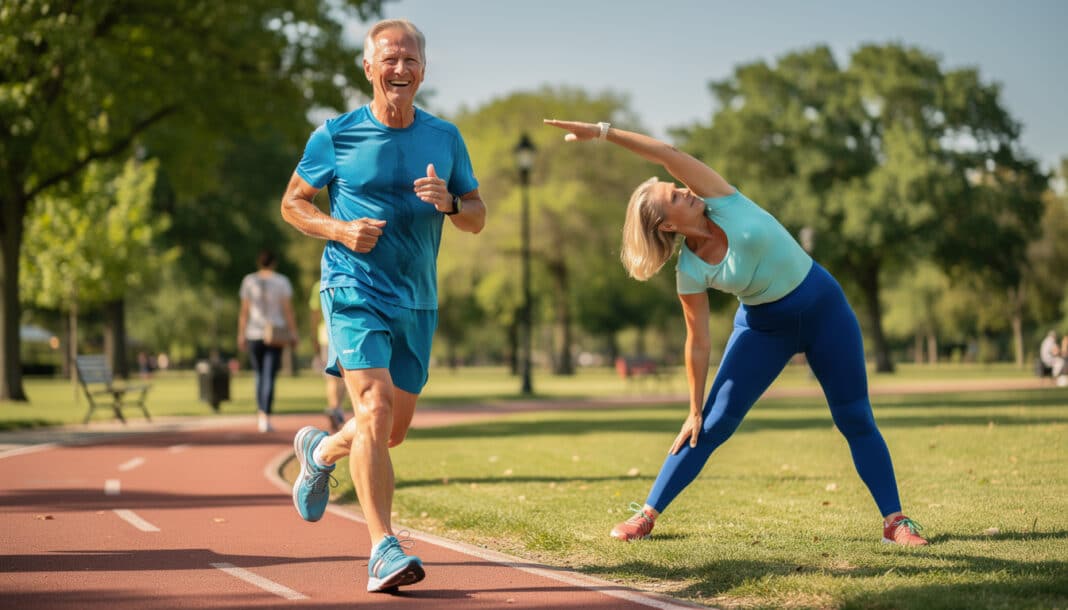
After 50, moving regularly becomes one of the keys to preserving your health, your independence and above all that sense of vitality that makes a difference day to day. Between the fear of getting injured, the doubt about which activity to choose and the difficulty of finding a sustainable rhythm, many hesitate to take the plunge. Yet studies show that a few simple adjustments — brisk walking, swimming, yoga, muscle strengthening — are enough to transform not only the body but also the mind. This transformation is not about athletic performance, but rather a form of reconnection with oneself, like rebinding the pages of an old book with patience and respect for the material.
Key points of this guide: 💪 Start with 3 sessions of 20 to 45 minutes per week • 🏊 Favor joint-friendly activities (swimming, yoga, walking) • 💓 Include cardiovascular work at 60-80% of your maximum heart rate • 🦵 Combine muscle strengthening with balance work • 📋 Consult a doctor before any intensive restart • 🎯 Set realistic goals to maintain motivation over the long term
🏃 The real reason to move after 50: far more than a health issue
Resuming a sports routine after 50 is accepting a kind, deliberate slowness — the kind that allows the body to rediscover itself without violence, without guilt. The benefits are multiple, but rarely presented in an integrated way. Beyond preventing cardiovascular disease, diabetes or hypertension, moving is about giving meaning back to your daily autonomy.
The story of Sophie, 54, illustrates this well. Before she started again, she felt a gradual decline: stairs had become difficult, her back hurt, chronic fatigue. Three months after beginning regular walks combined with gentle strengthening, she no longer spoke of “getting back into sport,” but of “regaining her freedom of movement.” It's that nuance that changes everything — shifting from obligation to the feeling of freedom regained.
Physical activity also acts as a mental filter. 🧠 Working on endurance improves cerebral perfusion and reduces brain inflammation, which translates into better concentration, clearer memory and more stable mood. Social ties are strengthened as well: a yoga class, a group swimming session, a walk with friends — these moments become opportunities for sharing, well beyond the simple physical exercise.
🎯 Getting back to sport: the rhythm that really works
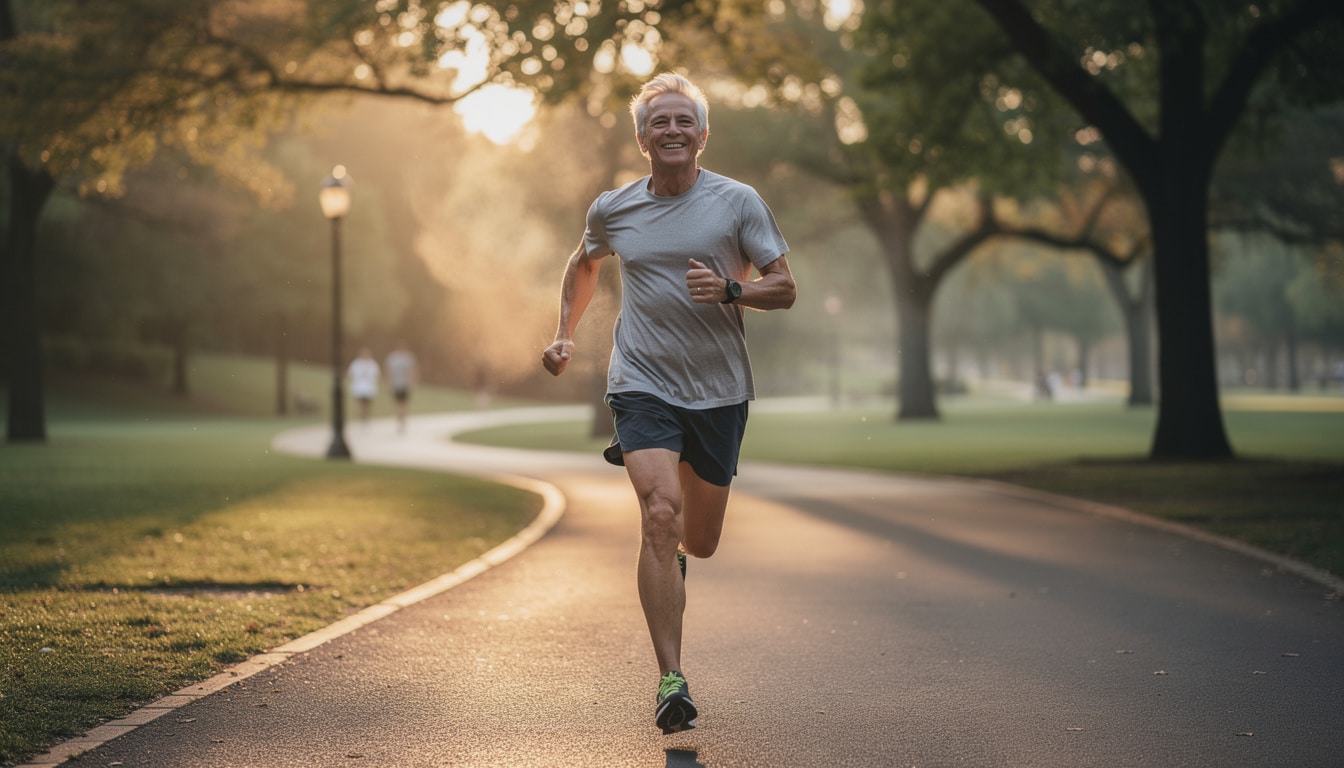
The question of rhythm is often where good intentions founder. You hear “resume progressively,” but what does that mean in concrete terms? For those starting from zero, aiming for 3 sessions per week of 20 to 45 minutes represents an optimal balance — enough to create change, not so much as to bore or injure.
Sophie followed exactly this path: first week, two 20-minute walks. Second week, she added a 15-minute strengthening session at home. Instead of doing everything at once, she let her body adapt gradually, creating a sustainable routine. 💪 What matters is not the intensity of day one, but consistency over three months. Real changes are seen after eight to twelve weeks of regularity.
For those returning after a long break, starting with the most natural activities — walking more, taking the stairs, doing a few simple movements at home — prepares the ground without feeling like a “fitness reboot program.” It's the art of slipping activity into daily life like slipping a bookmark into a book, discreetly but effectively.
📅 A practical tip: noting your sessions in a notebook or on your phone is not trivial. Seeing your progress written down reminds you that every effort counts, that routine is taking hold, that the body is responding. Sophie discovered that this simple visual trace strengthened her motivation far more than an ambitious challenge.
💓 Cardio after 50: why it's your best ally
Cardiovascular work is not reserved for young athletes. After 50, maintaining regular aerobic activity significantly reduces the risks of cardiovascular disease, hypertension and diabetes. But there's more: a recent study shows that three hours of aerobic exercise per week are enough to improve cerebral perfusion and reduce brain inflammation. In simple terms, your heart speeding up is also your brain waking up.
The ideal intensity lies between 60 and 80% of your maximum heart rate. 📊 For most people, this corresponds to a brisk walk where you can talk but not sing, regular swimming, or cycling on flat terrain. The advantage of this zone: it improves heart health without overloading the joints.
Nordic walking, for example, combines this cardiovascular intensity with upper body engagement thanks to the poles. Sophie discovered it by chance on a walk, and she quickly noticed that her breath improved without feeling the crushing fatigue of the early weeks. It's a gentle, almost imperceptible progression that opens doors.
The crucial point? Consistency trumps intensity. Better 20 minutes of walking every day than an exhausting session once a week. Your cardiovascular system works like weaving a fabric: thread by thread, day by day, you create something strong.
🏊 Activities to favor: building a balance between endurance, strength and stability
Resuming physical activity is not a matter of a single choice, but of a harmonious trio. After 50, the ideal goal combines three dimensions: preserving the heart, maintaining muscle mass and preventing falls. This approach avoids focusing on a single activity and offers more comprehensive protection.
Sophie gradually implemented this winning trio: swimming twice a week, gentle strengthening sessions twice a week, and a weekly tai chi class. This combination allowed her to never get bored while covering all the body's needs. Swimming freed her from joint pain, strengthening gave her the stability she had lost, and tai chi soothed her mind while improving her balance.
🎯 Why this formula works: each activity engages different systems without overloading a single joint group. The body doesn't wear out; it regenerates.
💪 Muscle strengthening: the often-forgotten key to autonomy
Muscle loss is the shadow that lengthens after 50. Each year, we lose between 3 and 8% of our muscle mass if nothing is done. It's not just a matter of appearance — it's about the ability to climb stairs without breathlessness, carry groceries without pain, get up from the couch without momentum.
Falls also represent a major risk. According to health data, more than 130,000 hospitalizations and 10,000 annual deaths are linked to falls among older people. A simple regular strengthening exercise drastically reduces this risk. 🦵 It's not about becoming muscular, but about maintaining bone density and the strength necessary for everyday tasks.
To start, Sophie began with bodyweight exercises: wall squats (2 sets of 10), heel raises (2 sets of 15), modified plank on the knees (3 times 20-30 seconds for core work). No equipment was necessary. After three weeks, she added light weights — 1 to 3 kg — always under professional advice. It's this slow progression that prevents injuries.
📋 An important reminder: consulting a physiotherapist or a fitness coach at the start allows you to check postures and avoid accumulating mistakes. Better a short, well-executed session than a long, shaky routine.
⚖️ Balance: that invisible skill that changes everything
Improving your balance is giving yourself a second chance against falls — and therefore a better long-term quality of life. Tai chi is an excellent example, as are certain forms of dance, yoga or even very simple proprioception exercises. 🧘 Two minutes of daily balance exercises are enough to strengthen stability in less than a month.
Sophie integrated this practice on waking: stand on one leg for 30 seconds, then the other, repeated three times. She also added heel-to-toe walks and slow torso rotations. These almost imperceptible gestures transformed her confidence when walking, particularly on uneven surfaces or outdoors.
Proprioception — the body's ability to sense itself in space — improves with practice. It's like developing a new sensitivity, a better internal awareness of your grounding on the floor. A physiotherapist can offer a personalized plan if frailty begins to appear, and that's where early intervention makes a real difference.
🧘 Flexibility and breathing: rediscover your body through gentleness
Yoga and swimming represent two entry points to reconnect with your own body. The first emphasizes conscious breathing and mobility, the second offers freedom of movement without impact on the joints. Practiced regularly — at least twice a week — these two disciplines transform posture, relieve chronic tension and improve concentration.
Sophie discovered that her first yoga session made her notice how shallow her breathing was, how tense her shoulders were. After eight sessions, she had gained a better understanding of her body. Not for aesthetic reasons, but for a better inhabiting of oneself. Swimming, in parallel, gave her a feeling of lightness — every time she entered the water, it was as if the weight of the years lightened for a few moments.
💧 These activities also act on the nervous system: they reduce stress, promote sleep and stabilize mood. For those who experience joint pain limiting walking or running, swimming becomes an indispensable ally — it's the activity that says “yes, you can move, without pain”.
Consult specialized resources such as our tips for progressing safely in the long term to refine your approach according to your personal profile.
📋 Simple exercises to start without equipment
No need for a gym or sophisticated equipment. A few accessible exercises, practiced regularly, produce durable and visible results in a few weeks. Here is the basic routine Sophie adopted and was able to maintain without interruption:
🚶 Brisk walking: 20-30 minutes, three times a week, at a pace where you can talk but not sing. This is the cardiovascular foundation.
🦵 Wall squats: 2 sets of 10 repetitions. Back against the wall, slide down slowly until forming a 90-degree angle at the knees, then rise. This strengthens thighs and glutes without impact.
📈 Heel raises: 2 sets of 15. Standing, lift yourself slowly onto your toes. Perfect for calves and balance.
💪 Modified plank (on the knees): 3 times 20-30 seconds. Lie face down, elbows bent, knees on the ground. Maintain a straight line from head to knees. This core exercise stabilizes the trunk.
🧘 Dynamic stretches: 5 minutes after each effort. Arm rotations, torso bends, leg stretches. Mobility is preserved like tending a garden — with regularity and gentleness.
These exercises can be combined according to your schedule and adapted progressively. Better 15 regular minutes than an irregular hour. To discover more variations and specialized advice, explore comprehensive resources on getting back to sport at 50.
🏥 Essential precautions and medical follow-up
Before any intensive restart, a medical check-up is strongly recommended, especially in cases of cardiac, respiratory or spinal history. This check is not a bureaucratic complication — it's a safeguard. Your doctor can identify signals you ignored, guide your activity choices and adapt intensity recommendations.
Sophie first consulted before her restart. Her doctor approved her approach while advising her to avoid abrupt neck movements due to a previous cervical pain. This simple advice prevented weeks of setback.
✅ Key precautions to remember:
• Stop immediately in case of sharp pain or abnormal breathlessness. Pain is a signal, not a weakness.
• Always warm up 5-10 minutes before exercising.
• Hydrate regularly, especially when swimming where dehydration goes unnoticed.
• Recover actively: a full rest day every two or three days allows the body to regenerate.
• Note your sessions and sensations to identify patterns and adjust accordingly.
🎯 Motivation: the forgotten ingredient of sustainability
We often talk about training plans, diets, regularity — but rarely about what keeps a person going beyond the first three weeks. Motivation is the invisible soul of lasting change. For Sophie, what made the difference was setting realistic, tangible goals.
Instead of “I want to be fit,” she told herself: “In three weeks, I want to be able to climb the stairs without stopping.” Four weeks later: “I want to do a short hike at the weekend without pain.” Each small success reinforced the next commitment, creating a virtuous circle instead of a cycle of abandonment and guilt.
💭 Some motivation tactics that really work:
• Record your progress — a simple line in a notebook each week. Seeing the accumulation creates an obvious fact: you did 12 sessions this month, that's already huge.
• Vary activities — if Monday is swimming, Tuesday walking, Thursday yoga, you never get bored.
• Find a partner or a group — a friend for walking, a class for yoga. Social commitment doubles your chance of persistence.
• Celebrate small victories — each week completed deserves recognition, even modest.
🔑 The three golden rules for a lasting transformation
Move regularly 💪 — Even 20 minutes daily makes a measurable difference. Consistency builds the habit, and habit creates the result. It's not a question of fleeting motivation, but of real transformation.
Vary activities 🎨 — Alternating cardio, strength, flexibility and balance engages every dimension of the body. It also prevents monotony and overuse injuries linked to repetitive movement.
Adjust intensity to your condition 📊 — The goal is not to feel exhausted, but energized. A session where you finish slightly out of breath but able to speak: that's the right zone. Listen to your body, not yesterday's ambitions.
These three pillars, Sophie applied them without knowing their names. And after four months, she no longer spoke of “getting back into sport” — she spoke of her daily life, simply smoother, more lively, more hers.
Profil de l'auteur
Derniers articles
 Electricity, Gas & Energy14 September 2026Gaz et électricité : ce que la hausse des tarifs va changer sur votre facture
- Agency, Webmarketing & SEO12 September 2026Fusion Omnicom-IPG : ce que la plus grande agence de publicité au monde change pour les marques
- Retirement & Senior Living10 September 2026Carte Avantage Senior SNCF : comment voyager moins cher en train après 60 ans
- Tech & Multimedia8 September 2026Objets connectés : la fin de la 2G et le nouveau Data Act vont rebattre les cartes




Table of Contents