In brief
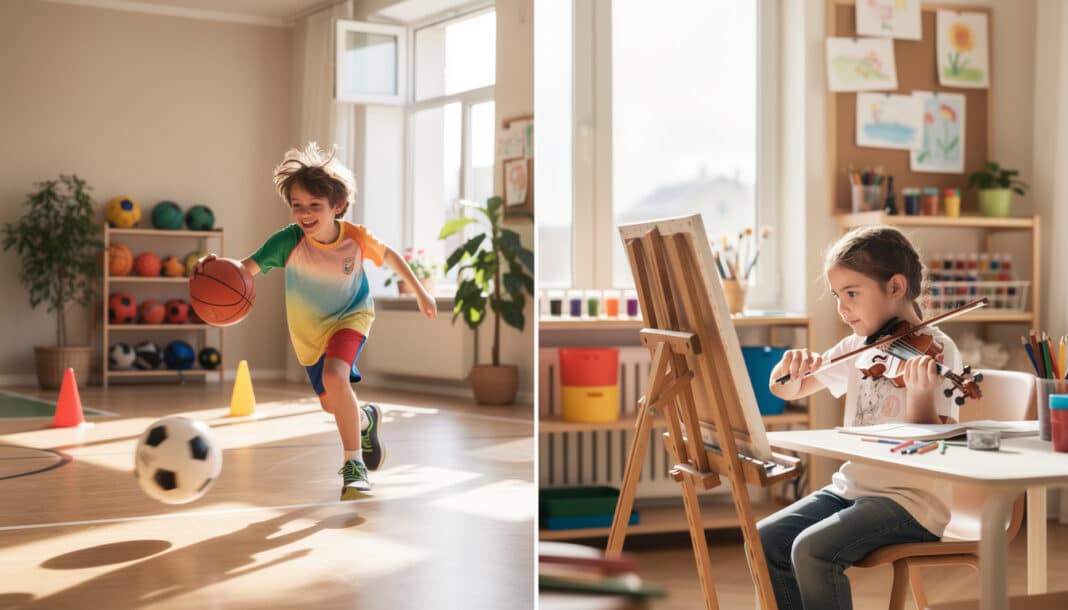
Choosing an activité périscolaire is not just a matter of scheduling. It's a window into the child's unique temperament. Some little ones find their balance in movement and competition, others in creation and contemplation. Between sport choice and art choice, the key lies in the patient observation of who the child truly is: their energies, their fears, their silences. This guide explores how to decode the child's temperament and offer them a sporting activity or an artistic activity that will become, not a chore, but a true space for flourishing and personal expression.
Read the child before choosing their extracurricular activity
Observing a child is like learning to read an ancient illuminated manuscript: it requires patience, presence and a certain tenderness. Before enrolling them in an activity, it's appropriate to listen to what they say without speaking, their gestures, their silent resistances. The child's adaptation to a discipline rarely depends on what parents believe is necessary, but on what the child carries within them.
Some children are natural dynamos: they need to channel overflowing energy, to feel the resistance of the physical world. Others operate in zones of interiority, by that ability to transform a blank sheet into a universe. Distinguishing these two temperaments is the first step in a successful child's adaptation. Paying attention to how the child plays alone, their favorite games, what silently captivates them—these are all precious clues.
The extraverted temperament and attraction to sport
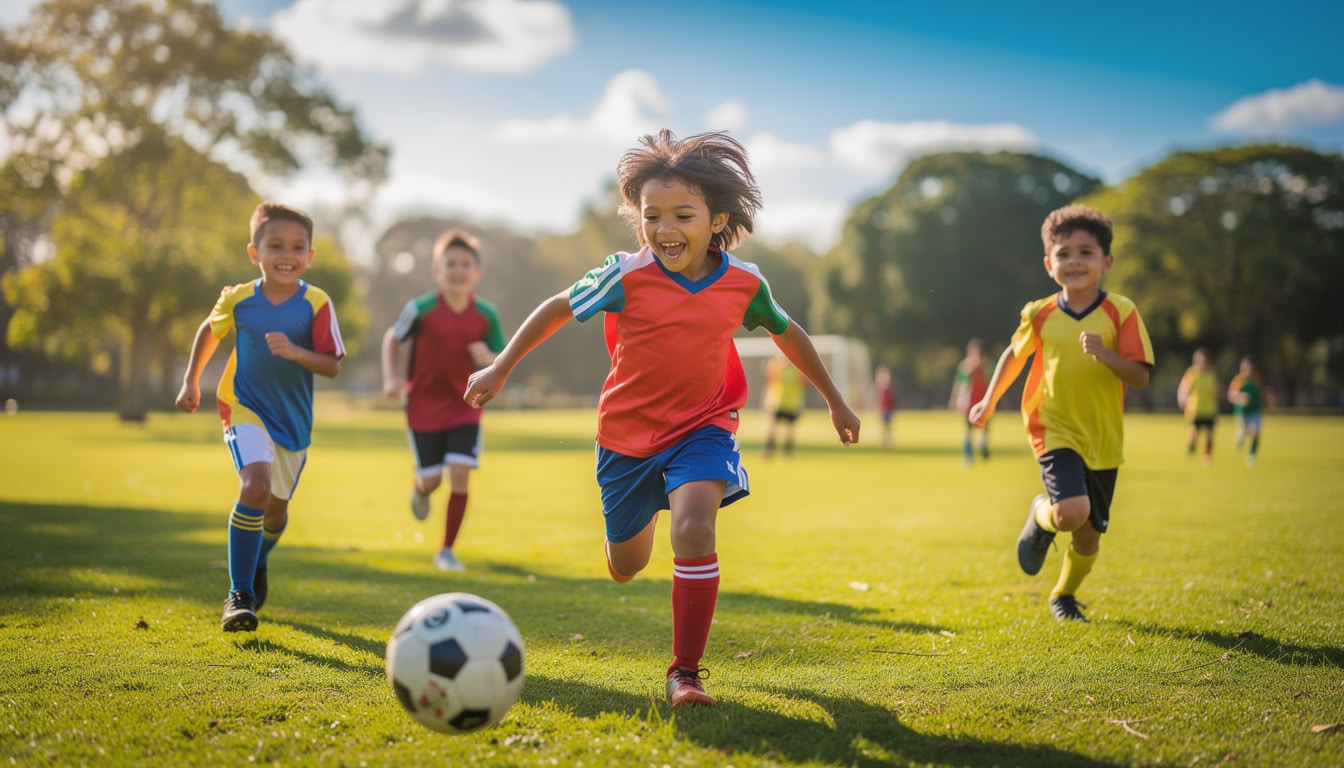
Children with an extraverted temperament often find fulfillment in a sport choice that values interaction, physical challenge and the sense of belonging to a group. A sporting activity for these children is never only a question of performance; it's a space to explore one's limits in the company of others.
Soccer, athletics, competitive swimming: these disciplines offer them a clear structure, tangible goals and that thrill of the challenge taken on together. These children need to see their progression, to feel that their efforts have measurable meaning. However, ensuring that the atmosphere remains healthy and caring remains essential—the pressure to win must never eclipse the joy of shared movement.
The introverted temperament and the path to the arts
Conversely, the introverted child is nourished by space, time to explore without an immediate witness, disciplines where personal expression takes precedence over competition. An art choice then becomes much more than an activity: it is a refuge in which to develop their singular language.
Painting, music, theatre in small workshops, contemporary dance where each person creates their own movement—these artistic activities invite the introverted child to tell themselves differently. These children do not need to be watched; they need to feel that they are listened to, that what they create is taken seriously. Personal expression gradually becomes their surest instrument of self-confidence.
Art as the language of silence
As in the bookbinder's trade where each stitch of thread finds its exact place, art for the introverted child is an accumulation of small, precise gestures that compose a whole. These children demonstrate a remarkable depth of concentration—giving them the tools to express it is to acknowledge a form of genius in them.
Beyond clichés: when profiles overlap
Of course, children never completely fit into boxes. The extravert may adore visual arts in silence. The introvert may dream of dancing on a stage before a hundred spectators. Child development is a more nuanced affair than our categories.
That is why explicitly listening to the child, asking them what truly piques their interest, what they look at for a long time through shop windows, is part of parental wisdom. Some complex children need both a physical outlet and time for solitary creation. Others discover their vocation by crossing two worlds: such as sport-theatre or meditative martial art.
The importance of the quality of guidance
Beyond the choice of discipline, it is the quality of the teacher or coach that seals the fate of an activité périscolaire. A leader who observes rather than merely corrects, who celebrates progress more than raw results, transforms any activity into a true space for flourishing.
The right educator, whether they are a piano teacher or a basketball coach, recognizes the child's temperament and adapts to it. They create an environment where mistakes are not shameful but a stage on the path. This requires a certain slowness, a patience that is no longer fashionable—and yet, it is precisely what is missing for so many hurried children.
Finding the right environment
Sometimes, the child's adaptation fails not because the discipline is poor, but because the atmosphere of the group or the place does not fit. A dance class that is too competitive is enough to extinguish a child's passion; training that is too permissive can demobilize a little one who needed structure. Observing how your child returns from the activity—their look, their posture, what they say about it—reveals more truths than one might imagine.
Assess without guilt: when an activity doesn't suit them
Recognizing that an activity initially chosen no longer pleases or never really made sense is an act of kindness, not abandonment. The child's temperament changes, grows, redefines itself. What was suitable at seven may no longer be at ten.
The issue is not perseverance at all costs, but authenticity: allowing the child to explore without guilt, to try several activités périscolaires before finding the one that truly resembles them. This quest is itself formative—it teaches the child to know themselves, to listen to their intuitions.
The parent's invisible role: support without imposing
This may be the most subtle: allowing the child to truly choose while guiding them with tact. Not projecting onto them one's own unfulfilled athletic or artistic dreams. Not letting them give up at the first difficulty, but also knowing how to recognize when it has become a burden.
This parental balance calls on a form of Zen wisdom: letting go while remaining present. Accompanying without crushing. Believing in one's child without overburdening them with expectations. The child's adaptation to an activity also depends on that silent permission given to them: to simply be themselves, with their strengths and vulnerabilities.
Choosing an artistic activity or a sporting activity for your child is ultimately a far deeper question than a simple timetable. It's recognizing who they are, what they need to grow, and offering them the space necessary to discover themselves. Not through our eyes, but through theirs.
Profil de l'auteur
Derniers articles
 Smartphones & Mobile Phones14 October 2026The loyalty penalty on your mobile bill: why staying put costs you more
- Family, Babies & Children5 October 2026Airline family seating fees: what the planned ban will change for parents
- Everyday Life & Society23 September 2026Consumer confidence index: what the monthly mood check on British households really measures
- Agency, Webmarketing & SEO31 August 2026SEO : a Google bug skews visibility statistics in AI results




Table of Contents