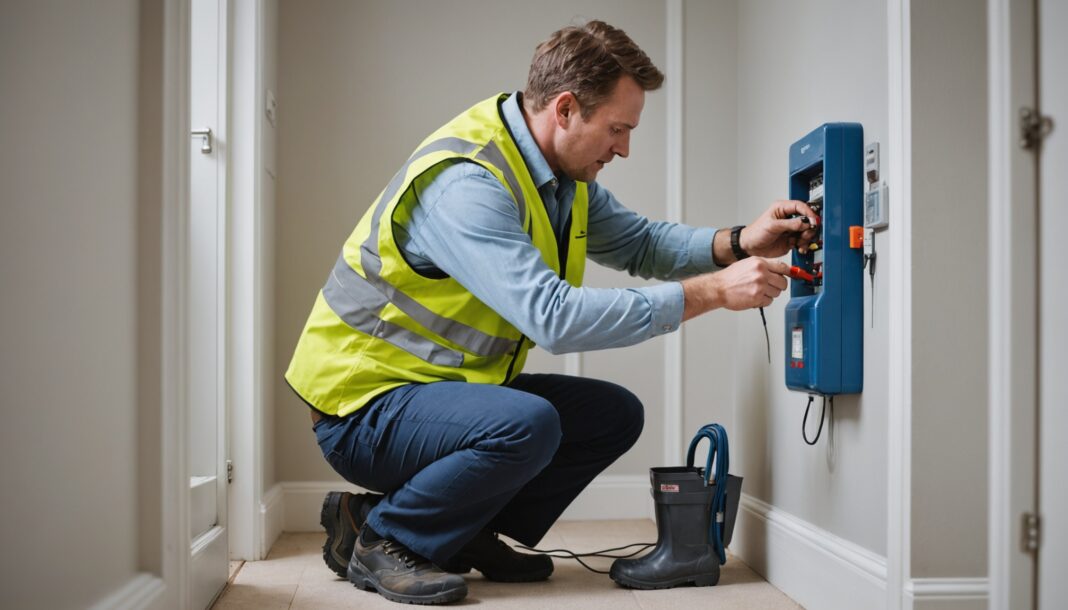
If your energy supplier has kept you waiting for a smart meter, or sent an engineer who could not finish the job, you may be owed money without ever having to ask for it. Since February 2026, three new guaranteed standards of performance have applied to smart metering in Great Britain, and each one carries a fixed £40 payment when a supplier falls short.
The standards were confirmed by the energy regulator Ofgem in a decision published on 30 January 2026. They extend a mechanism that has existed for years on other parts of the supply relationship — keeping appointments, fixing credit and prepayment meter faults, switching supplier within five working days — to the one piece of kit most households now have on the wall.
The three failures that trigger a payment
Ofgem set out three situations in which a customer is entitled to £40:
- Waiting more than six weeks for a smart meter installation appointment after asking for one.
- An installation appointment that fails because of something within the supplier's control — an engineer who does not arrive, or who turns up without working equipment.
- Reporting a problem with a smart meter and not receiving a resolution plan within five working days.
The third one is worth reading twice, because it is often described loosely. It does not promise that your meter will be repaired in five days. It requires the supplier to come back to you with a plan for fixing it in that time. The deadline sits on the answer, not on the repair.
Why “automatic” is the important word
Guaranteed standards are not a complaints route. The payment is supposed to arrive without a claim form, a phone call or a reference number, because the obligation sits on the supplier to notice its own failure. Ofgem has described automatic compensation as “a powerful way to incentivise industry”, and the logic is straightforward: a rule that depends on customers chasing it only ever reaches the most persistent ones.
The £40 figure itself is not new. Ofgem raised the standard payment to that level in January 2025 to reflect inflation, and the smart metering standards adopt the same amount. Melissa Giordano, Deputy Director of Systems and Processes at Ofgem, put the aim plainly: “Every customer who wants a smart meter should get one quickly, and it should work from day one.”
The gap that has not been closed
One widely expected standard was held back. A fourth proposal would have paid compensation where a smart meter is not operating in smart mode and remains unfixed after 90 days — the classic complaint of a device that has quietly reverted to manual readings. Ofgem said in January that it intended to do further work on it, with a view to implementing it later in 2026, once questions of accountability and technical responsibility were resolved. Smart meter connectivity depends on a national network run by the Data Communications Company, not on the supplier alone, which is precisely what makes liability awkward to pin down.
Government has consulted separately on requiring suppliers to repair a faulty smart meter as soon as possible and within a maximum of 90 days. Until one of those lands, a long-running “dumb” smart meter sits outside the automatic payment regime, and the five-working-day plan is the only hard deadline you can hold a supplier to.
Where it applies, and where it does not
Ofgem regulates the retail energy market in Great Britain. Energy in Northern Ireland is overseen by its own body, the Utility Regulator, so these particular standards are a Great Britain measure rather than a UK-wide one. It is the same split that catches people out on other energy questions, from the standing charge you pay before using a single unit of energy to the rules covering homes off the mains gas grid, where heating oil is only now being brought under regulation.
What the numbers say about the rollout
According to the latest government data cited by Ofgem, more than 70% of homes in Britain have a smart or advanced meter, and more than 90% of those are working correctly. That still leaves a large minority of households with a device that is not doing what it was installed to do. Ofgem also says its compliance work since 2024 has led to more than 900,000 previously non-operating smart meters being repaired or replaced, a figure it expects to keep rising.
The regulator has committed to reviewing the three standards in early 2027, to judge whether they are genuinely improving service rather than simply generating payments.
What to do if you think you are owed £40
Keep a written record of the date you requested an appointment and the date you were offered, and note the day you reported any fault. If six weeks pass, or five working days go by without a plan, raise it with your supplier in writing and refer to the guaranteed standards by name. If nothing happens, the complaint can go to the Energy Ombudsman free of charge once the supplier has had eight weeks, or sooner if it issues a deadlock letter. It is the same discipline that pays off elsewhere in the home: paperwork is what turns a grievance into an entitlement, much as it does when checking whether an appliance in your house has been recalled.
Frequently asked questions
Do I have to claim the £40 myself?
No. The payment is meant to be made automatically by the supplier when one of the three standards is missed. In practice it is still worth keeping your own dates, because the obligation only bites once the failure is recognised.
Does the payment cover a smart meter that has stopped sending readings?
Not directly. A meter stuck out of smart mode falls under the fourth standard, which Ofgem has not yet brought into force. What you can insist on is a resolution plan within five working days of reporting the problem.
Can I be charged for the installation itself?
Suppliers do not charge separately for a standard smart meter installation; the cost of the rollout is recovered through energy bills generally. Declining a smart meter also remains your choice, and no supplier can impose an appointment on you.
Sources
- Ofgem — Ofgem to roll out tougher smart meter rules from February (30 January 2026)
- Ofgem — Final decision: smart meter guaranteed standards of performance
- edie — Ofgem sets new compensation rules for smart meter households
Profil de l'auteur
Derniers articles
 Electricity, Gas & Energy29 November 2026Smart Meter Problems: The Automatic £40 Payment You May Be Owed
- Tech & Multimedia16 November 2026New 6 GHz Wi-Fi Rules: What They Mean for Your Router
- Electricity, Gas & Energy6 November 2026Heating oil is set to be regulated: what it will mean for off-grid homes
- Real Estate, Sales, Purchases & Rentals26 October 2026EPC C for rented homes: what the new energy rules will mean


Trending now on legal streaming
FilmThe Odyssey
SeriesBlack Doves
This article was written with the help of artificial intelligence. Editorial policy
Table of Contents