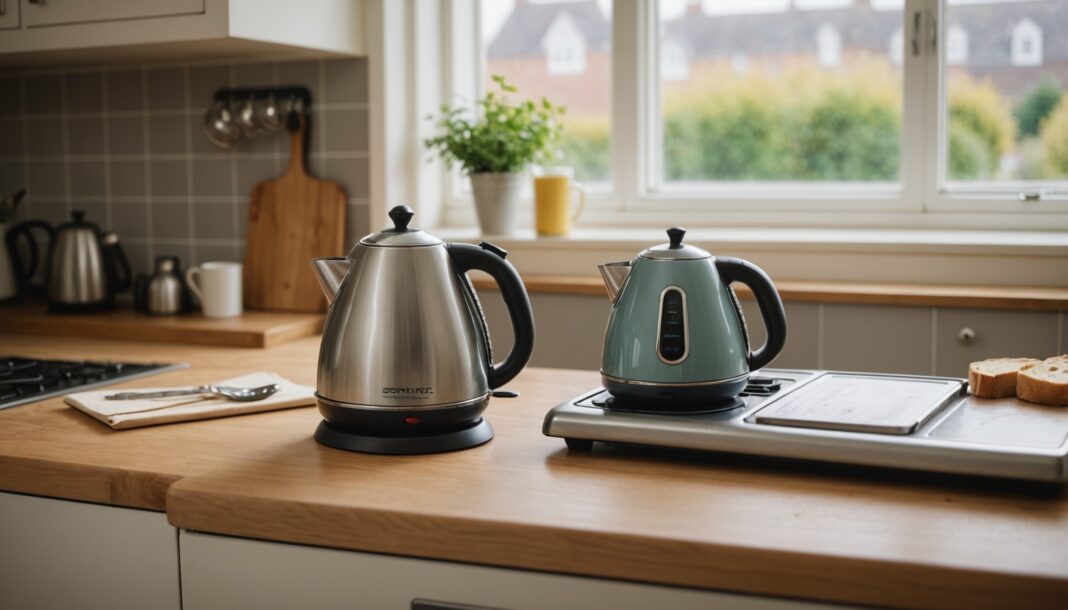
Most of us buy an appliance, drop the paperwork in a drawer and never think about it again. Yet every week, somewhere in the supply chain, a batch of kettles, chargers, cots or power tools is found to be unsafe and pulled from sale. The awkward part is what happens next: the shop can stop selling the item, but nobody can knock on every door to collect the ones already plugged in at home. That gap is why product recalls depend so heavily on owners checking for themselves.
Who decides a product is unsafe
The body in charge across the UK is the Office for Product Safety and Standards (OPSS), part of the Department for Business and Trade. It investigates products that turn out to be dangerous, pushes manufacturers into corrective action, and publishes recalls and safety alerts on GOV.UK. Behind the scenes it runs the Product Safety Database, which gathers notifications from its own investigations and from other agencies working on product safety.
Businesses have their own duty here: a manufacturer or importer that discovers a fault has to notify the regulator rather than quietly fix it on the next production run. That reporting chain is what turns one customer's burnt plug into a national alert.
Its recent campaign work gives a flavour of where the risks sit. Over the past year, OPSS has highlighted button batteries and magnets, heat pump tumble dryers, fireworks, vapes, baby self-feeding products and sleep pillows, counterfeit toys, and the safety of goods bought through online marketplaces. Several of those categories involve items sold cheaply by third-party sellers, where the brand behind the listing can be hard to trace.
Where to check what has been recalled
There are two reliable starting points, and both are free:
- the recalls and safety alerts published by OPSS on GOV.UK, which cover the full range of consumer goods;
- the government's dedicated product recall campaign site, built to help households look up an item quickly.
One change worth knowing if you have an old bookmark: Electrical Safety First no longer maintains its own recall database. The charity now points people to the OPSS listings, keeping its historic entries up to 2023 only for reference. If you check an old page and find nothing, that absence does not mean your appliance is in the clear.
The simplest protection, though, is registering an appliance with its manufacturer when you buy it. It takes a couple of minutes, it is the route brands use to contact owners directly, and it works even if you have moved house since. The same logic applies to second-hand purchases, where the original owner's details are the ones on file — worth repeating if you have bought a used washing machine or cot through a marketplace, much as you would check your rights before accepting a parcel left on the doorstep.
What to do if your item is on the list
Stop using it. That sounds obvious, but recalls are often ignored because the product still appears to work — the defect may only show up when a component overheats or a child handles it in an unexpected way. Follow the instructions in the notice, which usually offer a repair, a replacement or a refund at no cost to you.
Separately from the recall itself, you keep your rights against the retailer. Under the Consumer Rights Act 2015, goods must be of satisfactory quality and fit for purpose; a faulty item can be rejected for a full refund within 30 days of delivery, and after that you can ask for a repair or replacement. Your contract is with the shop that sold it, not the manufacturer — even when it is the manufacturer issuing the recall.
Do not simply bin a recalled electrical item either. It should go to a household waste recycling centre or back to the retailer rather than into a wheelie bin, where a damaged lithium battery can start a fire in a collection lorry. It is the same reflex as sorting the rest of your waste properly, an area where household recycling rules have been tightening.
Reporting a fault yourself
If a product injures someone, overheats, cracks or behaves in a way it plainly should not, say so. Tell the retailer first, then report it to the consumer service for your nation: Citizens Advice consumer service in England and Wales, Advice Direct Scotland north of the border, and Consumerline in Northern Ireland. Those services pass cases to trading standards, which feeds the regulator's picture of what is going wrong.
Keep the item, the packaging and the receipt if you can, and photograph the damage. A single complaint rarely triggers a recall on its own; a pattern of them does. That is the quiet argument for bothering — the report that protects someone else is usually the one that felt too small to make. It is the same instinct behind the consumer rules being tightened elsewhere, and behind keeping a careful eye on the home equipment older relatives rely on.
Frequently asked questions
Do I need a receipt to take part in a recall?
Usually not. A recall is run by the manufacturer or importer in the interests of safety, so the remedy is normally offered to anyone holding the affected model and batch, including people who received it as a gift or bought it second-hand. A receipt matters more for a claim against the shop under the Consumer Rights Act.
How do I know which model I have?
Look for the rating plate — a small label with the model number, batch or serial number, usually on the back, the base or inside a battery compartment. Recall notices are specific about which numbers are affected, so a close match is not enough; check the digits carefully before deciding you are unaffected.
Does registering an appliance mean marketing emails?
Registration is meant for safety contact, and you can decline marketing when you sign up. If a form insists on bundling the two, you can still register and then unsubscribe from the marketing list afterwards, which leaves your safety details on file.
Sources
- Office for Product Safety and Standards — GOV.UK
- Product Recall — UK government campaign site
- Product recalls — Electrical Safety First
Profil de l'auteur
Derniers articles
 Home Appliances & Equipment13 November 2026Product recalls: how to check whether something in your home has been pulled
- Moving & Transport4 November 2026The £2 bus fare cap returns: what it will mean for passengers
- Everyday Life & Society23 October 2026Subscription traps: the new rules that will make cancelling easier
- Smartphones & Mobile Phones14 October 2026The loyalty penalty on your mobile bill: why staying put costs you more




Trending now on legal streaming
FilmGodzilla Minus One
SeriesVisionQuest
This article was written with the help of artificial intelligence. Editorial policy
Table of Contents