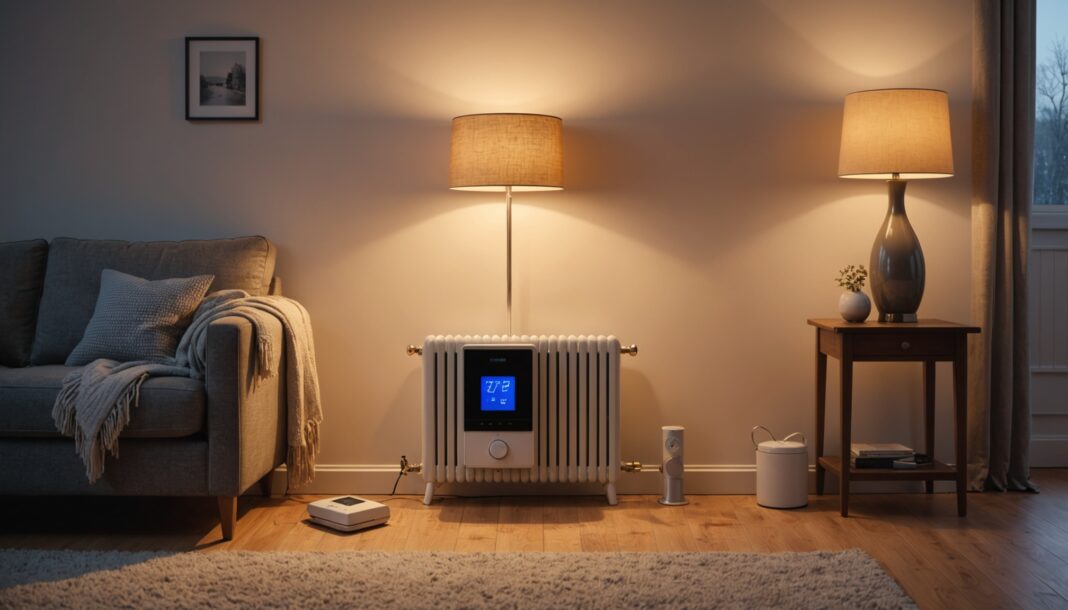
For a long time, the rule was simple: heating with gas cost less than running electric convector heaters. Starting in December 2026, this hierarchy is partly reversed. The benchmark gas sale price in France will rise by 5.8%, according to the official announcement relayed in early November. The result: for a household that takes advantage of the off-peak hours in its electricity contract, heating with gas becomes, for equal consumption, more expensive than turning on an electric heater in the evening or at night.
An Increase That Shifts the Energy Hierarchy
The benchmark price serves as a reference for suppliers in building their natural gas offers. Its 5.8% revaluation in December, confirmed by French authorities, will affect the majority of households still on indexed rates, whether they are customers of the incumbent supplier or an alternative one. This increase adds to a series of hikes already recorded since the beginning of the year, and it comes as the regulated electricity tariff (TRV) has remained stable since its last revision on August 1, 2026.
Under the current regulated tariff, a kWh of electricity costs about €0.2001 under the Base plan, but drops to €0.1589 during off-peak hours for households equipped with a dual-rate meter. It is this tariff gap, combined with the gas price increase, that is reshuffling the deck for households heated with natural gas, as well as for those considering a change of heating system.
What This Means in Practice
- A household heated with gas and consuming about 10,000 kWh per year will see its annual bill rise noticeably starting with the December billing cycle.
- Conversely, a household with electric heating programmed to run mostly during off-peak hours can, for the same consumption volume, limit the increase thanks to the tariff gap.
- The gap mainly benefits well-insulated homes, where shifting consumption to nighttime remains manageable without a loss of comfort.
This shift had already begun to appear in other parts of the energy budget: our article on the electricity bill actually paid by an average French household by department already showed significant disparities depending on consumption habits and equipment.
Electricity: Off-Peak Hours Become Competitive Again
The off-peak tariff gap is not new, but it is regaining an appeal it had lost during previous electricity price increases. Scheduling heating, water heaters, or electric vehicle charging during this time window mechanically reduces the bill, without requiring new equipment. This optimization is part of a broader trend, already documented in our analysis of the previous gas price increase on November 1, which had marked a first narrowing of the gap between the two energy sources.
For households thinking about their everyday budget planning, this rebalancing is worth anticipating before the first cold snaps, rather than discovering it on the January bill.
How to Prepare Before Winter
- Check the details of your contract: indexed rate, fixed price, or regulated tariff, and how much of it is the subscription fee.
- Compare, based on your own consumption, the actual cost of gas versus electricity during off-peak hours, rather than relying on a general rule.
- Shift compatible uses (water heater, EV charging, washing machine) to off-peak hours, without waiting for the next bill.
- For a renovation project, factor this price shift into the profitability calculation for replacing a boiler, in connection with the broader issues of energy savings and the ecological transition.
Frequently Asked Questions
Why is the price of gas rising in December 2026?
The benchmark gas sale price, used as a reference by suppliers, is being revalued by 5.8% as of that date, according to the official announcement. This increase mainly applies to offers indexed to this benchmark.
Is gas really more expensive than electricity for heating?
It depends on the contract and consumption habits. During off-peak hours, the regulated electricity tariff becomes, starting in December, lower than the cost of gas for equivalent use, which was not the case before.
Should you switch heating systems right now?
A decision to change equipment shouldn't be based solely on a one-time price increase. In the short term, it's more realistic to adjust electricity usage schedules and compare available offers before considering major work.
Sources
Profil de l'auteur
Derniers articles
 Agency, Webmarketing & SEO19 November 2026Search Console API: Three New Features for SEO Agencies
- DIY & Troubleshooting18 November 2026Dexter Sander Recall 2026: What Leroy Merlin and Weldom Customers Need to Know Before Using It
- Restaurants, Drinks & Food18 November 2026Flexitarianism in France: Less Meat on the Plate, but Not for the Reasons You'd Think
- Home Appliances & Equipment18 November 2026Washing Machine, Oven, Dishwasher: Which Brand to Choose for Appliances That Last?




Trending now on legal streaming
FilmSacrifice
SeriesGhosts
This article was written with the help of artificial intelligence. Editorial policy
Table of Contents