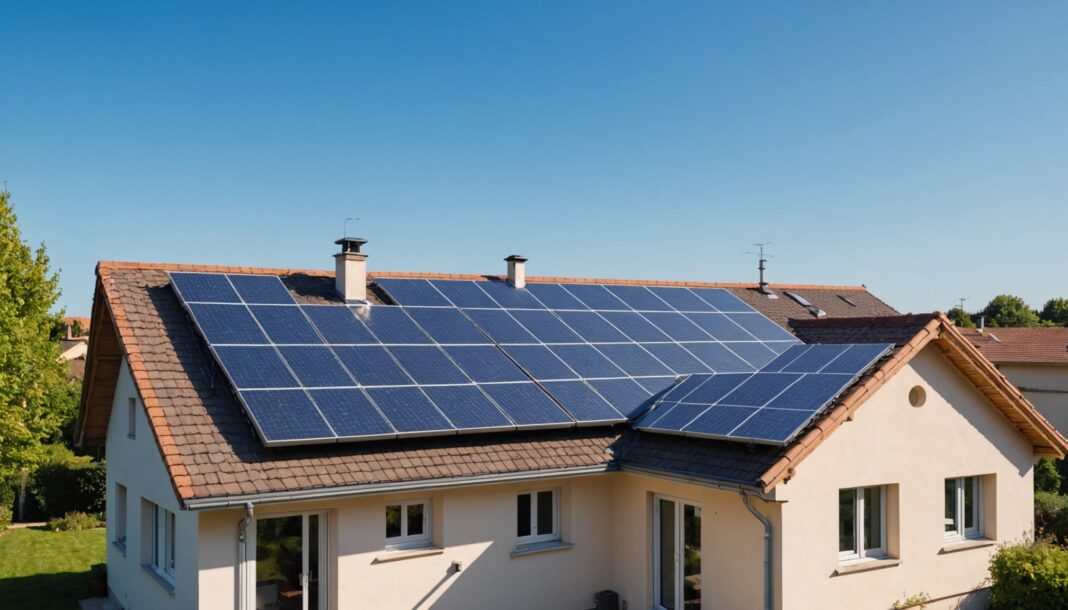
With electricity prices rising, more and more French households are considering installing solar panels on their roofs. But between constantly changing incentives, a surplus buyback rate that has been revised downward, and unscrupulous door-to-door sellers, it isn't always easy to find your way around. Here are the concrete criteria to check before getting started, and the most common mistakes to avoid.
Self-Consumption or Resale: A Choice That Now Matters
The first decision to make is whether to use the electricity you produce yourself or sell the surplus to EDF Obligation d'Achat (EDF OA, the French utility's buyback program). Since the new tariff order took effect in June 2026, the surplus buyback rate has been significantly lowered for small installations. As a result, for most households it is now more worthwhile to use their own production directly — to run the washing machine or charge an electric vehicle during the day, for example — rather than sell it. This choice then shapes the sizing of the installation: power output in kilowatt-peak (kWp), the roof's orientation and tilt, and whether or not there's a carport. Before requesting quotes, it's worth comparing several solar panels for sale catalogs to get a first sense of the power ratings and prices on the market.
Available Incentives, and a Common Mix-Up to Avoid
For self-consumption installations that also sell the surplus, an investment grant is available regardless of income, provided the panels are mounted on a roof or carport, installed by a professional certified RGE (Reconnu Garant de l'Environnement, the French government-recognized quality label for energy-renovation professionals), and the output does not exceed 100 kWp. Since October 1, 2025, VAT has also been reduced to 5.5% on the supply and installation of photovoltaic panels with an output of 9 kWp or less in residential settings. A common mistake is assuming that MaPrimeRénov' (France's main home-renovation grant program) covers these standard photovoltaic panels. It does not: this program only covers solar thermal systems and hybrid hydraulic systems, not electricity production.
RGE Certification: A Non-Negotiable Prerequisite
Without an RGE-certified professional, no public incentive can be claimed. This label can be checked directly on the official directories (France Rénov', the French government's renovation portal) before signing anything. It's also advisable to request several quotes, check the company's ten-year warranty insurance, and be wary of installers who use the logos of EDF, Ademe (the French environment and energy agency), or a local authority to build trust, without actually representing them.
The Trap of Cold Calling and False Urgency
Telemarketing calls are now banned by default for energy-renovation work, including solar panels. Yet unsolicited calls keep coming, often paired with a “limited-time” offer or a supposedly mandatory energy audit — which doesn't actually exist for this type of installation. The DGCCRF (the French consumer protection and fraud control authority) has in fact issued several sanctions in recent months against energy-renovation companies for misleading sales practices. The rule remains simple: never sign under pressure, and take the time to compare offers.
Insulate Before You Produce: The Step People Forget
One last point that's too often overlooked: solar panels installed on a poorly insulated home produce electricity that then escapes through the roof or attic. Before investing in production, it's often more cost-effective to start by reducing your energy needs — for example, by improving attic insulation. The two approaches are complementary, but the order in which you tackle them significantly changes the project's return on investment.
Frequently Asked Questions
Do You Have to Sell the Surplus Electricity You Produce?
No. Since the 2026 revision of buyback rates, direct self-consumption has become more advantageous than resale for the vast majority of residential installations.
Are Photovoltaic Panels Eligible for MaPrimeRénov'?
No: MaPrimeRénov' funds solar thermal systems and hybrid hydraulic systems, not standard photovoltaic panels, which fall under other programs (the self-consumption grant, reduced VAT).
How Can You Recognize a Reliable Installer?
The installer should be RGE-certified — which you can verify on the official directories — carry ten-year warranty insurance, provide several detailed quotes, and never pressure you to sign in a hurry.
Sources
Service-Public.fr — Getting Electricity From Solar Panels
economie.gouv.fr — Installing Solar Panels: Available Incentives
economie.gouv.fr — DGCCRF: Sanctions Against Fraud in Energy Renovation
Profil de l'auteur
Derniers articles
 DIY & Troubleshooting18 November 2026Dexter Sander Recall 2026: What Leroy Merlin and Weldom Customers Need to Know Before Using It
- Restaurants, Drinks & Food18 November 2026Flexitarianism in France: Less Meat on the Plate, but Not for the Reasons You'd Think
- Home Appliances & Equipment18 November 2026Washing Machine, Oven, Dishwasher: Which Brand to Choose for Appliances That Last?
- Nutrition, Diet & Weight Loss18 November 2026Pancreatic Fat: The Diet That May Help Reduce It




Trending now on legal streaming
FilmHeart of the Beast
SeriesCarrie
This article was written with the help of artificial intelligence. Editorial policy
Table of Contents