



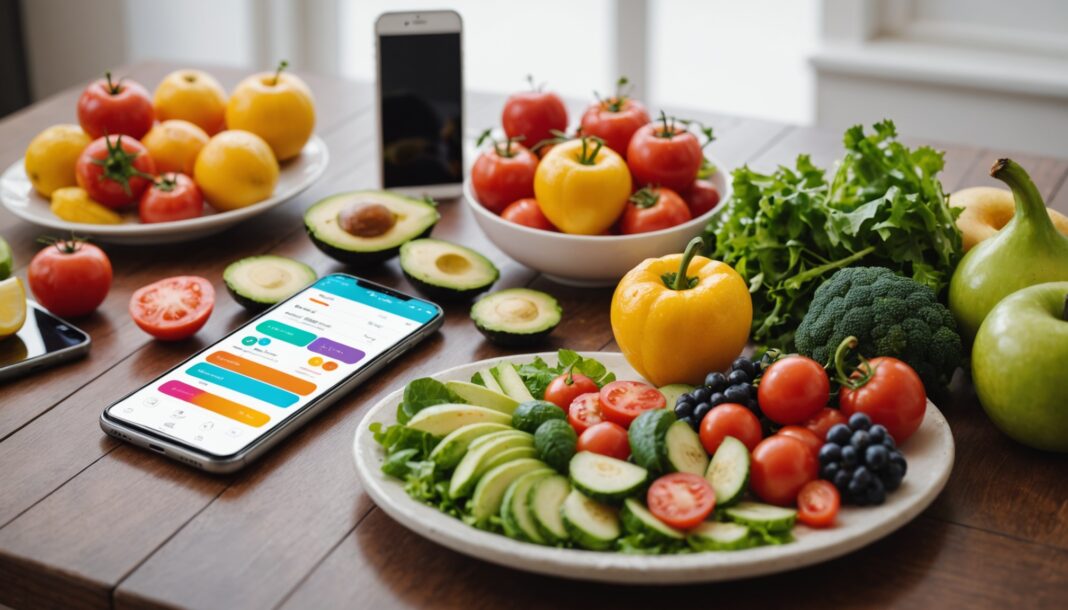
What if the key to losing weight wasn't counting calories, but knowing how your body reacts to each food? That's the promise of personalized nutrition, driven by the British research program PREDICT, whose latest results are upending conventional dietary recommendations.
A Large-Scale Scientific Program
The PREDICT program is led by gut health company ZOE, in collaboration with researchers from King's College London. It draws notably on the work of Sarah Berry, a nutritional sciences researcher at King's College and chief scientist at ZOE, as well as on that of nutritionist Federica Amati. Their finding: two people eating exactly the same meal can have very different metabolic responses, depending on their microbiome, genetics, and lifestyle.
Results Based on More Than 5,000 People
The analysis covers 5,048 participants who were overweight or obese (BMI of 25 or higher), followed for about three months as part of the program. The published figures are striking:
- 83% of participants lost weight in 12 to 15 weeks
- The average loss was 3 kg per person
- 34% lost at least 5% of their initial body weight, a threshold considered clinically significant
- Among the 2,200 most engaged participants in the program, the average loss rose to 3.6 kg, with 42% reaching that 5% threshold
None of these participants followed strict calorie restriction: the recommendations focused on the quality and combination of foods, not on their quantity.
How This Differs From Conventional Diets
This approach stands apart from overall calorie-restricted diets, but also from other approaches already explored for weight loss. A recent study showed, for example, that a low-fat vegan diet could lead to weight loss by reducing the energy density of meals, without factoring in personalization. Conversely, other research qualifies the actual impact of full-fat dairy products on weight and cholesterol, reminding us that no single dietary rule works the same way for everyone. Personalized nutrition specifically aims to move beyond these one-size-fits-all recommendations and adapt to each metabolic profile, a principle similar to the one already discussed regarding functional beverages that adapt to the gut microbiome.
What This Means in Practice
In practice, personalized nutrition doesn't replace the fundamentals of a sustainable dietary rebalancing strategy: rather, it fine-tunes the order, combinations, and timing of meals based on the body's individual response. The researchers stress one point: the results obtained with this cohort don't guarantee the same effects for every individual, and personalized guidance remains preferable to a strict, non-medical application of these principles.
Last updated: September 12, 2026.
Frequently Asked Questions
What Is Personalized Nutrition?
It's an approach that tailors dietary recommendations to each individual's unique metabolic response (genetics, microbiome, lifestyle), rather than applying a universal rule like calorie counting.
Do You Still Need to Watch Portion Sizes?
Participants in the PREDICT study did not follow strict calorie restriction: the emphasis was on the quality and combination of foods rather than their quantity, within the framework of a supervised program.
Do These Results Apply to Everyone?
No. The researchers themselves point out that effects vary from person to person, which is precisely the founding principle of personalized nutrition. Medical advice is still recommended before making any major dietary change.
Sources
- Ma Clinique — Personalized nutrition promotes weight loss without counting calories
- King's College London — Profile of researcher Sarah Berry
Profil de l'auteur
Derniers articles
 Retirement & Senior Living24 November 2026Mothers' Retirement: What the New 2026 Pension Calculation Changes
- Home Appliances & Equipment24 November 2026Appliance Repair Bonus: The Little-Known Boost to Fix Rather Than Toss
- Nutrition, Diet & Weight Loss24 November 2026Intermittent Fasting: What the Science Really Shows About Weight Loss
- Restaurants, Drinks & Food24 November 2026Restaurant Trends Set to Reshape How We Eat Out




Trending now on legal streaming
FilmThe Hunger Games
SeriesThe Lord of the Rings: The Rings of Power
This article was written with the help of artificial intelligence. Editorial policy
Table of Contents

: 83% of participants lost weight in 12 to 15 weeks without counting calories, via personalized nutrition.)