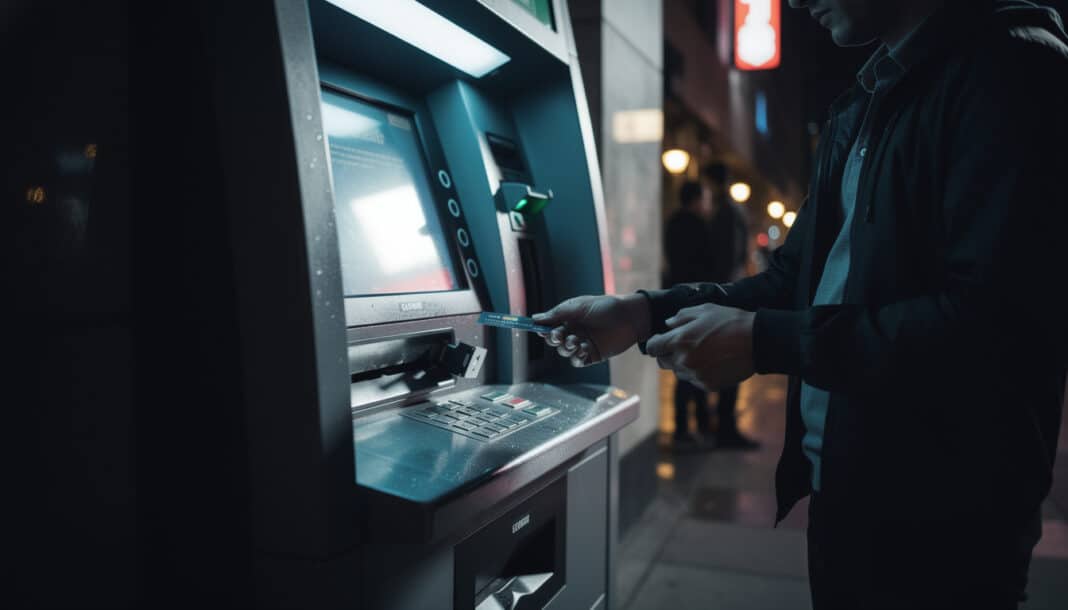
Summary : Scammers are modernizing their techniques to empty accounts in a few minutes at ATMs. Between clandestine card readers, fake keypads and transport-related traps, travelers are particularly vulnerable. Find out how to identify these traps and protect your money.
Key points to remember : 🚨 ATMs have become hunting grounds for scammers | 💳 Techniques are constantly evolving, especially in transport | ⏱️ A fraud can empty your account in less than two minutes | 🛡️ Simple actions are enough to protect you | 📍 Vigilance remains your best weapon when traveling.
When the ATM becomes a trap: understanding the scams hiding behind the glass
Withdrawing cash while traveling is a gesture we repeat mechanically. Like turning the pages of an old book, we think we know the movement by heart. Yet those who observe the details see what others do not: a slightly bulging slot on the card reader, a keypad whose keys shine differently, a tiny camera aimed at the numeric keypad.
🎯 Scammers have turned these machines into real traps. Every day, travelers imagine themselves safe using a familiar ATM, without suspecting that a clandestine device is recording every piece of information. In seconds, your banking data disappears. In two minutes, your account can be emptied. This reality is not fiction: it is the daily occurrence of ATM fraud that particularly hits tourists.
Data theft techniques: when technology becomes a weapon
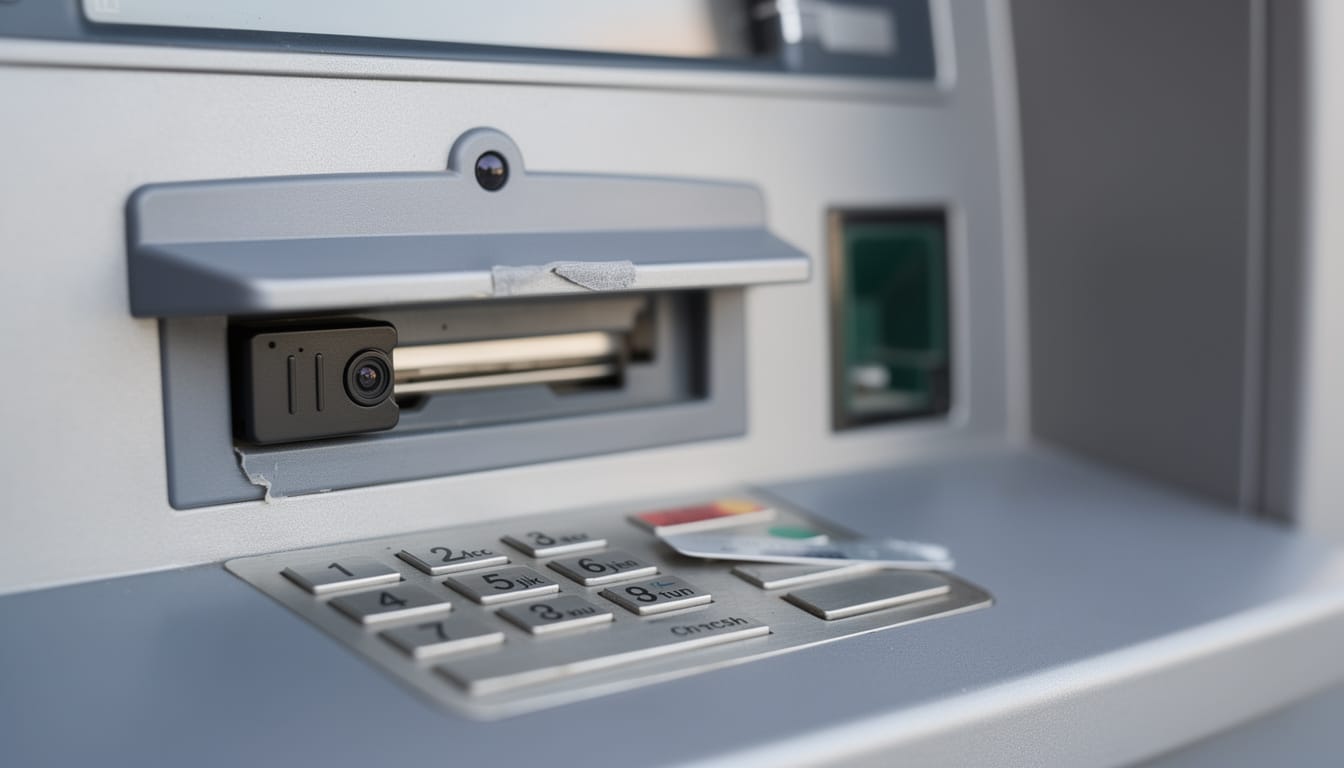
The theft begins long before your card physically disappears. 📱 Clandestine reading devices, called “skimmers”, attach to the original reader and capture your card information in fractions of a second. Meanwhile, a mini-camera records your PIN entered on a falsified keypad, where each digit has been carefully observed.
This method, as old as it is cunning, now has new variations. Criminals no longer limit themselves to isolated ATMs: they operate in train stations, airports, crowded tourist areas where no one pays attention to other users. 🚩 In Nice, Barcelona, Lisbon, alerts multiply every month. Some travelers discover the theft days after their return when they receive their bank statements.
What makes these scams particularly effective is their discretion. Unlike an armed robbery, there is no violence, no inconvenient witness. Just an almost invisible manipulation, orchestrated by organized networks that then sell the data to unscrupulous buyers.
At the heart of travel: how scammers target tourists
The hurried traveler is ideal prey. 🎒 Focused on their itinerary, worried about their luggage, they forget the essential: to observe their surroundings. Criminals know this. They deliberately choose ATMs on the roadside, those located in less busy neighborhoods, or conversely the busiest ones where the constant flow hides their manipulations.
The critical stages of travel — arrival in a new country, changing currency, the urgent withdrawal of cash — are all moments when vigilance fades. You don't ask questions. You insert your card, you type your PIN, you take your bills. It's automatic, almost ritual. Exactly like those repeated actions in a workshop, when you fold the paper in the same place a thousand times: the gesture becomes transparent.
🌍 On the roads of Southeast Asia, in Eastern Europe, or in Western capitals, French tourists are particularly targeted. Why? Because it is assumed their accounts are well funded, that fraud will be discovered late, and that distance plays in the scammers' favor. Between data theft and requesting financial help from your bank, several days pass. That's more than enough time for the money to disappear.
New transport traps: a scam that infiltrates everywhere
💳 In 2026, scams are no longer limited to isolated ATMs. They have migrated to public transport, contactless payment terminals, and station kiosks. Card frauds are multiplying in transport, where fake inspectors take advantage of the jostling to discreetly scan your badge or wallet.
These scammers rival each other in creativity. Some install fake Navigo card recharge terminals, identical to the real ones but programmed to capture your data. Others present themselves as legitimate inspectors, examining your ticket closely while holding a portable card reader in the other hand.
🚇 The proximity of public transport creates a perfect environment for theft. No one is really suspicious. No one shouts. It's a silent crime, committed in three seconds in the metropolitan crush. And the worst? You may not notice it until several days later.
Warning signs that should alarm you
Before approaching an ATM, take a moment to really observe it. 👁️ This slow and attentive practice is that of artisans: examine every detail before starting. Here is what should put you on alert.
A card reader that sticks out slightly from the normal frame. A cash dispenser slot surrounded by extra plastic. A keypad whose keys shine differently, or seem to depress unevenly. A small camera discreetly aimed at the numeric keypad. These details may seem trivial at first glance, but they are all signs pointing to a fraud.
🔍 Test the card reader gently: if it moves, it's a bad sign. Check that no additional device has been glued onto it. Look at the casing: traces of recent glue? Unusual cracks? Also be wary of ATMs located in isolated or little-trafficked areas.
Another important signal: if several people harass you around the ATM, offering to help, insisting on staying near you. It's rarely kindness. 🚩 It is generally an accomplice who watches your transaction and notes down your PIN.
The fundamental role of observation before each withdrawal
As in the meticulous work of bookbinding, where every element must be inspected before being assembled, prior observation is your first line of defense. Taking five seconds to really *look* at the ATM already cuts the risks in half.
📌 Make sure it is an official ATM, installed on the façade of a known bank or in a secure location. Avoid ATMs in small shops or second-rate hotels, which are more often targeted. Ensure that the card reading devices and cash dispensers show no anomalies.
Finally, hide your PIN by placing your hand over the keypad. This simple gesture makes video capture of your secret number impossible. A habit to adopt, like checking a card's expiration date before sliding it into the machine.
Bank protections: what your bank really does for you
You may be asking yourself: doesn't my bank protect me? 🏦 The answer is nuanced. Contrary to what one might sometimes imagine, banking bodies like Banque de France and the ACPR will never contact you to ask for your money or your banking details. If someone does, they are an impostor.
Protections do indeed exist. Most cards benefit from fraud detection systems that block abnormal transactions. But these systems are not infallible. A series of small withdrawals in different parts of the world can go unnoticed. That's why checking the scam alerts published by the Banque de France helps you stay informed about new traps.
💡 Enable real-time notifications on your bank account. For every withdrawal, every payment, you will receive an alert. This allows you to detect a fraudulent operation immediately. It's like having a vigilant guard, 24/7, who notifies you as soon as they see something unusual.
Steps to follow if you detect fraud
Unfortunately, even with these precautions, some people are scammed. The first step is speed. 🚨 Call your bank immediately to report the fraud, have your card blocked, and request a freeze on the accounts concerned.
Next, you must formalize your complaint. Follow the official procedures described by Service Public to file a complaint with the gendarmerie or police. Keep all account statements, emails from your bank, and proof of fraudulent transactions.
To better understand these classic financial scams and their traps, consult the resources available from consumer protection organizations. These administrative procedures, although tedious, are essential to recover your money and prevent scammers from striking again.
Travel safely: steps to take right now
Changing your behavior toward ATMs means accepting that vigilance is an art, not a chore. 🛡️ Here are the fundamental actions to integrate into your traveler habits.
Before the trip : Notify your bank of your dates and destinations. Banks then activate enhanced monitoring. Request a second bank card to keep separate from the first. That way, if one is compromised, the other remains accessible.
On arrival : First locate reliable ATMs. Prefer those located inside bank branches, accessible 24/7 but protected by secure doors. Avoid machines out on the street, easily accessible to criminals.
When withdrawing : 👀 Inspect the ATM before inserting your card. Mask your PIN. Limit withdrawal amounts to reduce exposure in case of fraud. Keep your receipt and check that the displayed amount matches the amount debited.
After the trip : Check your online account statement immediately. Verify every transaction. If in doubt, contact your bank. This belated vigilance can still spare you many hassles if the fraud is not too large.
Resources to deepen your understanding
Becoming an informed traveler also means knowing where to look for reliable information. Practical guides explain the actions to take to secure your bank card before withdrawing cash.
📚 Consumer associations like Que Choisir regularly publish tests and alerts on new types of fraud. They defend victims' rights and offer sample letters to dispute fraudulent transactions with your bank.
For travelers curious to better understand the most widespread scams during their trips, detailed analyses reveal the key points to spot to avoid theft. The more you know, the less vulnerable you will be.
Beyond fear: turning vigilance into habit
Talking about ATM scams can seem anxiety-inducing. Yet it's simply about adding a layer of awareness to a gesture you repeat constantly. 🧠 It's like learning to feel the paper in your hands: with practice, you immediately recognize what seems abnormal.
The vulnerability of travelers is not inevitable. It's simply a matter of attention. Every scammer counts on your carelessness, on that moment when you are rushed, distracted, tired. By taking back control of that attention, you take back control of your financial security.
💪 Think of the bookbinder who checks each thread before using it, each seam before finishing it. It is that same meticulousness that protects you at ATMs. Not out of paranoia, but out of respect for yourself and for the money you earned.
Traveling with peace of mind first means traveling with open eyes. Every destination deserves your conscious presence, not your absent vigilance. Scammers count on your distraction. Don't give it to them. Take those precious seconds to observe, check, protect. It's a tiny investment for priceless peace of mind.
Profil de l'auteur
Derniers articles
 Smartphones & Mobile Phones14 October 2026The loyalty penalty on your mobile bill: why staying put costs you more
- Family, Babies & Children5 October 2026Airline family seating fees: what the planned ban will change for parents
- Everyday Life & Society23 September 2026Consumer confidence index: what the monthly mood check on British households really measures
- Agency, Webmarketing & SEO31 August 2026SEO : a Google bug skews visibility statistics in AI results




Table of Contents