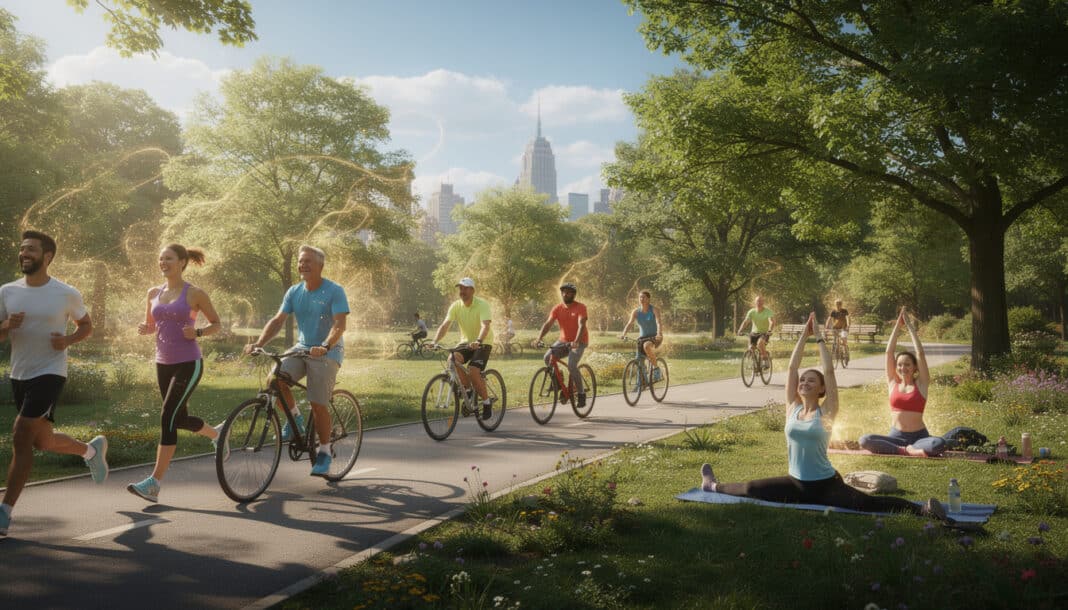
In short: Physical activity changes much more than your silhouette — it resets your brain chemistry. When you move regularly, your body releases a real cocktail of happiness hormones: endorphins, dopamine and serotonin. These natural chemical messengers act like free antidepressants, reduce cortisol (the stress hormone), improve your sleep and boost your self-esteem. Even 30 minutes of moderate effort is enough to trigger this beneficial cascade. Sport is not just about performance or appearance — it's an act of kindness toward your mind. 💪
What you'll discover: How movement activates your happiness hormones, why this chemical reaction changes your mood at a deep level, which sports maximize these effects, and how to build a routine that truly nourishes your mental well-being.
The chemistry of well-being: understanding the happiness hormones in motion 🧠
When the body exerts effort, something extraordinary happens at the heart of the brain. This organ receives the signal: adaptation required. To meet this physiological demand, it activates a sophisticated chemical production system, releasing molecules that transform your perception of the world and of yourself.
These molecules have a poetic name: the happiness hormones. They are not mythical — their existence, measurable and documented, explains why so many people feel light, liberated, almost euphoric after a workout. It's not a placebo effect; it's a tangible biochemical reaction that deserves to be understood.
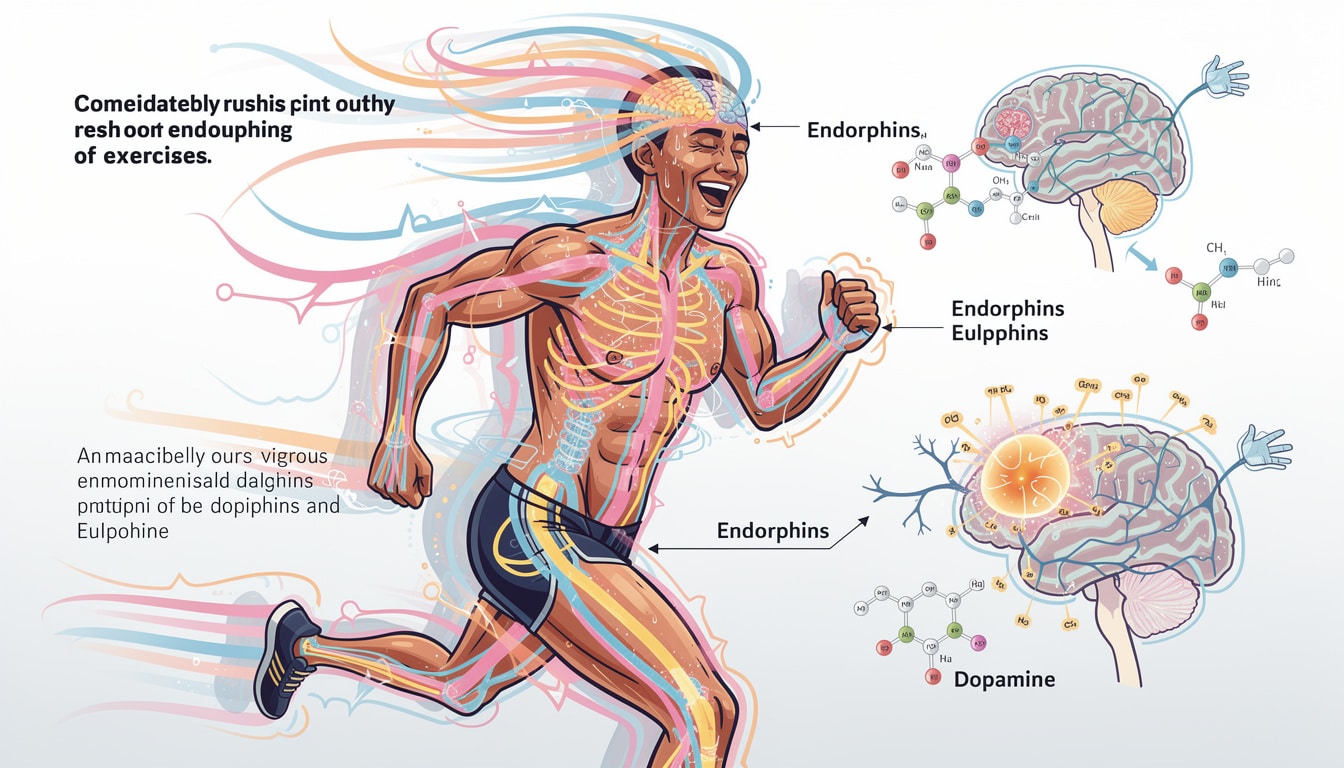
Three main players dominate this hormonal symphony: endorphins, the body's true natural morphines; dopamine, the hormone of reward and motivation; and serotonin, the regulator of mood and well-being. Together, they create what athletes describe as a “rush,” a sense of fullness that lingers long after the shower.
Endorphins: the morphine your brain produces naturally 💊
When you maintain sustained effort for around forty minutes, endorphins begin to flood your nervous system. These natural opioid peptides bind to the brain's receptors like keys in locks, blocking pain signals and producing a feeling of detachment from physical discomfort.
A fascinating phenomenon results: long-distance runners describe a runner's high, that sensation of invincibility where fatigue seems to belong to someone else. Endorphin concentration in the blood can reach up to five times its usual level during prolonged effort. That's why a simple jog can turn into moving meditation, a moment of grace.
But beyond physical pain, endorphins also soothe anxiety. They create an emotional protective bubble that lasts several hours after the session — a gift you give your mind every time you decide to move.
Dopamine: the neurotransmitter of motivation and reward 🎯
Unlike endorphins, which act on pain, dopamine influences your relationship to pleasure and accomplishment. Each time you pass a milestone — finishing your first kilometer, completing a set of movements, reaching your weekly goal — your brain releases dopamine in recognition.
This hormone creates a positive addiction to exercise. You feel satisfied, valued, capable. It's not about vanity: it's the nervous system saying “you did it, you deserve to be proud.” Over time, this reward loop strengthens your intrinsic motivation. You no longer exercise out of obligation, but because your brain chemistry has integrated it as a source of well-being.
Serotonin: the hormone of serenity and emotional balance 🌅
Serotonin is the often-forgotten player in conversations about sport, yet its role is crucial. This hormone is synthesized from tryptophan, an amino acid that exercise helps shuttle more effectively to the brain.
A deficiency in serotonin is often associated with depression, chronic irritability and mood disorders. By moving regularly, you provide your brain with a natural and continuous production of this substance that stabilizes your emotions, smooths out the rough edges of daily stress and creates a foundation of inner calm. It's an antidepressant without a prescription, without side effects, accessible to everyone.
Why stress fades when you move: sport's action on cortisol 🌊
Before talking about happiness, let's talk about the weight it lifts: chronic stress. In 2026, as has been the case for several years, many people live in a state of constant activation, cortisol flowing freely in their veins like an inexhaustible river.
Cortisol is necessary in small doses — it helps you react to real dangers. But in excess, it exhausts, creates inflammation, destroys sleep, weakens immunity. It's the invisible poison of modern life.
Here sport intervenes as a natural regulator. When you practice regular physical activity, your brain rebalances hormonal production. Cortisol gradually decreases while the happiness hormones increase. Even a brisk 20-minute walk is enough to interrupt this harmful cycle.
Even better: people who commit to an exercise routine show systematically lower cortisol levels, even in difficult moments. Their nervous system has learned a new default reaction: resilience rather than panic.
Sleep: the missing link between sport and happiness 😴
There is an invisible link between what you do during the day and the quality of your night. Physical exercise regulates circadian cycles, those biological rhythms that govern your wake-sleep alternation like invisible tides.
During deep sleep — the one that physical activity lengthens — the brain performs its most important maintenance work. It stabilizes emotions, consolidates memories, repairs the damage caused by stress. A night of quality is therefore a night where your mind has rebuilt itself.
The serotonin produced during your workout is converted into melatonin come evening, your sleep hormone. By moving, you plant the seeds of a restorative night, creating a beneficial domino effect: the better you sleep, the more energy you have to move, the more you move, the better you sleep.
Self-esteem: the inner structure you build with sport 🏗️
Beyond hormones, something deeper is built when you practice regularly. Each session, each small act of surpassing yourself, each day you keep your promise to yourself contributes to erecting a stronger self-image.
It's not vanity. It's recognition. When you feel your body getting stronger, your breathing steadier, your endurance increasing, you gradually internalize a new belief: you are capable. You can take on challenges. You deserve to take care of yourself.
Research confirms that active people have a more positive body image, regardless of their weight or appearance. This pride then radiates into social, professional, romantic interactions. You move differently, you speak with more confidence, you dare more.
How to maximize the release of happiness hormones 📊
Not all sports activate your happiness hormones in the same way. There are thresholds, durations, intensities that optimize this chemical reaction. Understanding these parameters allows you to choose the activity that will resonate most with your needs.
Endurance: the undisputed queen of hormone production 🏃
Endurance sports — running, cycling, swimming, cross-country skiing — require a constant and prolonged effort. That's precisely what triggers the most impressive hormonal cascade.
When you maintain an intensity corresponding to about 60% of your respiratory capacity, your body enters a zone of balance where endorphin production is stable and lasting. You don't suffer acutely, but you provide a continuous effort. That's when the biochemical magic takes place.
That's also why the pleasure hormones in running create a true cocktail of happiness — the activity precisely demands that optimal duration and intensity.
HIIT: the sprint to immediate dopamine ⚡
If you're short on time but looking for a quick mental boost, high-intensity interval training (HIIT) is your ally. By alternating explosive effort phases with short rests, you provoke a brutal surge of dopamine and noradrenaline.
These hormones increase your alertness, your attention, and provide an immediate feeling of power. A 20 to 30 minute HIIT session can be enough to transform your mental state for the following hours, ideal for breaking the monotony of a stressful day.
The 30 to 45 minute threshold: when the brain switches over 🔄
Many beginners quit exercise before feeling the real hormonal benefits. The reason? They ignore biological latency. The massive release of endorphins generally occurs only after 30 to 45 minutes of continuous effort.
The first minutes are often the hardest — your body endures the effort without yet benefiting from the hormonal protective shield. It's at this stage that many give up. But if you persist, if you cross this critical threshold, the brain switches into a chemical protection mode. You then enter that zone of well-being every athlete knows.
Understanding this biological inertia changes your relationship with exercise. The euphoria is not out of reach — it awaits you on the other side of the initial fatigue.
Anxiety that evaporates: how sport calms the nervous system 🧘
Generalized anxiety is one of the silent sufferings of our time. This persistent worry, sometimes without a specific object, gradually exhausts. Sport intervenes as a natural and powerful intervention.
During physical activity, your brain releases several key neurotransmitters — serotonin, dopamine, endorphins — that soothe the nervous system. But there's more: exercise also improves the regulation of breathing, heart rate and muscle tone — all physiological systems directly disrupted by anxiety.
The attention paid to movement and breathing during exercise acts like a form of active meditation. Your intrusive thoughts, those little voices that torment you, lose their grip. You are brought back to the present, to the body, to the sensation of the wind on your skin or the steady rhythm of your steps.
Over weeks, people who practice regular physical activity notice a lasting decrease in their general anxiety. Less muscle tension, fewer stress-related digestive issues, fewer headaches linked to stress. It's a natural prescription, simple, and within everyone's reach.
Emotional resilience: learning to bounce back through movement 💪
Resilience is the ability to face difficulties, overcome trials and bounce back after failures. It doesn't arise by chance — it is learned, built, strengthened. Sport is one of the best schools for it.
Through exercise, you learn to tolerate effort, to persevere despite fatigue, to overcome moments of doubt. You experience discomfort without real danger, which forges a form of mental endurance. When you face a real difficulty in life, you already have the proof within you: you are capable of enduring discomfort and emerging stronger.
Sport also teaches how to regulate strong emotions — frustration, anger, discouragement — that can arise during effort. Gradually, you develop a natural mastery of these reactions. You remain calmer under pressure, more stable in the face of the unexpected.
Look at how exercise improves mood and manages stress on multiple levels simultaneously — it's this depth of action that makes it a true tool of psychological transformation.
Mental clarity: when sport frees up space in your head 🧭
Have you noticed how some of your best ideas come during physical effort? It's not a coincidence. Exercise increases blood flow to the prefrontal cortex — the brain region responsible for decision-making, creativity and planning.
During training, your analytical mind calms down. To-do lists, waiting emails, recursive thoughts — all of that eases. You enter a state of altered consciousness where your creativity naturally flourishes.
This mental clarity does not disappear at the end of the session. It persists for several hours, improving your focus, efficiency and ability to solve complex problems. That's why executives, creatives and thinkers integrate sport into their routine — it's not a luxury, it's a tool for mental productivity.
Social connection: when happiness is shared with others 🤝
Group sport creates something unique: a sense of belonging. Whether in a gym, a running club, or a group class, you share with others a common experience of effort and progress.
This human connection stimulates the production of oxytocin, the hormone of trust and social bonding. You don't just feel the happiness hormones — you feel them together, amplified by the presence of those around you.
In times of vulnerability or low energy, the group acts as an anchor point. You feel welcomed, encouraged, less alone facing your personal challenges. Discover how sport improves mental health across multiple dimensions — the social aspect is one of the most powerful.
From theory to practice: building your personal hormonal routine 🛠️
Understanding the biochemistry of happiness is one thing. Putting it into action is another. Here's how to turn this knowledge into a lasting habit.
Choose the right pace for your life 📅
You don't need an hour every day. Regularity trumps duration. Three 45-minute sessions per week are already enough to transform your brain chemistry and your overall mood. For those with less time, two 20- to 30-minute HIIT sessions complemented by daily walks also produce excellent results.
The important thing is to create a structure, a predictable moment where you commit to yourself. This regularity itself becomes beneficial to your mental health — it creates stability, a promise you keep toward your own well-being.
Integrate movement into everyday life 🚶
Structured sport is wonderful, but daily movement matters too. A 20-minute walk at noon, taking the stairs instead of the elevator, a short yoga session before bed — these small efforts add up, gradually helping to reduce your stress and increase your serotonin.
Think of movement not as an activity separate from your life, but as an integral part of it. Our ancestors moved constantly without thinking about it — we must restore that normality in our sedentary lives.
Discover how moving and physical activity directly contribute to happiness and well-being — it's not a punishment for the body, it's an offering to the mind.
Celebrate the small victories 🎉
Each completed session, each promise kept to yourself activates your dopamine and strengthens your confidence. Do not minimize these small achievements. They are the bricks of a stronger, happier life aligned with your values.
Do you feel that lightness after a session? That mental clarity? That feeling of being more alive? It's your internal pharmacy at work — free, inexhaustible, always at your disposal. Honoring this process is honoring your very well-being.
The path to lasting happiness does not pass through a single miracle pill, an accumulation of possessions, or a life without difficulties. It passes through simple, repeated gestures rooted in respect for your body and mind. Every movement, every deep breath, every sustained effort brings you closer to a lighter, happier, truer version of yourself.
Profil de l'auteur
Derniers articles
 Smartphones & Mobile Phones14 October 2026The loyalty penalty on your mobile bill: why staying put costs you more
- Family, Babies & Children5 October 2026Airline family seating fees: what the planned ban will change for parents
- Everyday Life & Society23 September 2026Consumer confidence index: what the monthly mood check on British households really measures
- Agency, Webmarketing & SEO31 August 2026SEO : a Google bug skews visibility statistics in AI results




Table of Contents