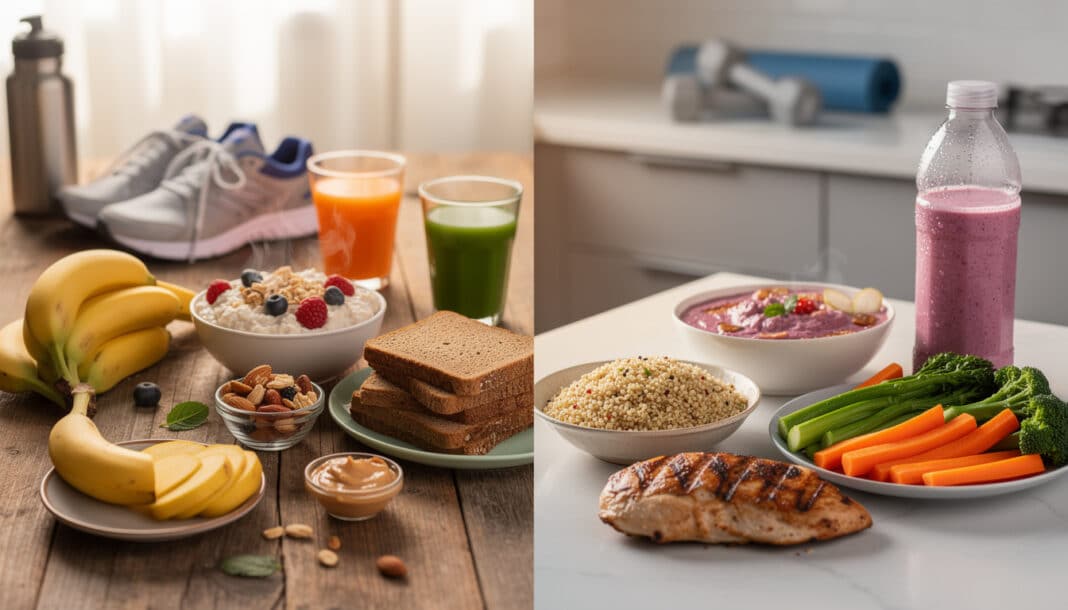
In short — Sports nutrition is much more than a simple question of calories: it shapes the quality of your efforts and the speed of your recovery. Before exercise, carbohydrates combined with light proteins provide the necessary energy without overloading the stomach. During the session, hydration and appropriate intakes maintain performance. After exercise, a balanced meal allows muscles to regenerate and energy stores to be replenished. Timing, food choices and a good understanding of your individual needs are the three pillars of successful sports nutrition.
Brief — 💪 What to eat before exercise to have energy? 🍌 Fruits, rolled oats, natural yogurt — simple choices that fuel without weighing you down. ⚡ How to optimize recovery afterward? 🥗 With proteins and carbohydrates combined, consumed within the hour following your session. 💧 And hydration? Water regularly, light infusions, homemade smoothies — nothing complicated. 🎯 The secret: adapt timing and portions to your activity, then adjust according to how you feel. Far from complex industrial products, a thoughtful and progressive approach truly transforms your relationship to effort.
The fundamentals of pre-exercise nutrition: preparing your body for performance
Long before lacing your sports shoes, the meal that precedes training lays the foundation for what follows. Pre-exercise nutrition is not a question of quantity, but of quality and timing. Three hours before an intense session, a light meal rich in complex carbohydrates and low in excess fiber prepares the muscles without creating digestive discomfort.
This preparatory phase works like the binding of a book: every element must be in its place. Carbohydrates provide immediate fuel, while light proteins stabilize that energy supply. Have you ever felt that lightness during a session, that sense of being able to truly give your best? It's often the result of thoughtful food preparation.

Which foods to choose in the hours before training?
An hour before your session, opt for a light snack: a banana, a few almonds, a natural yogurt. 🍌 These choices offer a balance between quick carbs and protein without overloading your digestive system. If you have more time, two to three hours before, a bowl of porridge with honey and dried fruit creates a solid and lasting energy base.
Rolled oats, in particular, deserve special attention. 🌾 They release their energy gradually, avoiding the blood sugar spike followed by a sharp drop. Test during your light training sessions what suits your body: some enjoy fresh fruit, others prefer dried fruit or fruit pastes. Discover specialized advice tailored to your discipline to refine your strategy.
Always favor moderate portions and foods you tolerate well. Patient experimentation remains the key: what suits your training partner may cause you discomfort. Avoid foods that are too fatty or too fibrous just before the session, as they slow digestion.
Hydration during exercise: maintaining bodily fluidity and mental clarity
During training, hydration imposes itself as an invisible but central necessity. 💧 Your body works like a system where every drop counts. Losing even 2% of your body weight in water can degrade your performance and concentration. For efforts under an hour, plain water is more than sufficient.
Beyond an hour of intense activity, isotonic drinks provide sodium and carbohydrates, compensating for sweat losses and maintaining your energy levels. 🥤 Consider this detailed analysis of sports nutrition: it highlights the importance of hydration calibrated according to the intensity and duration of your effort.
Natural and effective drinks to support performance
Homemade smoothies, prepared with fresh fruit and yogurt, offer a soothing alternative to commercial drinks saturated with refined sugars. 🥑 Try a blend of banana, orange and fresh ginger: it's invigorating, natural, and your digestive system will thank you. A light infusion of green tea or mint, consumed warm or cold according to your preference, soothes thirst without overloading the stomach.
Water remains, however, the essential base. Drink regularly in small sips rather than ingesting large volumes at once. This gradual approach prevents digestive discomfort while maintaining continuous hydration. Have you noticed how some athletes seem to float effortlessly during their sessions? Often, it's because they are properly hydrated.
Recovery and post-exercise nutrition: replenish and regenerate
The post-exercise phase is when your body tenderly asks for what it gave. 💪 This moment, generally neglected, proves decisive for your progress and future well-being. Within thirty to sixty minutes following your session, a snack rich in protein and carbohydrates accelerates muscle regeneration and restores your energy stores.
Imagine this recovery like the restoration of an old book: patience, attention, the right ingredients. Semi-skimmed milk with a banana and a touch of cocoa provides exactly what is needed for your muscles to begin repairing. Post-exercise nutrition is not a luxury, it's a biological necessity.
Compose the ideal recovery meal
Always pair a protein source with carbohydrates: hard-boiled eggs and wholemeal bread, lean chicken and white rice, Greek yogurt and fresh berries. 🍗 These combinations are not arbitrary — they meet a real need of your body. Proteins provide the amino acids necessary for rebuilding muscle fibers, while carbohydrates replenish depleted glycogen stores.
Avoid meals that are too heavy or too spicy immediately after your workout. Your digestion is solicited, your metabolic priorities lie elsewhere. A light protein salad with eggs, crunchy vegetables and a simple dressing is better suited than a massive plate. To deepen this reflection, explore how to adapt your meals before and after exercise.
Timing remains as important as content. 🕐 The longer you wait after your session to eat, the longer the recovery process becomes. Ideally, consume something within the hour following the end of your activity. If a full meal is not possible, a simple protein bar or a fruit with nuts will suffice temporarily.
Build your personalized nutrition strategy
Sports nutrition is never a one-size-fits-all approach. Each body responds differently depending on its metabolism, activity, and training intensity. A marathon runner will not have the same needs as someone practicing explosive weight training. 🏃
Start by observing your sensations. For two weeks, test different food combinations at key moments: one hour before, during (if necessary), and immediately after your effort. Mentally note what allowed you to feel light and performing, and what caused you discomfort. This patient experimentation is your best school.
Adapt your approach according to your sport
A cyclist on a four-hour ride will need regular refueling with energy gels or protein bars. 🚴 A yoga practitioner will be better off favoring light hydration and a balanced meal a few hours before their session. Team sports, due to their variable intensity, require different food preparation than endurance efforts.
Your weight, body composition and goals (performance, general health, weight loss) also influence your needs. A female athlete in the postpartum period will not have exactly the same recommendations as an experienced athlete — although some fundamental principles remain universal.
Do not give in to the temptation of unnecessary supplements. 💊 Before considering protein powders or highly processed bars, first master the art of composing a simple, complete meal with real foods. Fruits, whole grains, natural dairy products, eggs, legumes — these are what have nourished athletes for centuries, long before the emergence of modern nutritional supplements.
Pitfalls to avoid: a clear-eyed reading of your habits
Many people unknowingly sabotage their recovery by choices that seem harmless. Waiting three hours after your session to eat, consuming ultra-processed foods rich in quick sugars, drinking alcohol immediately after exertion: all habits that slow your progress. 🚫
Also beware of the opposite excess: believing you must eat enormously after sport to “reward” your effort. A moderate snack is sufficient in the first hours. The proper meal can wait a few hours if your schedule requires it. What matters is consistency over time, not a single spectacular gesture.
Excessive hydration and other common mistakes
Drinking beyond your real needs can cause hyponatremia (dangerous dilution of blood sodium). ⚠️ Simply listen to your thirst, drink regularly in small amounts. During an effort of less than an hour, water is enough — no need for sugary or isotonic drinks.
Neglecting sleep because you ate well before and after your session would be a major mistake. Sleep remains a pillar as important as nutrition for your recovery and overall performance. A short night quickly erases the benefits of excellent nutrition.
Put into practice: from dream to everyday reality
Turn this knowledge into concrete habits. 🎯 Plan your weekly meals, prepare your snacks in advance, buy the fruits and foods you will need. This predictive organization, which every craftsperson instinctively recognizes, creates the conditions for success.
Start modestly. If you had nothing specific before your sessions, simply add a banana one hour before. If you never thought about recovery, have a yogurt with honey as soon as your session ends. Gradually, by refining each detail, you will feel the difference: more energy, better endurance, faster recovery, less chronic fatigue.
Sporting excellence, like the binding of a beautiful book, is built with patience, attention to detail and a deep understanding of what makes each element indispensable. Your body is a work of art of which you are both the craftsman and the reader. Each meal is another page in this story of constant progress.
Profil de l'auteur
Derniers articles
 Dog, Cat & Animals12 August 2026Sale of dogs and cats in pet shops : new severe fines come into effect
- Development, Digital Marketing & SEO11 August 2026Influencer marketing: French brands are increasing their budgets
- Psychology11 August 2026This personality trait may be linked to a longer life
- Agency, Webmarketing & SEO10 August 2026Advertising market in France: CTV and retail media drive growth, despite advertisers' caution




Table of Contents