
In short: Finding a cheap plane ticket in 2026 is less magic than a well-thought-out strategy. Contrary to urban legends, the exact hour or day of booking does not really affect the final fare: what truly matters is planning ahead and flexibility with dates. Midweek departures (Tuesday to Thursday) generally remain less expensive than weekends, while June and September often offer the most advantageous fares. Browsing in incognito mode, though often mentioned, does not automatically change prices, nor does booking in the middle of the night. On the other hand, signing up for price alerts, exploring alternative airports and accepting stopovers can really make a difference to your travel budget.
🎫 Separating truth from myth: what urban legends tell us
For years, travel forums have been full of contradictory advice. Booking on a Tuesday at 3 a.m. in incognito mode, using a VPN, checking fares at midnight on a Thursday… so many rituals travelers repeat like mantras. However, these tips belong more to popular belief than to pricing reality.
According to industry experts, notably Frédéric Pilloud, Marketing Director at MisterFly, the hour and day of your search have absolutely no impact on the airfare you will pay. A ticket cheaper in the evening than in the middle of the day? It's possible, but that results from hundreds of other factors, certainly not from the moment you clicked on the site.
This confusion stems from a lack of understanding of how flight comparison sites and pricing algorithms actually work. Every fare fluctuation hides a complex and systematic logic, far from the simplistic assumptions found on social networks.
💡 Yield management: the real mechanism behind prices
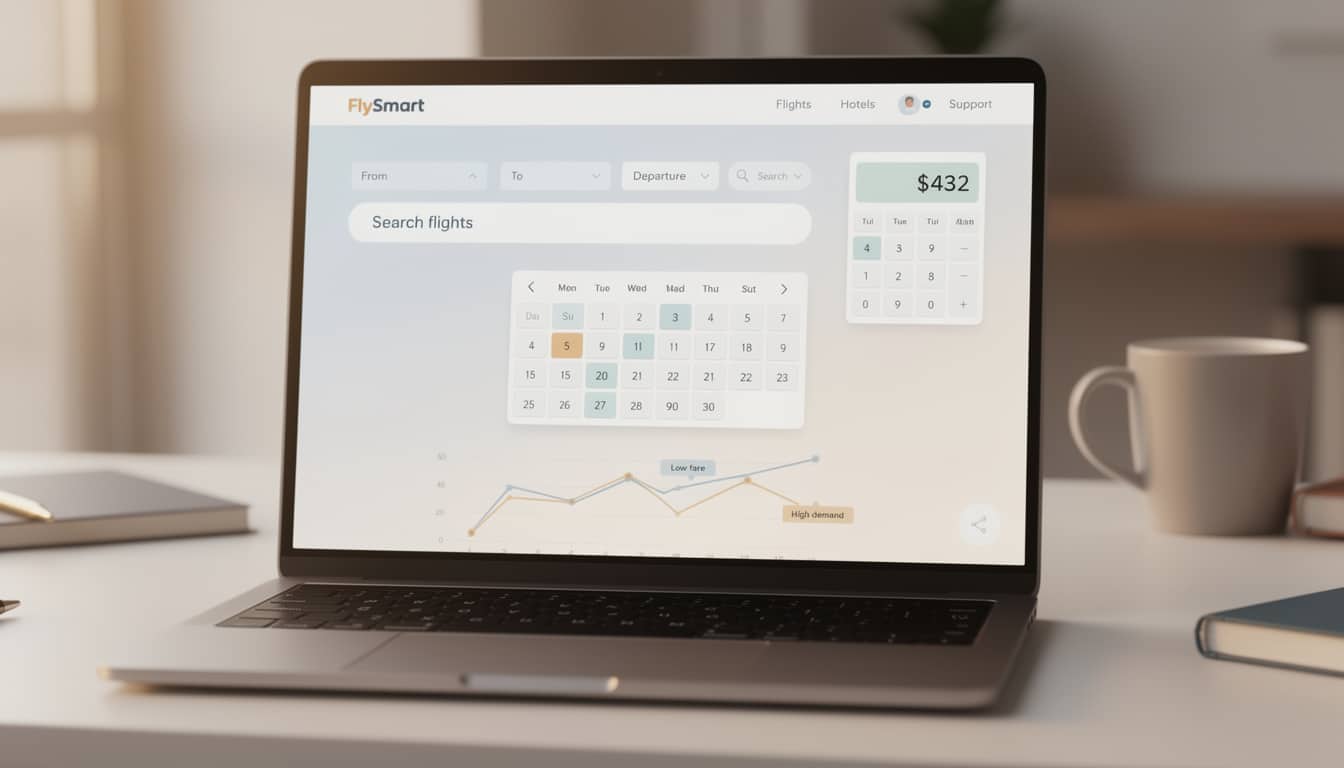
To understand why a flight shows €100 in the morning and €130 in the afternoon, you need to look at yield management. This pricing method adjusts fares according to demand, load factor, competitors' prices and dozens of other variables in real time.
Imagine an old book whose chapters were bound according to their popularity: the more readers demanded it, the more the binder increased the care given to the finishing, and thus the price. Airlines operate similarly. Each row of seats has a code and a specific fare. Once that bracket is booked, you move to the next, and so on until the aircraft is full.
This switch between fare levels explains why an economy flight can suddenly seem more expensive between two successive searches. It's not a programmed increase: it's simply that seats at that fare have been sold, and the airline is now offering the next bracket.
🔄 The traveler's indecision, an invisible factor
Notice how booking a plane ticket generates a certain anxiety. You hesitate, you compare, you postpone the decision. That lapse of time between the first search and the final purchase creates a gap where prices naturally increase. There's no scheme here: simply, the longer you wait, the more room you leave for fare adjustments.
According to specialists, this period of indecision matters more than the supposedly perfect timing. Waiting a few days hoping to « find the right moment » may ultimately lead you to pay more than if you had decided quickly.
⏰ Planning ahead: the only rule that really works
If only one tip deserves your attention to find a cheap plane ticket, it's this: book several months in advance. This rule, unlike urban myths, is based on a solid and proven economic logic.
For a long-haul flight, you should consider booking between 3 and 5 months before departure. For a short-haul, 1.5 to 3 months is enough. At this early stage, airlines offer their most competitive fares, before gradually adjusting upwards as the date approaches and seats become scarce.
Be careful, however, not to swing to the opposite extreme. Booking a year in advance is not an infallible guarantee: airlines continually readjust their fares downward over the months, as costs and uncertainties diminish. Planning ahead, yes, but in moderation.
📅 Periods to favor
Beyond booking timing, your departure date plays a very real role. Days of the week are not equal when it comes to airfares. From Tuesday to Thursday, prices generally remain lower than on weekends, when leisure travel and personal trips dominate bookings.
As for the months, June and September have traditionally been the cheapest times of the year. Why? These months flank the main summer holidays, offering an ideal window to travel off-peak, away from the crowds of July and August. It's a clever strategy: enjoy good weather while avoiding the summer price surge.
🔍 Practical tools and strategies to optimize your search
Beyond myths, certain concrete practices genuinely improve your chances of snagging a deal. Les comparateurs de vols en ligne aggregate offers from hundreds of carriers, offering a panoramic view of available fares at a glance. Skyscanner, Kayak and Momondo are among the most popular, each bringing its own expertise.
Beyond one-off searches, subscribing to price alerts transforms your booking approach. As soon as a fare drops on your preferred route, you are informed. It's like receiving a handwritten note slid under your door: a discreet nudge that changes everything.
✈️ Alternative airports and stopovers as assets
Many travelers fixate on the main airport of a region. However, broadening your horizon to secondary or regional airports can yield significantly more advantageous fares. A trip of a few kilometers by car or train is often worth the savings on the ticket itself.
Similarly, flights with stopovers, although longer and sometimes tiring, allow access to fare ranges far lower than direct flights. Searching for the best budget travel deals also means accepting a certain flexibility regarding immediate comfort.
📧 Newsletters and loyalty programs
Signing up for airlines' newsletters gives exclusive access to flash sales and promotional fares. These opportunities often arise unexpectedly and disappear just as quickly. It's a form of patient vigilance: you wait, and a great opportunity falls into your lap.
Loyalty programs, meanwhile, turn your miles and points into free tickets or upgrades. Air France, for example, with its Flying Blue program, rewards frequent travelers. In the long run, this accumulation becomes a very useful parallel currency.
🛡️ What you really must not forget: hidden fees and insurance
The price displayed on your computer screen is never the final price. Baggage, onboard meals, upgrades, insurance… so many extras that nibble away at your budget in silence. Reading the terms, especially the fine print, becomes an almost ritualistic gesture for the savvy traveler.
Even holding the cheapest ticket, an unexpected problem can be costly. That's where travel insurance comes in, often neglected, always useful in case of cancellation or incident. A few extra euros at booking can potentially save you hundreds of euros of trouble.
🎒 The issue of baggage and comfort
Bringing your own food on the plane, reducing your luggage to the strict minimum, choosing a non-premium seat… so many micro-decisions that reduce ancillary fees. It's an art of thoughtful frugality, not deprivation.
Some adventurous travelers even book just a one-way ticket, then buy the return separately depending on current prices. Others strangely discover that booking a round-trip ultimately costs less than a one-way alone. Airlines play on these fare asymmetries; it's up to you to take advantage.
🌍 Build your personalized budget travel strategy
Booking a flight at the best price doesn't follow any magic formula, but a personal geometry. Your destination, your schedule, your tolerance for stopovers, your aversion to Mondays or your preference for regional airports: all these elements make up your unique equation.
Rather than blindly following generic advice, ask yourself questions. How much flexibility do you have? Three months before or five? A weekend or a full week? Will you have time for a connection? The answers to these questions map out your path to the best fares.
📊 The importance of continuous monitoring
Where legends lose ground and truth operates is in regular monitoring. Exploring tips to reduce your air travel expenses also means checking platforms repeatedly, over a few weeks. You observe the variations, cycles, and fare patterns specific to your route.
It's a patient, almost meditative act. Like rereading an old book several times to discover new details, exploring air fares gradually reveals its secrets. Anomalies become visible, good deals obvious.
In 2026, where information flows in real time and prices fluctuate by the nanosecond, the traveler armed with knowledge has an undeniable advantage. Forget superstitious rituals. Embrace flexibility, planning ahead, and a healthy dose of observation instead. Your wallet will thank you, and you'll make a point of looking for good opportunities rather than waiting for the miraculous moment that will never come.
Profil de l'auteur
Derniers articles
 Smartphones & Mobile Phones14 October 2026The loyalty penalty on your mobile bill: why staying put costs you more
- Family, Babies & Children5 October 2026Airline family seating fees: what the planned ban will change for parents
- Everyday Life & Society23 September 2026Consumer confidence index: what the monthly mood check on British households really measures
- Agency, Webmarketing & SEO31 August 2026SEO : a Google bug skews visibility statistics in AI results




Table of Contents