
In short: The right of withdrawal is a fundamental legal protection for consumers making distance purchases. With a period of 14 calendar days to change your mind, you can cancel your order without justification. However, exceptions exist (customized products, services already started, digital content), and return costs generally remain your responsibility. Understanding the refund procedures and the specific conditions is essential to effectively assert this right.
🛡️ The right of withdrawal: an essential protection for your online purchases
You have just received a product ordered online and realize that it is not exactly what you imagined. Good news: the right of withdrawal allows you to change your mind without having to justify your decision. This legal provision is a real safety net for consumers who buy remotely.
This protection is part of a strict regulatory framework aimed at balancing the relationship between professional sellers and buyers. It applies to both online purchases and contracts concluded off-premises, that is when a trader offers you a product or service outside their professional premises.
To better understand your rights and obligations, consult the official information on consumer withdrawal rights, which details the applicable legal modalities precisely.
📋 When the right of withdrawal applies and when it does not
Not all purchases benefit from the right of withdrawal. It is important to clearly identify the situations in which this right applies or not. Distance contracts — notably online purchases — are the primary area for this right. You can also withdraw from a purchase made during a home demonstration, from subscribing to a telephone subscription, or from signing up for a gym membership made by phone.
However, certain categories of products and services are excluded from this protection. Personalized goods or custom-made items cannot be subject to withdrawal, since their nature implies execution specific to your request. Likewise, if you explicitly requested that a service begin before the end of the legal period, you will no longer be able to withdraw.
📌 Catering, accommodation, transport or leisure services booked for a specific date are also not covered by the right of withdrawal. Digital content (ebooks, software, music) without physical support also falls under an exception, unless you did not consent to the execution beginning before the expiry of the period.
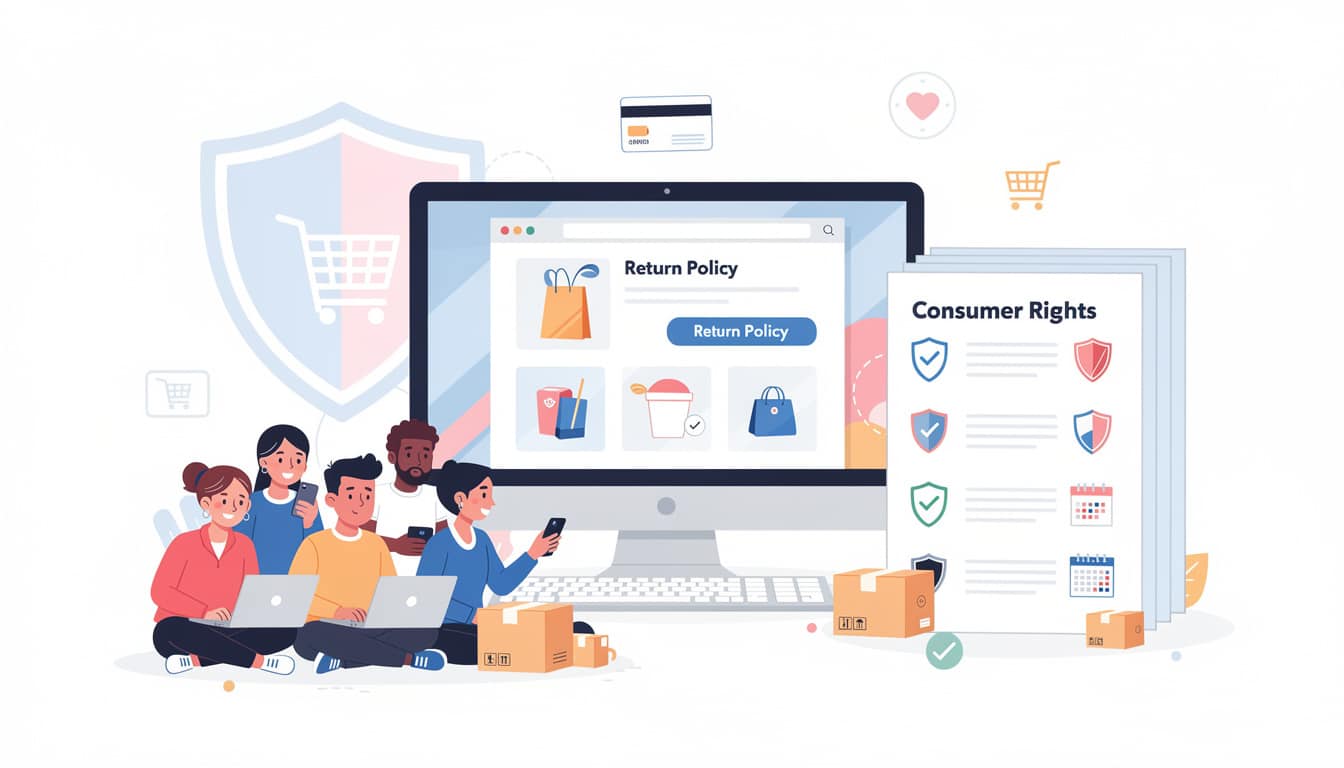
⏱️ Withdrawal deadlines: 14 days, but under what conditions
The standard withdrawal period is 14 calendar days, the starting point generally being the receipt of the good or the conclusion of the contract. This period gives you a sufficient reflection window to check that your purchase meets your expectations. This period can, however, be extended if the seller fails to inform you of this right or does not provide the mandatory contractual information.
Certain contracts follow specific rules. For insurance contracts, the starting point is the conclusion of the contract or the delivery of the contractual documents — the later date prevails. In real estate matters, the withdrawal period is 10 days from the day after the first presentation of the registered letter with acknowledgment of receipt notifying the act.
💡 Be sure to systematically check the exact period in the seller’s withdrawal terms, as some sectors apply particular rules. Constant vigilance will prevent you from missing your opportunity to withdraw.
💳 Refund procedures and return costs: who pays what
To exercise your right of withdrawal, you must first inform the seller in writing of your intention, using a method that leaves a trace (registered letter with acknowledgment of receipt, email, online form). This step formalises your request and constitutes the first stage towards a refund.
Once this notification is received, the professional has 14 days maximum to refund you the full amount paid. The refund follows the same route as the original payment — if you paid by credit card, the amount is returned to your card account. Regarding return costs, the situation varies: they generally remain your responsibility, unless the seller failed to inform you of this obligation or explicitly offers to cover them.
Consult details on refund procedures for an online purchase, which provide a comprehensive overview of sellers’ legal obligations.
🚚 You must return the goods within 14 days from the communication of your decision. Ideally: return the product in its original packaging and in excellent condition to avoid any justified deduction by the seller. If the merchandise has suffered depreciation due to your handling (beyond what is necessary to inspect it), the seller could request financial compensation.
📝 How to exercise your right of withdrawal: the practical procedure
The procedure for exercising the right of withdrawal remains simple but requires respecting a few essential formalities. You must communicate your wish to withdraw to the seller in a clear and unambiguous manner. An email is technically sufficient, but a registered letter strengthens your position in the event of a later dispute — it constitutes indisputable proof of the date of transmission.
No justification is required: you are not obliged to explain why you wish to cancel your purchase. A simple statement of your intention is enough. 📌 Make sure to keep a copy of your request and obtain an acknowledgment of receipt, whether postal or digital. This documentation protects your interests in case of disagreement over the effectiveness of your request.
Once your withdrawal has been notified, arrange the return of the product without delay. However, if the seller remains inactive past the 14-day refund period, do not hesitate to follow up or explore avenues of recourse (mediation, consumer association). To delve deeper into this crucial phase, consult the practical guide to the right of withdrawal for consumers.
⚖️ Exceptions and special cases: understanding the limits of the right
Although the right of withdrawal offers general protection, the legal reality includes nuances that every informed consumer should master. If you explicitly asked a provider to begin performing a service before the legal period expired — for example, an urgent translation or an immediate repair — you then lose the right to withdraw for the portion executed.
Online merchants must inform you clearly and legibly about the existence of your right of withdrawal, the applicable deadlines and the conditions of exercise. Failure to provide this information invalidates the withdrawal period, which then extends by up to an additional 12 months. 💼 For insurance or consumer credit contracts, special regimes apply, sometimes with reduced periods or distinct modalities.
Also, goods that suffer a noticeable deterioration during your possession may incur partial billing. The seller can claim compensation if the depreciation results from excessive handling — inspecting the item does not justify a deduction, but opening all secondary packaging or using the product intensively may do so.
🔍 Practical tips to effectively defend your rights
To withdraw without complication, start by carefully reviewing the merchant’s terms and conditions of sale. These documents specify the deadlines, return shipping costs and refund procedures specific to that seller — and cannot override the law except in your favor.
📌 Always keep a written record: copy your withdrawal request, keep email confirmations, note the tracking numbers of your postal return. These proofs will be essential if a dispute arises. When you return the goods, photograph them beforehand to document their condition — a picture is worth a thousand words in case of a dispute.
If the seller is slow to refund or unjustifiably refuses, before incurring legal costs, try amicable mediation or contact a local consumer association. Many conflicts find a quick resolution through these informal channels, as is often observed during intense sales periods such as peak promotional periods when returns surge.
🎯 Differences between the right of withdrawal and the statutory warranty
A common confusion pits the right of withdrawal against the statutory warranty. The former concerns your freedom of choice: you change your mind for any reason, personal or aesthetic. The statutory warranty, on the other hand, applies when the product has a defect or does not correspond to the seller’s description — it is a remedy based on conformity, not regret.
💡 These two mechanisms coexist and add up. You can invoke your statutory warranty even after the 14-day withdrawal period has passed. For an electronic purchase, the statutory warranty covers a period of two years from the delivery of the good. That is why understanding these two avenues of recourse distinctly strengthens your position as a consumer.
During commercial tensions or periods of high online sales activity, sellers sometimes try to deliberately confuse these concepts to limit their obligations. Remain vigilant and do not accept being opposed with a warranty deadline when you invoke your right of withdrawal, or vice versa.
🌍 Withdrawal in a cross-border context
If you buy from a trader established in another European Union country, the right of withdrawal applies identically — the law of your country of residence prevails. However, the return procedures (notably the costs) can be more complex to handle. Some international sellers require a return to their country of origin, which significantly increases your shipping costs.
📌 Before buying from a foreign seller, check how they handle returns and who bears the costs. The European Union enforces harmonisation of the right of withdrawal, but logistical practice depends largely on the seller. Favor merchants offering simplified returns or compensation for return shipping costs.
For purchases outside the EU, the right of withdrawal may not apply, or different periods may apply. Extra vigilance is therefore required when you cross commercial borders.
📞 Resources and support to assert your rights
Several organisations exist to support you in defending your consumer rights. National consumer associations, specialised public services and official government websites provide tools, letter templates and up-to-date advice.
Never underestimate the importance of rigorous documentation. 💼 In the event of a persistent dispute, a consumer association can represent you free of charge or at low cost. Some even offer a mediation service with the merchant — a faster and less expensive route than the courts.
You can also explore e-commerce platforms that offer enhanced buyer protection, which intervene on your behalf in case of seller failure. Finally, if you plan regular purchases, take the time to consult an in-depth analysis of the legal framework of withdrawal to anticipate all scenarios.
Information remains your best ally: consuming with full knowledge means consuming safely, able to invoke your rights without hesitation or surprise.
Profil de l'auteur
Derniers articles
 Smartphones & Mobile Phones14 October 2026The loyalty penalty on your mobile bill: why staying put costs you more
- Family, Babies & Children5 October 2026Airline family seating fees: what the planned ban will change for parents
- Everyday Life & Society23 September 2026Consumer confidence index: what the monthly mood check on British households really measures
- Agency, Webmarketing & SEO31 August 2026SEO : a Google bug skews visibility statistics in AI results




Table of Contents