Summary : Online payment errors represent a serious threat to your finances. Between technical problems, sophisticated scams and security vulnerabilities, discover how cybercriminals can empty your bank account and the solutions to effectively protect yourself.
Key points of this article :
- 🚨 Fatal mistakes when paying online can expose your banking data
- 💳 FormJacking is a silent technique that captures your card information
- ⚠️ SMS scams and phishing drain bank accounts every day
- 🔐 Strong authentication and vigilance are essential to secure your transactions
- 📱 Virtual cards offer additional protection against bank hacking
- ✅ Transaction cancellation remains possible under certain precise conditions
🔴 The fatal mistakes that can empty your bank account
Every day, thousands of consumers face online payment errors that turn a simple transaction into a financial nightmare. These errors are not always due to your inattention, but often to security flaws exploited by sophisticated cybercriminals.
Most of the time, you still receive your order a few days after paying. But in the background, your bank account is quietly being emptied. You only discover it when checking your statement, when it is too late to act quickly.
The vulnerability begins the moment you enter your banking details into a payment form. That is precisely the moment hackers target to inject their malicious scripts and capture all of your sensitive information.
🎯 FormJacking: the silent scam that leaves no trace
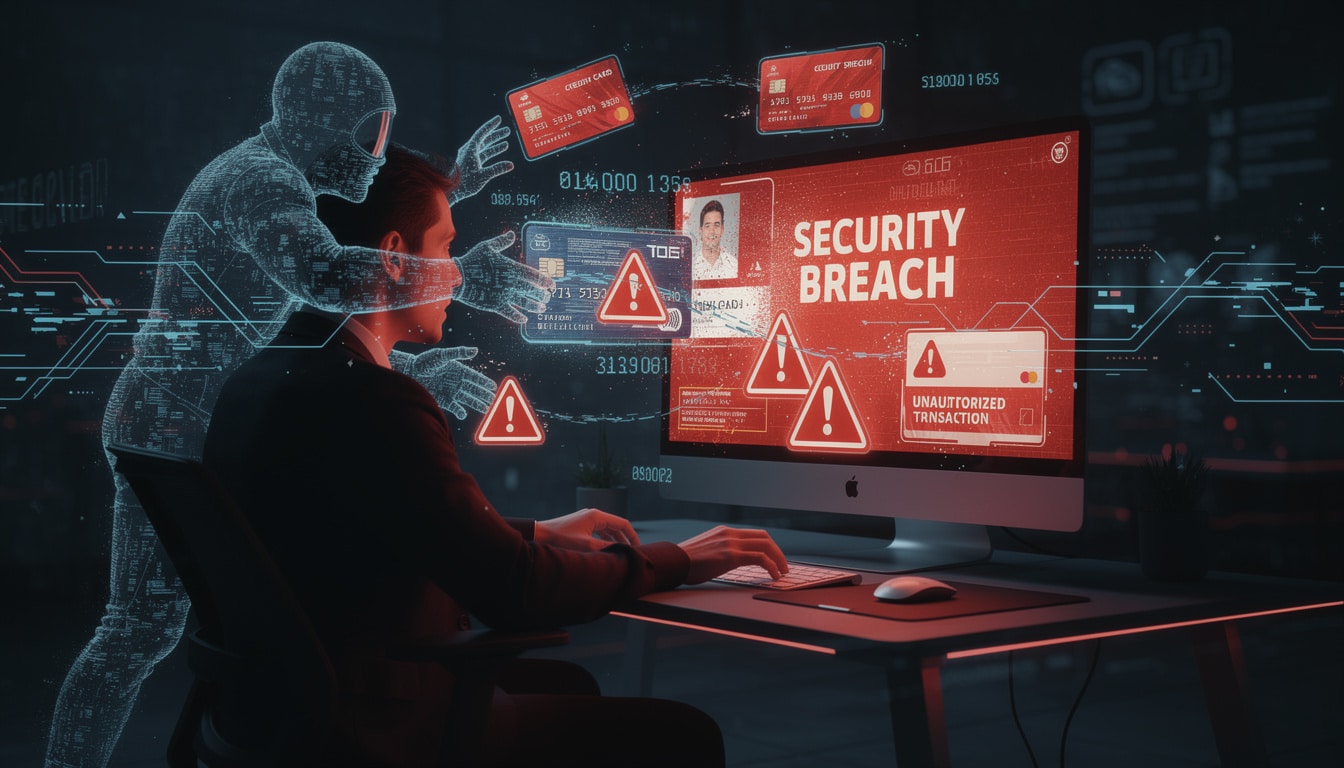
FormJacking is a dreadfully effective cybercrime technique. Unlike classic viruses, it does not visibly alter your computer or browser. Instead, hackers inject malicious JavaScript code directly onto the payment page of the site you visit.
This script then captures every piece of information you type: your card number, your name, the expiration date, and the three-digit security code on the back. The most insidious part? You are completely unaware that your data has been stolen. Everything works normally on your side, you receive your order confirmation, and you think everything went smoothly.
Then, cybercriminals resell your data or use it to carry out massive unauthorized transactions on your account. Some do not target one or two people, but hundreds of thousands. In 2018, British Airways was the victim of such an attack, compromising more than 320,000 customers.
⚡ Threats that expose your banking data
Even before your payment is processed, several weak points can expose your data protection. These vulnerabilities are exploited at different stages of your transaction, from the moment you click “pay” until the final confirmation.
The real question is not if you are a target, but when you will become one. Any individual who regularly shops online, visits e-commerce sites, or has online bank accounts faces this risk.
📵 SMS scams that drain accounts
Bank SMS scams have multiplied in recent years. Cybercriminals send messages impersonating your bank, asking you to click a link or validate an urgent operation.
Once you provide your credentials or accept an action, your account is compromised. The hacker can then make massive transfers or activate paid services without your consent. To learn more about these techniques, consult a comprehensive guide on bank SMS scams.
🔓 Technical issues that facilitate fraud
An unstable Internet connection during your payment can interrupt the process and create anomalies. Sometimes your transaction does not complete, but your account is debited anyway. Other times, the system asks for payment again, and you end up paying twice without realizing it.
Browser errors, malicious cookies stored on your machine, or compromised plugins can also inject malicious code without your knowledge. That is why experts recommend regularly clearing your browser cache and updating all your systems.
🛡️ How to secure your online payments and avoid account draining
Bank security relies on a combination of technological measures and responsible behavior. You cannot rely solely on your bank to protect you; you are also responsible for your actions online.
💻 Updates: your first line of defense
Regular updates to your operating system, browser, and software are not administrative hassles: they are essential security patches. Each update fixes vulnerabilities that hackers already know about and actively exploit.
Never postpone a security update. When a notification appears, install it as soon as possible. This also applies to your smartphone, connected printer, and any device capable of connecting to the Internet.
Modern security suites and antivirus programs add an extra layer of protection. They can detect and block malicious scripts before they reach your browser or sensitive data.
🃏 Virtual cards: a smart protection
Virtual cards offered by many banks are limited in time or by amount. If you generate a virtual card for a purchase of 50 euros, the hacker cannot spend more, even if they obtain the number.
Each virtual card is unique and traceable. If it is compromised, you can disable it immediately without affecting your real bank card. It is an excellent solution for purchases on unknown or less reliable sites.
🔐 Strong authentication: a bulwark against fraud
Two-factor authentication and strong authentication (3D Secure) make it much more difficult for third parties to access your accounts. Even if a criminal has your card number, they must also overcome a second verification barrier.
Since 2026, banking regulations require strong authentication for transactions over 100 euros. If your bank offers it, enable it systematically. It is a minor inconvenience compared to the protection it provides.
⚠️ When the mistake has already been made: how to cancel or recover your money
Despite all precautions, a fatal error can occur. You have sent money to the wrong account, or you have discovered unauthorized debits. What to do at this stage?
📊 Timeframes and procedures to cancel an erroneous payment
If you realize your mistake quickly, you have a limited time window. For an occasional bank transfer, you can cancel it as long as its status remains “pending” processing by your bank.
For scheduled or deferred transfers, cancellation is possible until the day before the scheduled date. For standing transfers, you can cancel them at any time before the next due date. Visit the complete guide to canceling a bank transfer and discover the exact procedures depending on your situation.
Deadlines play a crucial role. The faster you report the error to your bank, the greater your chances of recovering your money. You have up to 70 days after the debit to oppose it, a period that can be extended to 120 days depending on your contract.
🏦 Your bank's responsibility in case of a scam
If you are a victim of an unauthorized transaction due to a security flaw on the merchant site, your bank has a duty to assist. It must conduct an investigation and attempt to recover your funds from the beneficiary's account.
This procedure is called a “transfer recall” and only works for SEPA transfers. Your bank contacts the recipient's bank to request the return of the funds. Unfortunately, if the account has already forwarded the money elsewhere or if it is an international transfer, recovery becomes almost impossible.
See this article on payment error messages to understand exactly what happened during your transaction.
👤 If you received a transfer intended for someone else
You suddenly receive money in your account that does not belong to you. What to do? Do not spend it. This is crucial. Under the Civil Code, you are obliged to reimburse this money to its rightful owner.
Contact your bank immediately to report the error. The bank can then automatically credit the sender's account. If you spend the mistaken money, you risk legal action and substantial financial penalties.
🌐 The most common technical problems during payment
Beyond scams, simple technical errors also cause unnecessary debits and frustrations. Understanding these problems helps you avoid them or react quickly.
⏱️ Connection interruptions and double payments
You click “confirm my payment” but your WiFi connection drops. You come back 10 seconds later and… the page asks for your details again. You think the first payment failed, so you pay again.
In reality, both transactions were processed. You discover this fatal error when checking your bank statement. To avoid this, always wait for the confirmation message before leaving the page or clicking again.
A stable connection is essential. If you have a slow connection, prefer a wired network or wait for a better connection before making an important payment.
🚫 Payment refusals: exceeded limits and anomalies
Your card is declined even though you have enough money. This is often because you have exceeded your card's payment limit. Banks intentionally limit daily amounts to reduce fraud risk.
Check your banking app and verify your limits. If you need to increase them temporarily, contact customer service. To understand in detail why your payment is declined, consult your bank's resources.
🔍 IBAN anomalies and incorrect details
If you enter an incorrect IBAN, your bank may detect the anomaly and block the payment before it is processed. This is a smart protection that prevents you from losing your money.
However, systems do not detect all errors. If the first 10 digits of the IBAN match a valid account but it belongs to someone else, the transfer may go through. You will then need to contact the beneficiary's bank to request a refund, a process that can take several weeks.
🎖️ Best practices for safe browsing
Beyond payments, your overall banking security depends on your daily online habits. A few simple actions can dramatically reduce your risks.
🏪 Choose the right sites for your purchases
Do not enter your banking details anywhere. Beware of unknown or insecure sites, but do not blindly trust big names either. Large companies have also been victims of massive attacks.
Before paying, check that the site uses HTTPS (the closed padlock in the address bar). Read user reviews and check the privacy policy. A professional site should clarify how it protects your data.
For purchases on new or little-known sites, prefer virtual cards or digital wallets that do not share your real card number.
📋 Constant monitoring of your statements
Check your bank statements regularly, ideally every week. Most banking apps send instant notifications for each transaction. Enable them and read them.
If you detect an unauthorized transaction, report it immediately. The faster you act, the more likely your bank can recover the funds and prevent further fraudulent debits.
🔑 Manage your credentials with rigor
Use unique, complex passwords for each site. Never reuse the same password. A secure password manager can help you manage them without having to memorize them.
Enable two-factor authentication on all your important accounts, including your email and bank access. Even if someone steals your password, they will not be able to access your account without the additional code.
Profil de l'auteur
Derniers articles
 Smartphones & Mobile Phones14 October 2026The loyalty penalty on your mobile bill: why staying put costs you more
- Family, Babies & Children5 October 2026Airline family seating fees: what the planned ban will change for parents
- Everyday Life & Society23 September 2026Consumer confidence index: what the monthly mood check on British households really measures
- Agency, Webmarketing & SEO31 August 2026SEO : a Google bug skews visibility statistics in AI results




Table of Contents