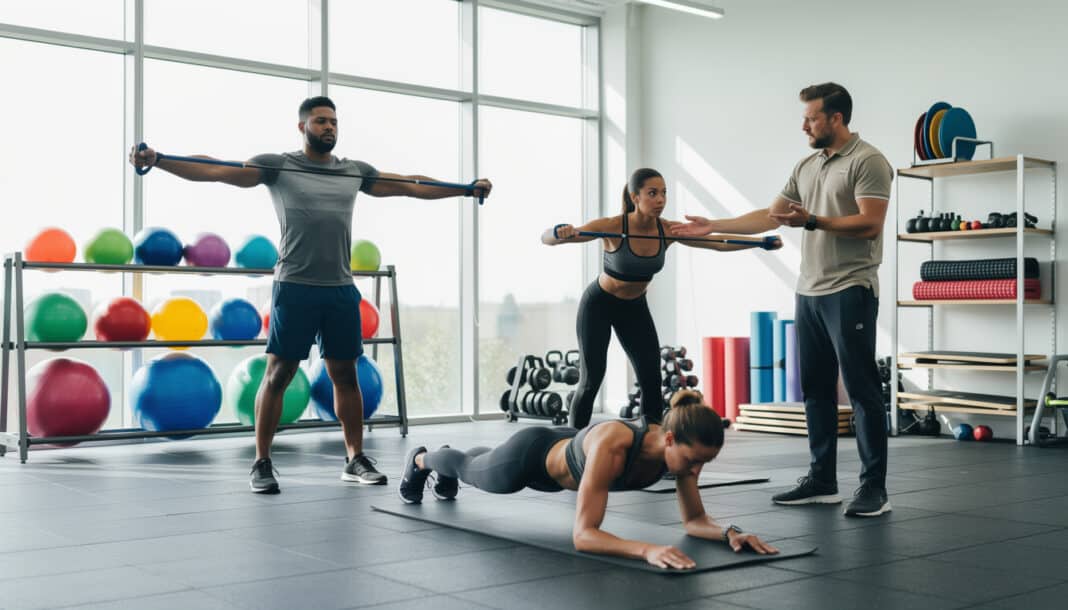
The body's balance is like the binding of a precious book: each thread must be stretched with precision. Preventing sports injuries is not a matter of chance, but of patient construction, based on correct and repeated movements. Postural strengthening exercises form that invisible framework that protects every movement, every effort. In 2026, as the focus on well-being and sustainable performance grows, understanding how to stabilize the body becomes an act of compassionate self-defence.
Key takeaways: A solid posture drastically reduces the risk of injury. Strengthening exercises, particularly those targeting the core and body stability, form the foundation of effective prevention. Muscular balance and proprioception work together to protect the joints. A comprehensive approach — warm-up, mastered technique, attentive recovery — turns sports practice into a safe path toward performance. Movement professionals recommend a progressive preparation, never forced.
🏋️ The invisible foundation: why postural strengthening changes everything
Imagine a building with mismatched foundations: the walls crack, the doors no longer close properly, and every storm becomes threatening. That's what happens when the body lacks bodily stability. Preventing sports injuries begins with this primary truth: a well-anchored body is a protected body.
The deep trunk muscles — those discreet little workers — are not seeking the glory of pumped-up pecs. They weave a protective web around the spine, keeping each vertebra in place, absorbing shocks, allowing fluid movements. When this framework is neglected, the rest follows: the knees work poorly, the shoulders stiffen, the ankles weaken. The advice of physiotherapists already confirmed this, and that wisdom persists.
That is why core strength is never a luxury, but a necessity. It supports every daily movement and every athletic performance, whether you are a runner, a dancer, or simply a human who walks.
💪 Fundamental postural strengthening exercises
Building core strength, stone by stone
There is no shortcut to a solid posture, only repeated movements, mindful breathing, small daily victories. Postural muscular strengthening is built progressively, without force, like preparing and assembling the sections of a book.
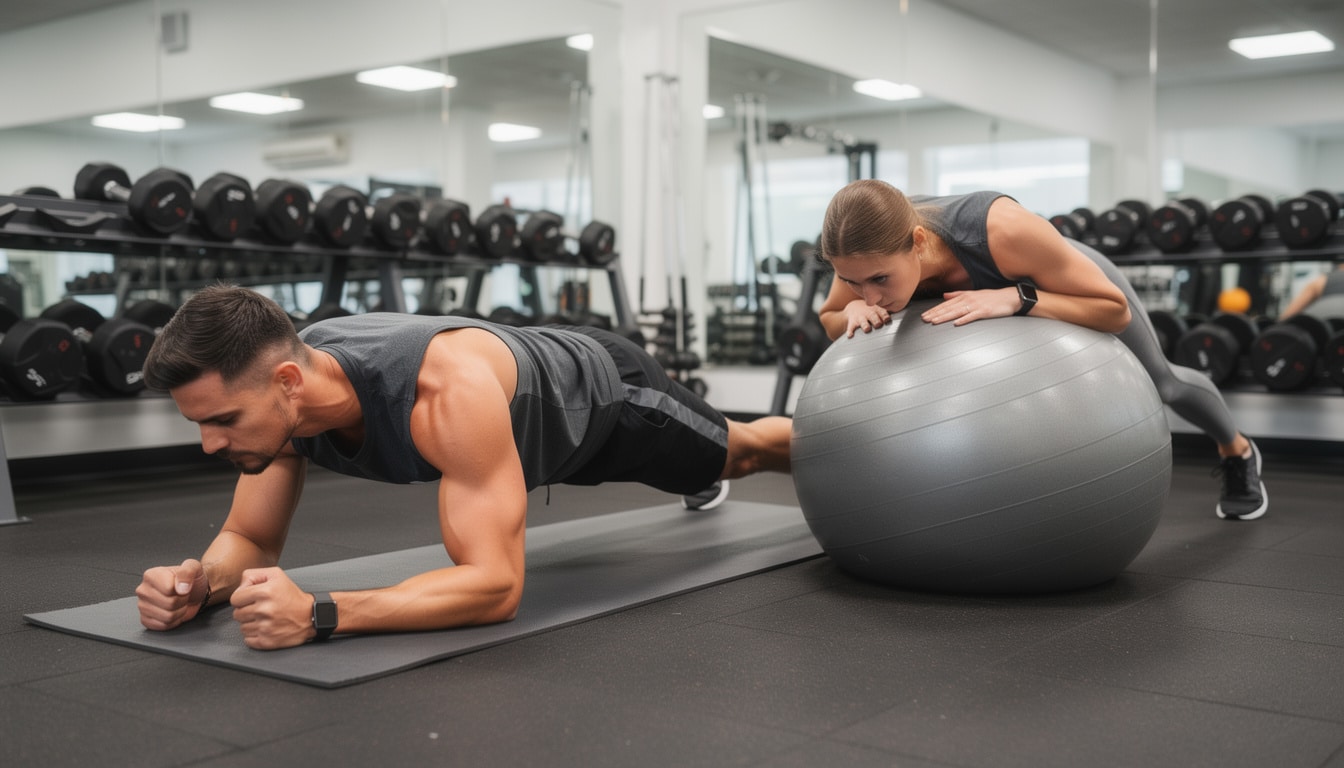
Planks — those seemingly simple movements — embody this philosophy. Holding the body in a straight line for a few seconds creates a dialogue between the deep muscles and body awareness. Start with 20 seconds, then 30, then a minute. Each progression marks a step in strengthening.
Back extension exercises, performed with control, awaken the paravertebral muscles often put to sleep by hours of sitting. Glute bridges activate this very important, often forgotten area. Controlled trunk rotations restore joint mobility too often lost.
🎯 Proprioception, or the art of feeling your body in space
Proprioception — that somewhat scholarly word that simply means “feeling where your limbs are” — is the foundation of true stability. It's not visible, but it's tangible: that's why we stand without looking at our feet.
Single-leg balance exercises, work on unstable surfaces (balls, wobble platforms) awaken hundreds of tiny nerve receptors. They teach the body to correct itself in real time, to anticipate imbalances, to avoid falls.
It is during these moments of controlled instability that joint health is strengthened. The ankles, knees, and hips learn to stabilise themselves, without relying on a single large muscular contraction.
🌟 Warm-up: preparing the ground
A bookbinding workshop requires tidying: tools laid out, the leather prepared, the hands warmed. Before every sports session, the body deserves the same caring attention. Prevention guides recommend a progressive and structured preparation, and that logic holds up.
Ten to fifteen minutes of light cardiovascular activity gently raise internal temperature and increase blood flow to the muscles. Then come the specific movements: those that mimic the upcoming activity, but gently. For a runner, progressive high knees; for a weightlifter, joint mobilization movements.
Dynamic stretches — never static before exertion — awaken muscular range without “locking” it. It's the difference between gently opening a door and forcing it: one prepares, the other damages.
⚡ Muscular balance: avoiding the asymmetry that injures
How many sports create imbalances? Tennis players develop an overpowered arm. Runners too often skip upper-body muscular work. Cyclists forget the posterior leg muscles. These asymmetries are never innocent: they accumulate stress in weakened joints.
That is why muscular balance must become a gentle obsession. Working opposing muscle chains, strengthening what is forgotten, guarantees even wear, a fair distribution of forces. A complete athlete is not one who shines in a single direction, but one who stands without fear.
🔄 Front, back, left, right — each area should receive the attention it deserves. When they are all strong, none complains.
💧 Recovery: where the magic happens
We rarely talk about the moments after, yet that's where the body truly builds. Effort slightly destroys muscle fibers; recovery rebuilds them stronger. Without this phase, training becomes mere destruction.
Regular hydration, before, during and after effort, maintains that inner fluidity without which nothing functions well. Gentle stretches at the end of a session release accumulated tensions. 7 to 9 hours of quality sleep allow the body to synthesise proteins, repair micro-lesions, and prepare for the next day.
Balanced nutrition — rich in carbohydrates and proteins within 30 minutes following effort — provides the building blocks for this reconstruction. Some add light, mindful self-massage to improve this beneficial circulation.
👂 Listen to your body: the forgotten wisdom
In our cultures of “the stronger,” of “no pain no gain,” we forget a simple truth: pain is never normal during exertion. It's a signal, not a weakness. A twinge in the knee, an unusual burning in the shoulder, abnormal fatigue — these messengers deserve to be listened to.
Injuries that persist beyond 48 hours, swelling, sudden stiffness — all of these deserve a pause and an assessment. It's difficult for those who love consistency, but it is this wisdom that allows you to last, to truly progress, without frustrating interruption.
🛑 Prevention begins with listening. Two days of rest can prevent two months of forced downtime.
🔀 Diversify to strengthen
Monolithic training — always the same exercises, the same muscle groups — creates imbalances. Overused tendons become inflamed, overworked joints tire. Musculoskeletal disorders emerge silently: tendinitis, bursitis, chronic pain.
Mixing practices — strength training one day, moderate cardio another, yoga or swimming for fluidity — ensures that every fiber receives varied attention. The seven reflexes to prevent sports injuries all acknowledge this importance of variety.
This diversity is also a hidden pleasure: it prevents boredom, maintains motivation, and lets you rediscover new sensations with each outing.
📋 Warning signs never to ignore
Some symptoms leave no room for debate: you must stop and consult. A persistent pain lasting more than 48 hours, visible swelling, a sudden loss of joint mobility, abnormal muscle weakness — these signals deserve a professional's opinion.
Night pains, those that wake you from sleep, are never benign. A prompt consultation with a physiotherapist or a sports doctor can spare many complications. ⚠️ Preventing sports injuries also means knowing when to call for help.
This comprehensive approach — patient strengthening, attentive listening, balanced variety — transforms training into something sustainable. No shortcut to performance, only solid foundations, built move by move, breath by breath. This is why comprehensive guides for safe training remain part of the recommendations: because real strength is the one that lasts.
Profil de l'auteur
Derniers articles
 Smartphones & Mobile Phones14 October 2026The loyalty penalty on your mobile bill: why staying put costs you more
- Family, Babies & Children5 October 2026Airline family seating fees: what the planned ban will change for parents
- Everyday Life & Society23 September 2026Consumer confidence index: what the monthly mood check on British households really measures
- Agency, Webmarketing & SEO31 August 2026SEO : a Google bug skews visibility statistics in AI results




Table of Contents