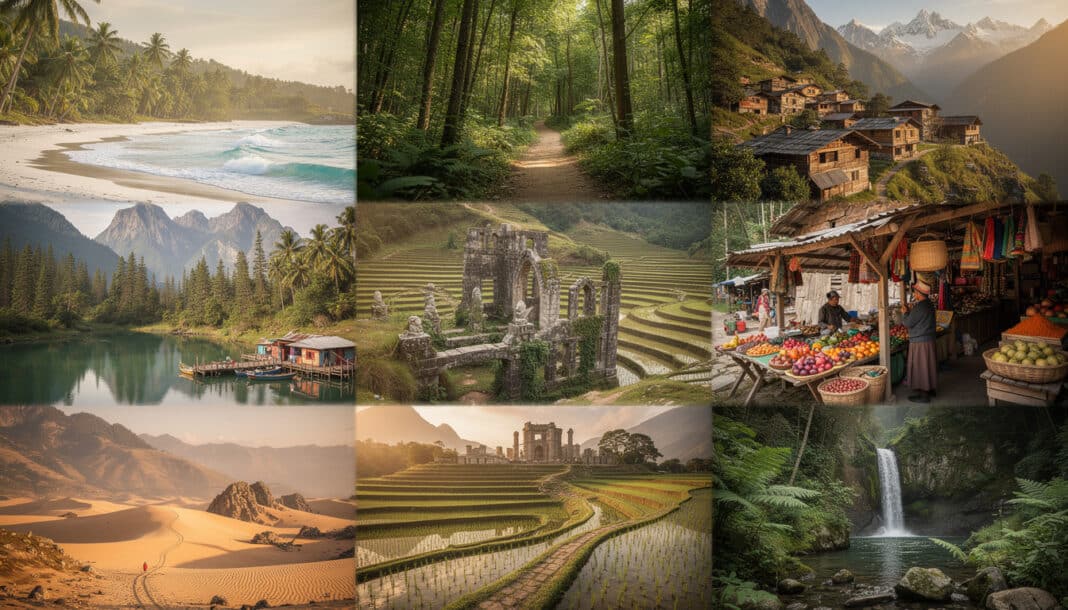
📍 In brief — Expedia unveils its Horizons 2026 report, revealing ten emerging destinations that capture the attention of travelers seeking authenticity. From Big Sky in Montana to Okinawa, via La Savoie and Phu Quoc, these places embody a major trend: escaping the beaten path to discover preserved landscapes and living cultures. Six of these destinations meet the criteria of the Smart Travel Health Care Check, favoring sustainable tourism that respects local communities.
Key takeaways — A majority of the spotted destinations concentrate their charms on nature and wild spaces. Searches record spectacular increases: Big Sky shows +92%, Okinawa +71%, Phu Quoc +53%. La Savoie, the only French destination in the ranking, combines majestic mountains and rural authenticity. Responsible tourism is becoming a decisive criterion for contemporary travelers, far from the frenzy of post-pandemic “revenge travel”.
🌍 Emerging destinations that are redefining travel in 2026
Something has changed among travelers. After the feverishness of recent years, a new quest is emerging: one of meaning rather than spectacle. Expedia’s Horizons 2026 report, published in October 2025, attests to this through the analysis of more than 24,000 globe-trotters. These emerging destinations do not shine through notoriety, but through what they promise: a form of authentic encounter with the world.
This trend reflects a fatigue with mass tourism. Crowded metropolises give way to more intimate territories, where one can still breathe, observe, and soak in the surroundings. That is precisely what sets these ten destinations apart from the ambient noise of conventional tours.
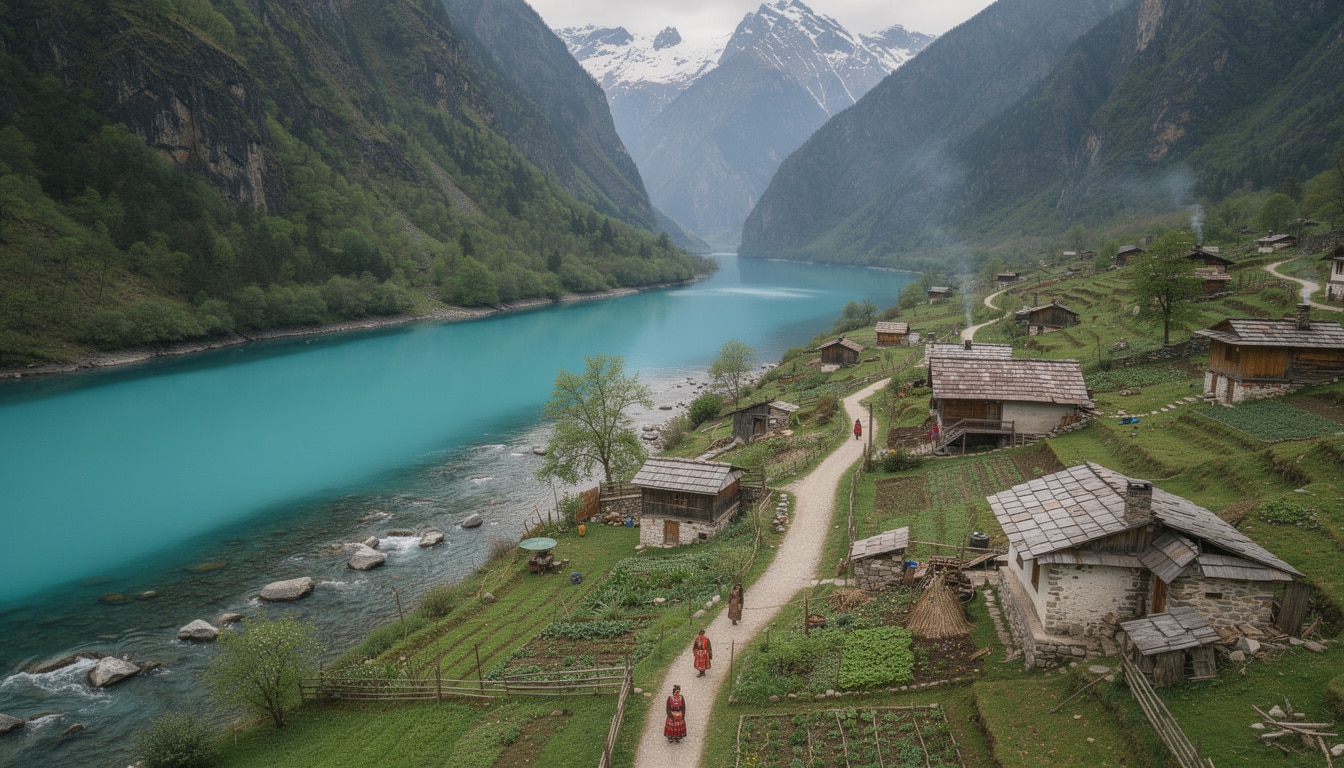
🏔️ Mountain lands: Big Sky and La Savoie at the top
Big Sky, in Montana, embodies this aspiration with an almost magnetic force. The largest ski area in the United States, its growing popularity (+92% in searches) is due neither to unbridled luxury nor ultra-modern facilities, but to the vast rawness that surrounds it. Slopes that stretch like blank pages, seasons that each offer their own grammar of activities, landscapes that remind you why we travel: to feel our own smallness.
Across the Atlantic, La Savoie represents the same quest in a European version. With a 51% increase in searches, this French region dares to rival the tourism giants. It does so without showiness, simply offering its stone villages, living traditions, and cheeses that tell a story. It’s a place where time flows differently, where every detail matters because it has been preserved, almost carefully so.
🏝️ Archipelagos: Okinawa and Phu Quoc, between paradise and authenticity
Okinawa, nicknamed the Japanese Hawaii, takes second place in the ranking with +71% in searches. This archipelago offers something rarer than mere exoticism: an encounter between preserved nature and a singular culture. The turquoise waters are only the surface; beneath them stir island traditions, a unique gastronomy, and landscapes that blend tropical lushness with meditative serenity.
Phu Quoc, in Vietnam, follows closely with +53% interest. An island off the coast of Cambodia, it embodies a form of authentic exploration, with its white-sand beaches but also a national park that offers mountains and tropical forest. Unlike cramped seaside resorts, this place breathes. It invites wandering and immersion. It’s where a traveler can truly taste what authentic tourism means.
🌊 Lesser-known coastlines: Sardinia, Fort Walton Beach and Ucluelet
Sardinia rounds out the podium with +63% growth. The only Mediterranean destination in the ranking, it offers an alternative to the overcrowded Côte d'Azur: wild coves, preserved nature, and villages where the Tuscan accent of mass tourism hasn’t completely smothered local life.
Fort Walton Beach, in Florida, and Ucluelet, in Canada, share a common feature: water takes precedence over infrastructure. These little-known destinations attract those who seek less to show off than to discover themselves, through maritime landscapes that invite wonder rather than the accumulation of selfies.
🎨 Beyond landscapes: the quest for cultural depth
San Miguel de Allende, in Mexico, reminds us that emerging travel is not limited to the contemplation of nature. Ranked 9th with strong attention from discerning audiences, this colonial city embodies something else: the possibility of walking through a living history, of meeting artisans, thinkers, and creators who chose to settle where life costs less but cultural wealth is priceless.
Hobart, the capital of Tasmania, closes the ranking with +25% in searches. This destination accumulates what contemporary travelers seek: authenticity, preserved nature, and a welcoming local community. Major travel agencies are already beginning to include these lands in their selections, recognizing that exploration now goes through depth rather than surface.
🌱 The shift toward responsible and sustainable tourism
A crucial detail emerges from this report: six of the ten destinations meet the criteria of the Smart Travel Health Care Check, inspired by the World Travel & Tourism Council. What distinguishes these places, then, is not only their picturesque beauty but also their commitment to sustainable and responsible tourism.
This distinction carries deep symbolic importance. It says something about the new maturity of travelers: the awareness that visiting a place implies a responsibility toward its inhabitants, its ecosystem, and its cultural fabric. A traveler who chooses Phu Quoc or Okinawa no longer does so innocently; they choose a destination that collaborates to empower its inhabitants, strengthen sustainable resource management, and offer enriching experiences without denaturing what makes it precious.
💚 Criteria for responsible tourism in 2026
According to Ariane Gorin, CEO of Expedia Group, some trips leave a deeper mark than others: those in which one lives immersed in the local culture, supports the local economy, and explores less frequented territories. This philosophy redefines the relationship to travel, turning it from an act of tourism extraction into a gesture of sharing.
Responsible tourism thus becomes a natural filter for emerging destinations. A traveler who opts for an alternative vacation in Big Sky or Ucluelet does more than flee conventional circuits; they participate in preserving these places as living spaces, inhabited by communities that deserve respect and autonomy.
📊 Numbers and trends: proof in the data
The numbers speak for themselves. After the frenzy of post-pandemic “revenge travel,” a clear inflection is taking place. Travelers no longer just seek to tick boxes or validate symbolic destinations. They invest time in places that really suit them, that transform them, that connect them to something larger than themselves.
This new generation of travelers favors destinations that combine majestic nature and respect for ecological balances, according to cross-analyses by Expedia, Hotels.com and Abritel. The Cotswolds in the United Kingdom (8th place) and the Tasmanian countryside illustrate this thirst for spaces where humans have learned to live without destroying, where the beauty of the landscape reflects a form of possible harmony.
🗺️ Redefining exploration for the contemporary era
What unites Big Sky, Okinawa, Phu Quoc and La Savoie, if not a certain resistance? These places remain spaces where the logic of mass tourism has not yet homogenized everything. They retain a uniqueness, a distinct texture, stories that are not reduced to tour-bus bubbles.
This quest for genuine exploration reflects an epochal fatigue. After decades of tourist homogenization, travelers are rediscovering that travel once meant: exposing oneself to the unknown, accepting discomfort, learning. These emerging destinations restore that possibility.
There is something artisanal about this approach. Like a bookbinder who takes the time to fold each sheet, press the signatures, inspect the grain of the paper, the contemporary traveler relearns to travel slowly, consciously, paying attention to the details that make a life, a culture, a place. Perhaps the real revolution lies there: not in discovering new territories, but in the way of inhabiting them mentally, respectfully, and sustainably.
Travel in 2026 will not be that of the crowds, but that of seekers. Individuals who have understood that getting lost in an alley of San Miguel de Allende or watching the dawn over the waters of Phu Quoc offers far more than a photo: an encounter with what it means to be in the world, here and now, without destroying what makes it livable.
Profil de l'auteur
Derniers articles
 Electricity, Gas & Energy14 September 2026Gaz et électricité : ce que la hausse des tarifs va changer sur votre facture
- Agency, Webmarketing & SEO12 September 2026Fusion Omnicom-IPG : ce que la plus grande agence de publicité au monde change pour les marques
- Retirement & Senior Living10 September 2026Carte Avantage Senior SNCF : comment voyager moins cher en train après 60 ans
- Tech & Multimedia8 September 2026Objets connectés : la fin de la 2G et le nouveau Data Act vont rebattre les cartes




Table of Contents