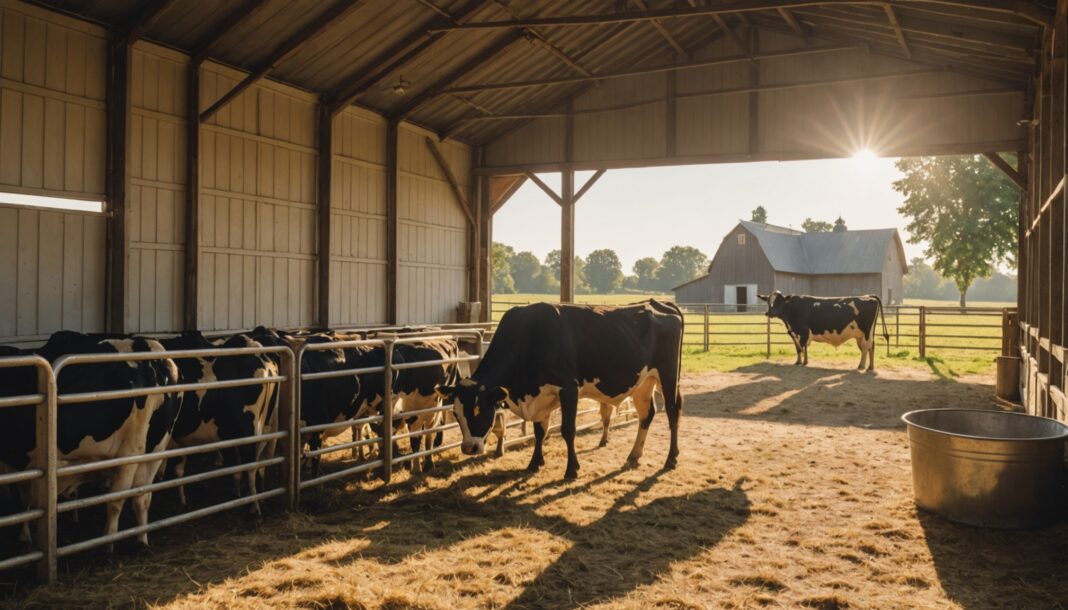
The heatwave in French livestock farming is disrupting a sector already weakened by increasingly hot summers. Since the first major heat episode of the summer, farms in the Grand Ouest, which concentrate a large share of the country’s animal production, have had to urgently manage the drop in milk production, the increased mortality in poultry farming and the adaptation of livestock buildings.
An early episode that took farmers by surprise
Unlike late-summer heatwaves, this heat episode arrived early in the season, before many farmers had time to check their ventilation or watering systems. The West of France, however, concentrates a disproportionate share of the national livestock: about 75% of the pigs, 80% of broiler chickens and 20% of the country’s dairy cows are raised there, according to data reported by the specialized agricultural press. This geographic concentration amplified the consequences of the heat spike across the whole sector.
Quantified losses, unlike those in a normal year
The toll of this episode is first measured in tonnage: several thousand tonnes of dead animals, overwhelmingly poultry, had to be handled by the rendering industry, with Brittany alone accounting for more than two-thirds of these volumes. On the dairy side, several operators reported a drop in production of up to 30% in some cows, with average losses on the order of 2 to 3 kilograms of milk per day per animal, sometimes more depending on the exposure of buildings.
Veterinarians and technical institutes recall that heat stress in dairy cows begins as soon as the temperature exceeds around 22°C, particularly when humidity is high. Beyond milk production, this stress affects appetite, behavior and the animals’ general health, with an increased risk of acidosis, mastitis or lameness when animals stand longer to better dissipate heat.
Measures implemented on farms
Faced with this situation, the Ministry of Agriculture called on operators to immediately strengthen their protection measures: fresh water available at all times, reinforced ventilation, creation of shaded areas in buildings and adjustment of feed rations to the coolest hours of the day. Some farms have also invested in misters or cooling systems for livestock buildings, an additional expense in a context where farm finances are already strained.
Health authorities also sought to reassure on the continuity of the rendering chain, assuring that no lasting disruption had been observed despite the occasional influx of volumes linked to increased animal mortality.
A challenge likely to recur
Beyond this particular episode, sector professionals believe that adaptation to heatwaves is becoming a structural issue for French livestock farming. Building insulation, genetic choices more tolerant to heat, revision of production cycles: several avenues are being studied to limit losses during future episodes, which are statistically expected to recur with global warming. Operators investing today in ventilation or cooling equipment, which can also be found on the equipment side for consumers, hope to limit the impact of future heatwaves on their activity.
This news more broadly illustrates the challenges faced by the entire rural world in the face of hot summers, whether it concerns farms covered in the agriculture and livestock section or private outdoor spaces, regularly discussed in the garden and outdoor section, where the management of water and shade raises similar issues.
Frequently asked questions
At what temperature does a dairy cow experience heat stress?
According to agricultural technical institutes, heat stress generally appears as soon as the temperature exceeds around 22°C, especially when it is associated with high humidity. Beyond this threshold, appetite and milk production gradually decrease.
What are the main measures taken by farmers during a heatwave?
Recommendations focus on permanent access to fresh water, reinforced ventilation of buildings, the creation of shaded areas and adjusting feeding times to the coolest periods of the day.
Which animal sectors are most exposed to heatwaves?
Poultry farms and dairy farms are among the most sensitive, particularly in western regions that concentrate a high density of animals, which amplifies the sanitary and economic consequences of an intense heat episode.
Sources
Profil de l'auteur
Derniers articles
 Farming & Nature4 August 2026Heatwave : French livestock farmers under intense pressure
- Weddings & Special Occasions3 August 2026Weddings: the new trends redefining the ceremony
- Tech & Multimedia1 August 2026Generative AI in video games : viral GTA 6 videos and growing unease among players
- Psychology29 July 2026Infinite scroll : voluntary friction, the science-backed weapon to take back control



Table of Contents