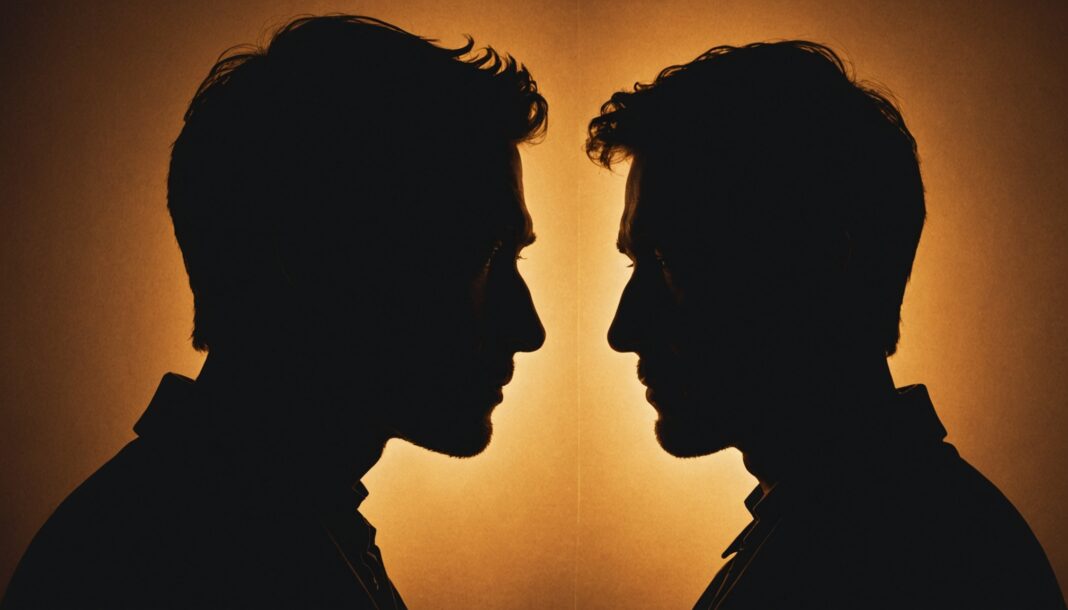
There is a psychological profile that specialists consider particularly difficult to spot: that of the dark empath. Neither clearly narcissistic nor entirely empathic in the usual sense, this personality combines so-called “dark” personality traits — narcissism, Machiavellianism, sometimes psychopathy — with an above-average capacity for empathy. A mix that, far from neutralizing the harmfulness of these traits, actually makes it harder to detect.
The concept was formalized in 2021 in the scientific journal Personality and Individual Differences, by researcher Nadja Heym, of Nottingham Trent University, and her collaborator Emanuele Fino. Their study, conducted with about 1,000 participants in the United Kingdom and then replicated on nearly 800 people in the United States, continues today to fuel numerous discussions among psychologists and in the specialized press.
A profile that affects nearly one in five people
According to the results of this research, 20% of the sample matched the dark empath profile. For comparison, 34% showed a “typical” profile with low dark traits, 33% a highly empathic profile with few of these traits, and 13% fell into the classical “dark triad” — narcissism, Machiavellianism and psychopathy combined, without developed empathy.
This figure should be put into perspective with the prevalence of clinical disorders: narcissistic personality disorder affects 1 to 5% of the population, and clinical psychopathy about 1%. The dark empath is therefore not a pathological profile in the clinical sense, but a combination of traits that, taken as a whole, merits the attention of occupational psychologists as well as those concerned with interpersonal relationships.
Empathy used as a tool, not as a moral compass
The key distinction lies in the nature of the empathy mobilized. Dark empaths have developed cognitive empathy — the ability to understand and read others' emotions — but lack emotional empathy, that is, the compassion that usually motivates action for another person's good.
- 20 % : part of the population corresponding to the dark empath profile according to the Heym & Fino study
- High cognitive empathy, low emotional empathy : the characteristic combination of the profile
- Observed techniques : guilt-tripping, emotional mirroring, passive-aggressiveness, social exclusion
- Profile often extraverted, charismatic and socially competent, therefore difficult to spot
Unlike the “classic” narcissist, often perceived as distant or self-centered, the dark empath can appear warm, sociable and charismatic, which complicates identification. They use their fine reading of emotions to adjust their discourse, anticipate reactions and, at times, steer a situation to their advantage.
A profile to watch in professional relationships
In the workplace, this profile can manifest as broken promises, withholding strategic information or forms of indirect control over colleagues. Psychologists recommend some caution regarding personal information shared with colleagues displaying this kind of behavior, without descending into systematic suspicion: the vast majority of highly empathic people remain benevolent.
This subject is part of the broader issues of well-being and the quality of interpersonal relationships, whether in the private sphere or in the professional environment addressed by players in business consulting. Better understanding these dynamics also helps adopt useful daily reflexes, a theme regularly found in content devoted to practical life and society.
Frequently asked questions
What is a dark empath?
It is a person who combines dark personality traits (narcissism, Machiavellianism, sometimes psychopathy) with a level of cognitive empathy above average, which they use more to understand and influence others than to help them.
How many people fit this profile?
According to the study by Nadja Heym and Emanuele Fino (Nottingham Trent University, 2021), about 20% of the sample studied presented the characteristics of a dark empath, based on nearly 1,000 participants in the United Kingdom and a replication with 800 people in the United States.
How is it different from a classic narcissist?
The dark empath is generally more extraverted, more pleasant in appearance and more charismatic than a typical narcissist, which makes them harder to identify as potentially toxic in social or professional relationships.
Sources
Actusante — These “dark empaths” worry psychologists
Daily Geek Show — The dark empaths, those dangerous psychopaths and narcissists endowed with empathy
Vie Associative — How to spot a “dark empath”
Profil de l'auteur

Derniers articles
 Dog, Cat & Animals16 September 2026Animalerie : la vente de chiens et chats est désormais interdite
- DIY & Troubleshooting13 September 2026Le marché du bricolage se stabilise : ce que cela change pour vos travaux
- Home Appliances & Equipment12 September 2026Droit à la réparation électroménager 2026 : la garantie passe à 12 mois
- Nutrition, Diet & Weight Loss12 September 2026Nutrition personnalisée : maigrir sans compter les calories, l'étude qui change la donne en 2026




This article was written with the help of artificial intelligence. Editorial policy
Table of Contents