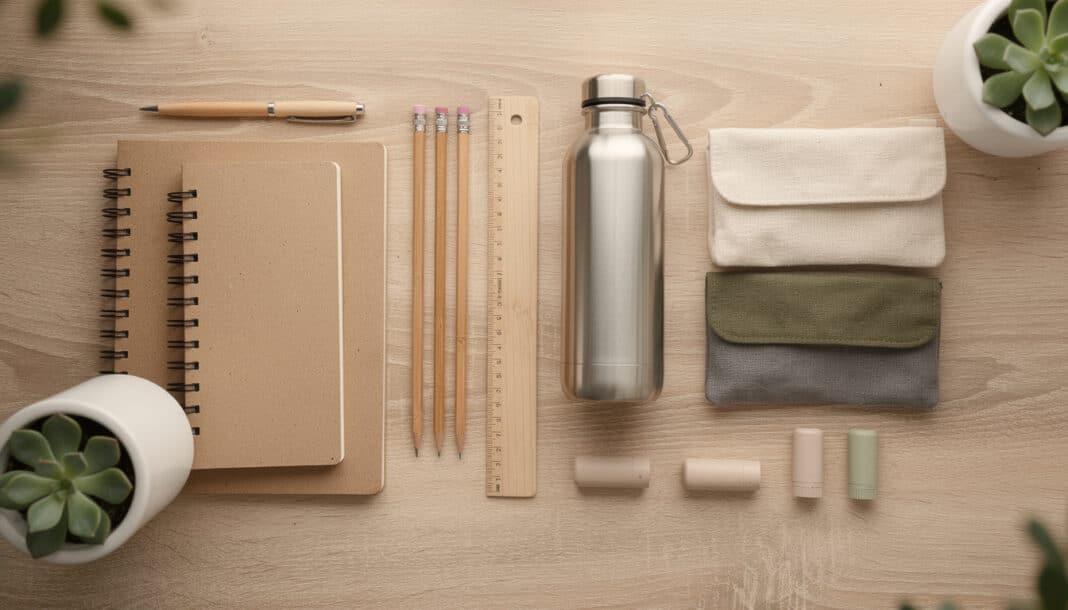
Each back-to-school season generates the equivalent of 5 Eiffel Towers in waste. Faced with this alarming finding, families are looking for sustainable alternatives without sacrificing quality or budget. Eco-responsible supplies are no longer marginal products: they now rival their traditional equivalents in performance. Notebooks made from recycled paper, plantable pens, pencil cases made from reclaimed materials, reusable water bottles… A zero-waste back-to-school is no longer an unreachable dream, but a reality within reach. Between committed brands, reliable labels and the right habits to adopt, it is time to turn this chore of the school supply list into a genuine civic act.
Why eco-responsible school supplies are a game-changer
Equipping a child for the start of term is a bit like binding a book: every detail counts, every material has its weight. A pupil consumes on average 15 kg of paper per year, a figure that rings like a call to action. But beyond the statistics, there is a real question: what are our children absorbing on a daily basis?
Some pens contain up to 15 controversial substances, scented markers can trigger allergies, and plastics like PVC release endocrine disruptors. Choosing eco-responsible school supplies therefore protects young people’s health while reducing their exposure to toxins. A double benefit that gives one pause, especially when you know these high-performing alternatives cost little or no more.
School is never just a place for passing on knowledge. It is also where consciences are formed. By offering environmentally respectful materials, each lesson becomes a civics lesson, every daily gesture a responsible decision. Children thus become actors of change, not passive spectators.
The essential criteria for properly selecting sustainable supplies
Faced with the green marketing that floods the shelves, you need to learn to decode truth from falsehood. Official certifications become your most reliable allies. The FSC label guarantees that the wood used comes from sustainably managed forests, while PEFC covers the entire production chain. For writing instruments, NF Environnement limits chemical substances, and the European Ecolabel even examines the manufacturing energy impact.
A good practice: always check packaging for the absence of phthalates and favor pencil cases in recycled polyester or rulers in metal. Wash hands after each use, avoid chewing on pens, prefer solvent-free glues… These are simple gestures that protect health while raising young people's awareness of ecological responsibility.
The real challenge is to distinguish authentic commitment from greenwashing. A truly committed company speaks about its manufacturing processes, its suppliers, its waste management. It embraces transparency rather than hiding it under enticing promises.
Brands that embody sustainability without compromise
In Brittany, Coq en Pâte has chosen to produce locally, placing ethics at the heart of each creation. The organic cotton for clothing comes from certified workshops in India, while stationery and games are made in France from eco-materials or recycled materials. Backpacks and satchels attract particular admiration: robust, timeless, they withstand the years without showing wear.
Creations adorned with threatened wild animals are not just aesthetic: they raise children’s awareness of biodiversity protection. The company actively supports NGOs and environmental education programs, turning each purchase into a gesture for nature.
Around the world, innovations come straight from creative laboratories. The plantable pencil Sprout, voted the most ecological product in the world in 2013, contains seeds in its biodegradable cap. When it becomes too short from sharpening, you plant it in a pot filled with soil, water it… and literally let ecological awareness sprout. Surprising and playful, it is exactly the right way to make commitment flourish.
Recycled paper, far beyond the simple notebook
In Le Mans, L'Arbre aux Papiers has for years embodied an obsession with responsible paper. Each notebook, sketchbook, and coloring mandala comes from a social and solidarity enterprise. The printing house, a cooperative structure, adheres to the Minga platform which groups together companies in the solidarity economy. The selected recycled papers are never bleached with chlorine, and the printing processes use vegetable-based inks.
The minimalism of these notebooks is especially appealing: clean covers, no unnecessary frills, a kind of retro elegance that contrasts with the garish design of conventional supplies. It's like discovering an old workshop book whose yellowed pages tell the story better than any new one.
But the true innovation lies elsewhere. Artisan creative papers, fully biodegradable, quite literally bloom after use. Non-GMO seeds are incorporated directly into the pulp before the sheets are formed, their germination rate tested and certified in the laboratory. Zero waste, 100% flowers: that's the promise. Ideal for personalized gifts with that little eco-cool touch that brings a smile.
Beyond supplies: building a zero-waste back-to-school
A stainless steel or glass reusable water bottle, paired with a compartmentalized snack box, form the must-have duo for a responsible start to the school year. Not only does this significantly reduce disposable plastic waste, but it is also healthier: no plastic migration into food, and more economical in the long term.
Anticipating purchases becomes strategic. Rather than rushing at the end of August to depleted stocks, taking the time to explore alternatives allows you to find exactly what fits. And what if your child took part in sorting old supplies before buying new ones? This domestic inventory exercise offers a rare educational opportunity: involving the child in collective responsibility.
Parent exchange platforms, garage sales, school fairs: these are places to unearth timeless pencil cases, complete geometry sets, sturdy binders. Reusing second-hand items remains the most ecological act, and often the most economical.
Turning classrooms into spaces of ecological engagement
Some pioneering establishments already show how to integrate ecological education into daily school life. At Collège Simon Vinciguerra in Bastia, students eliminated 80% of plastics in six months simply by launching playful challenges: water bottle customization workshops, drawing contests on recycled notebooks, interactive quizzes during the European Sustainable Development Week.
When a teenager explains to their peers how to reduce waste, the impact multiplies. These young people become natural ecological influencers, carrying a message far more credible than that of an adult. Some high schools even organize « repair cafés » where students repair worn pencil cases, thus creating a collective dynamic while extending the life of objects.
Used notebook pages are transformed into origami, supports for creative posters, material for artistic projects. Textbook exchange programs between classes, systems for lending technical equipment: so many mechanisms that create bonds while respecting the environment. These actions carry a powerful implicit message: taking care of things is taking care of the world.
Practical habits for a smart and responsible back-to-school
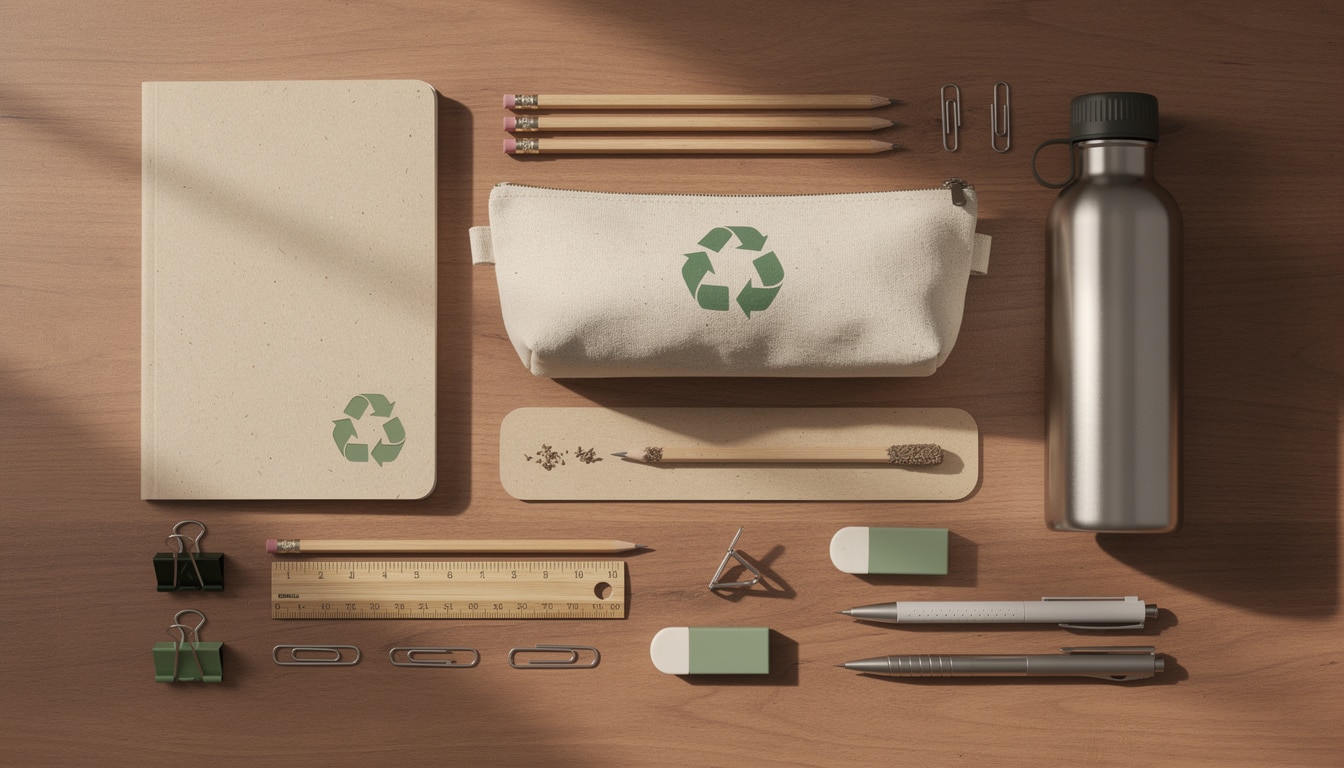
Start with the essentials: recycled paper notebooks with a pleasant feel, pencils made from FSC-certified wood, solvent-free glues and correction fluids. These basic items now match the performance of their conventional counterparts, without the health compromises. Adding a few playful touches—a plantable pen, for example—turns school supplies into a conversation between the child and their values.
Refillable planners with customizable covers, wall calendars made from banana fiber, protractors in recycled plastic: so many small revolutions that go unnoticed until you really notice them. Some retailers offer ready-to-use kits to save time, without giving up the responsible approach. The secret: eco-responsible supplies that last longer avoid mid-year repurchases, ultimately saving more than they cost.
Check packaging, favor bulk when possible, talk with the child about the reasons for these choices: each educational gesture strengthens commitment. A zero-waste back-to-school is never a punishment; it is an invitation to see everyday objects differently.
Profil de l'auteur
Derniers articles
 Electricity, Gas & Energy14 September 2026Gaz et électricité : ce que la hausse des tarifs va changer sur votre facture
- Agency, Webmarketing & SEO12 September 2026Fusion Omnicom-IPG : ce que la plus grande agence de publicité au monde change pour les marques
- Retirement & Senior Living10 September 2026Carte Avantage Senior SNCF : comment voyager moins cher en train après 60 ans
- Tech & Multimedia8 September 2026Objets connectés : la fin de la 2G et le nouveau Data Act vont rebattre les cartes




Table of Contents