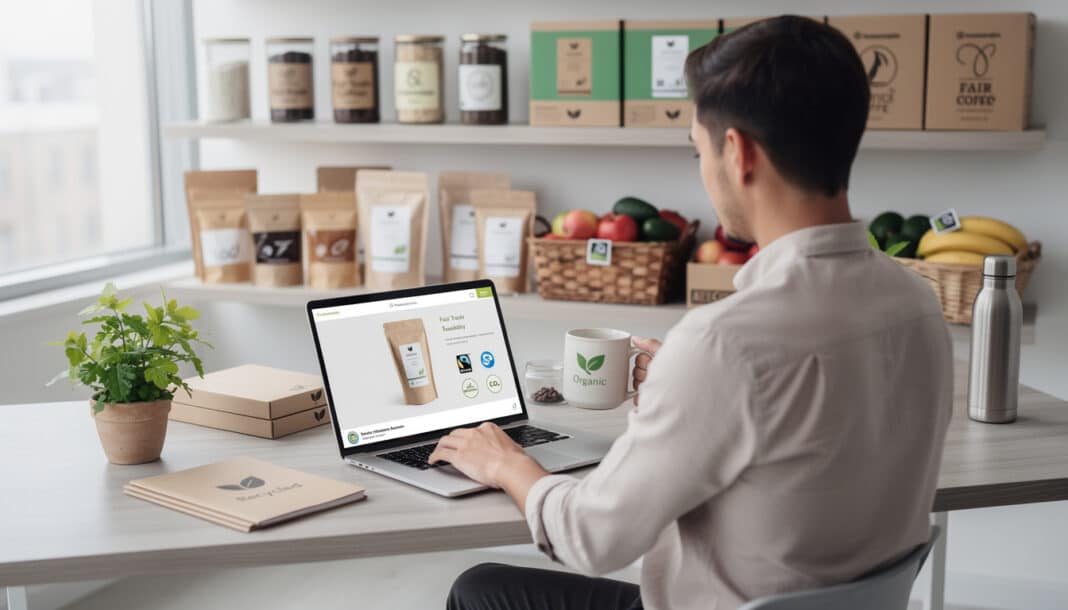
📌 In short: Buying online involves increased trust in sellers. To verify the authenticity of your fair and organic products, you should check official certifications, examine detailed labelling and trace the exact origin of the goods. Recognized labels (Fair Trade, AB, Ecocert) guarantee real transparency and a sustainability that is tangible. Verifying these elements protects both your health and your ethical values.
🌍 Understanding organic labels and fair trade online
With the proliferation of offers on the internet, distinguishing a genuine organic product from a counterfeit becomes a major issue. Organic labels and fair trade labels are much more than marketing logos: they embody a commitment to sustainability and transparency.
When you browse an online shopping platform, each certification displayed on a product tells a story: that of producers complying with strict standards, of land cultivated without pesticides, of workers paid fairly. Understanding these distinctions helps you buy with full awareness.
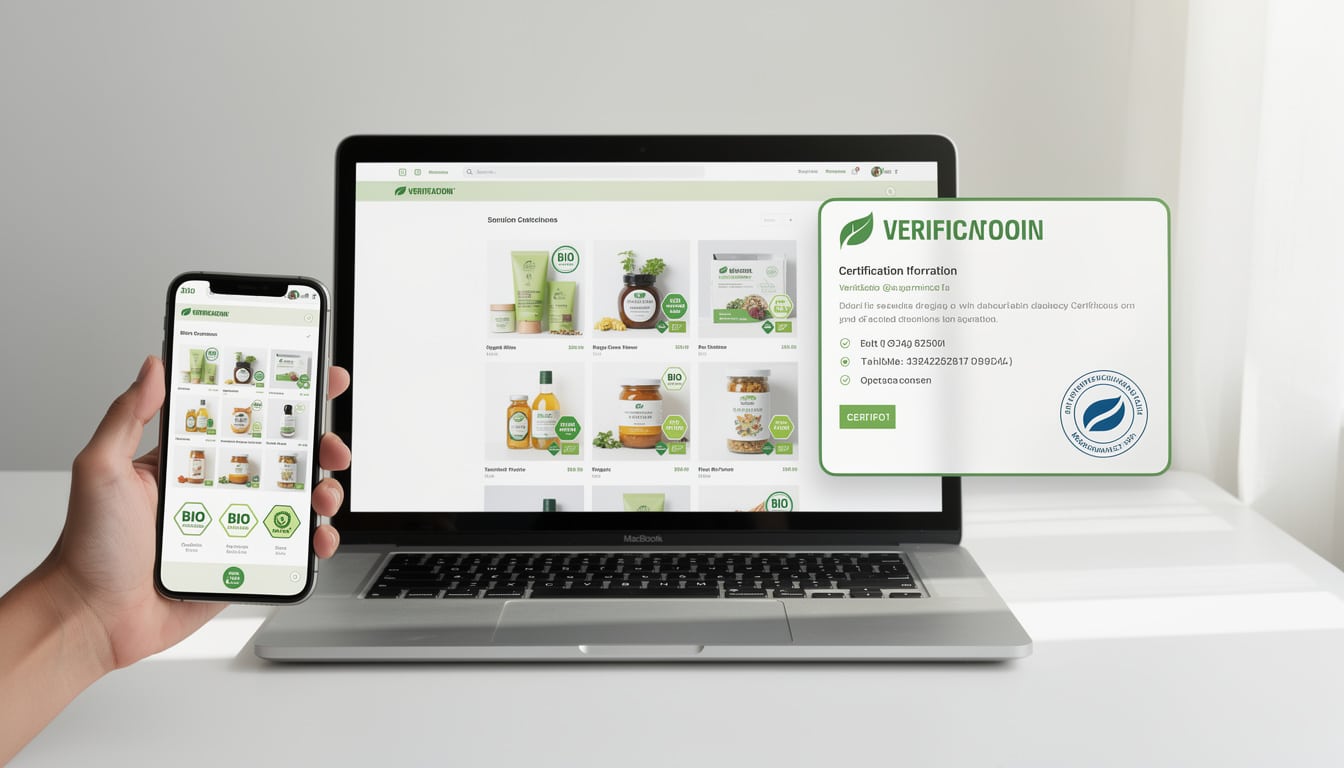
🏷️ The main labels to recognize
The French AB (Organic Farming) label guarantees that a product comes from a farm respecting the strictest European standards. No chemical fertilizers, no GMOs: it's the reference certification in France.
The Fair Trade (Equitable) label ensures that producers in the Global South receive a fair price for their work and that social conditions are respected. This certification often covers coffee, cocoa, cotton and fruit.
Ecocert and IFOAM provide rigorous organic guarantees, particularly recognized internationally. These bodies carry out regular audits to verify the conformity of farms.
🔍 Verifying traceability: best practices
The traceability of online products is the foundation of lasting trust between consumer and seller. How can you ensure that the product ordered really matches its description?
Start by checking the detailed product sheet: it should explicitly mention the label, the certifier (the body that validated the certification), the certification date and its number. An authentic organic product will display this information unambiguously.
📋 Consult official databases
Several sites allow you to verify the authenticity of certifications. The site www.annuaire-bio.com lists all certified organic producers and processors in France. There you will find exact contact details, the certification date and the products concerned.
For fair trade products, consulting the legal frameworks governing logistics and trust helps to understand the obligations of platforms. These regulations require increased transparency about the origin of the products and their shipping.
Certification bodies also have public registers. For example, Fair Trade International publishes the complete list of certified companies, allowing you to verify that a seller is truly authorized to use the label.
🔐 Identify scammers and counterfeits
Some dishonest sellers do not hesitate to counterfeit certifications. How can you thwart these attempts? Systematically look up the certification number with the certifying body: a real label always includes this unique number.
Beware of blurry logos, poorly printed ones or those whose colors do not match the official version. Certifiers use very precise graphic guidelines. Any doubt? Contact the certification body directly to validate authenticity.
Customer reviews can also alert you: a flood of comments reporting inferior quality or an absence of certification is a warning sign. Collective vigilance strengthens everyone’s protection.
🌱 Understanding criteria of sustainability and responsibility
Beyond certifications, the concept of sustainability encompasses many dimensions. An organic-certified product respects the environment, but what about its packaging, its transport, its supply chain?
Truly responsible trade considers the overall impact. E-commerce logistics and parcel management play a decisive role: recyclable packaging, consolidated delivery and committed logistics partners complete the promise of responsible trade.
♻️ Assess the real ecological footprint
An organic product imported by plane can have a larger carbon footprint than a conventional local product. The true actors of fair trade and sustainability are transparent about this reality rather than hiding it.
Look for information on transport: sea freight (less polluting), consolidation of shipments, use of renewable energy in warehouses. These details often appear on the « Responsibility » pages of quality sites.
Some sellers display the carbon footprint of their products or offer compensation through tree planting. These initiatives demonstrate a sincere willingness to go beyond simple labelling.
💳 Securing your purchases and knowing your rights
Buying online involves legal protections. If in doubt about the conformity of a product or a certification, you have remedies. An informal administrative appeal can help you contest a scam or a flagrant non-compliance.
Online marketplaces must comply with legal obligations. They are responsible for the conformity of products sold by third-party sellers. In case of dispute, you can demand a refund or an exchange of the product.
🛡️ Document your purchases and report abuses
Systematically keep screenshots of product pages, order numbers and correspondence with the seller. If a product advertised as organic or fair trade proves not to have a real certification, these documents constitute essential evidence.
Consumer associations and certification bodies welcome reports of counterfeits. Your report protects other buyers and strengthens the credibility of genuine responsible producers.
Some sites even offer satisfaction guarantees: a non-compliant product entitles you to an unconditional refund. This client-centric approach reflects real confidence in the quality offered.
🌐 Explore the best fair trade marketplaces
Some major players have established themselves as references for transparency and certification. Biocoop, Alter Eco, Ethiquable and specialized online organic grocers offer a carefully curated selection.
These platforms generally publish detailed information about their producers: who grows, where and with what social and environmental commitments. Visiting a partner producer’s profile gives you a concrete view of the supply chain.
🏪 Criteria for choosing a reliable platform
A quality platform clearly displays the certifications of its products and offers exhaustive descriptions. It indicates the origin of the products, the producer’s name, and the certification dates. No ambiguity should remain.
Check whether the platform itself is certified or labelled. Some obtain official recognitions (such as the Fair Trade Platform label) which guarantee strict compliance with standards. The evolution of retail shows that even large chains are renewing their approaches to include more responsible products.
Verified reviews, third-party certifications (such as trust audits) and the presence of a responsive customer team are markers of reliability.
💬 Engage in dialogue with sellers
Don’t hesitate to ask specific questions before buying. A genuine responsible producer or distributor will answer your questions directly about certifications, the exact origin or environmental practices. Silence or evasive answers should alert you.
Some brands even offer video calls with their producers, an extreme level of transparency. This approach strengthens trust and humanizes responsible trade.
Profil de l'auteur
Derniers articles
 Smartphones & Mobile Phones14 October 2026The loyalty penalty on your mobile bill: why staying put costs you more
- Family, Babies & Children5 October 2026Airline family seating fees: what the planned ban will change for parents
- Everyday Life & Society23 September 2026Consumer confidence index: what the monthly mood check on British households really measures
- Agency, Webmarketing & SEO31 August 2026SEO : a Google bug skews visibility statistics in AI results




Table of Contents