
📱 In 2026, artificial intelligence no longer just suggests products: it anticipates your desires before you even articulate them. AI-powered recommendation systems analyze every click, every pause, every interaction to build an ultra-precise behavioral profile. This technology transforms the user experience by offering real-time personalization that increases conversion rates, strengthens customer loyalty, and generates significant additional revenue. But behind this formidable efficiency lie major ethical challenges: data protection, filter bubbles, and algorithmic transparency.
💡 Key takeaways from this article:
🎯 Machine learning algorithms dissect your online behaviors to offer you tailor-made content — a revolution compared to traditional systems that relied on basic data.
🚀 AI personalization is no longer limited to e-commerce: Netflix adjusts its thumbnails, Spotify composes your playlists, Amazon anticipates your future purchases.
⚡ 71% of consumers now expect a personalized experience, while companies that provide it see growth three times higher than their competitors.
🔒 Ethical challenges — privacy, filter bubbles, algorithmic biases — remain at the heart of debates about the future of the technology.
🌐 Emerging trends like hyper-personalization and omnichannel personalization are redefining brand-customer interactions.
🤖 How recommendation systems work: beyond basic filtering
For years, digital platforms relied on rudimentary approaches: you watch an action movie, you're suggested another action movie. You buy a science fiction book, you're offered similar titles. This logic, while functional, was severely lacking in sophistication.
Traditional recommendation systems rested on two pillars: collaborative filtering, which assumes that if you liked the same content as another user, you'll likely share other preferences; and content-based recommendation, which analyzes the characteristics of items you liked to suggest other similar ones.
But these methods hit a major snag: the cold-start problem. How do you recommend something to a new user with no historical data? How do you include a brand-new product in suggestions without prior consumption references? That's precisely where artificial intelligence changed the game.
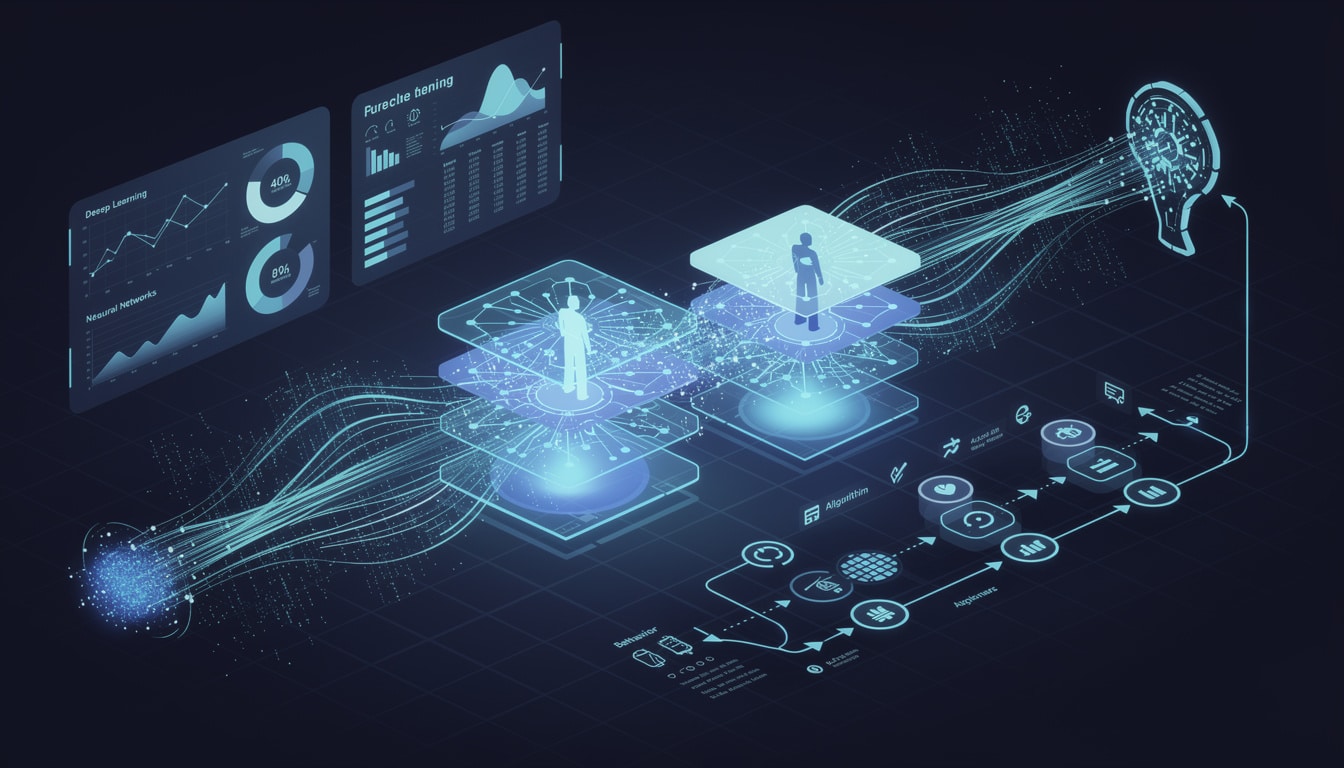
🧠 Artificial intelligence redefines personalization: from reaction to anticipation
Machine learning and deep neural networks have turned recommendation systems into true behavioral prediction machines. Unlike classical algorithms that only analyze visible data, these technologies detect hidden correlations that the human eye would never perceive.
Imagine a user who watches an action series on Tuesday night, a comedy on Thursday, and documentaries on the weekend. A traditional system would see three distinct categories. An AI-based system, however, will understand that this person adapts their preferences to context: tired after work, they seek adrenaline; before the weekend, they prefer to laugh; in free time, they want to learn. This contextual understanding elevates recommendation to a level of near-human intelligence.
The user data analyzed goes far beyond simple clicks: viewing duration, pause moments, reviews left, social interactions, time of access, device used, geographic location. Each signal helps refine the user's psychographic profile.
📊 How algorithms decode your real preferences
Take Amazon as a concrete example. When you visit the platform, behavioral analysis starts immediately. AI notes not only what you view, but also how long you spend on it. If you scroll past a product quickly without looking, that's not the same signal as if you carefully read customer reviews.
Netflix goes even further: it measures the exact moment you stop watching a series (a sign the content doesn't appeal to you), whether you read the description, whether you check reviews, even the video quality you choose. These AI-based personalized recommendations represent a true revolution in the customer experience by enabling a nuanced understanding of preferences.
Machine learning combines these thousands of signals to build a unique behavioral model per user. With each new interaction, the model refines itself, becoming progressively more accurate. It's a continuous learning process where the AI “grows” with every user action.
💼 Real-world applications: how AI is transforming online commerce
Theory is nice, but the numbers speak for themselves. Companies that integrate AI personalization see a 40% increase in their revenues compared to those that don't use it. This difference is far from trivial.
On Amazon, product recommendations generate about 35% of total revenue. Spotify claims its “Discover Weekly” feature, generated entirely by AI, has helped retain millions of users. Netflix estimates that its ability to anticipate content you'll like reduces decision time and significantly boosts time spent on the platform.
🛍️ E-commerce: when AI becomes your personal advisor
In online retail, personalization takes many forms. Product recommendations are of course the main pillar, but they are only the beginning. AI also adjusts the homepage itself: thumbnails, descriptions, even the order of presentation change based on what it thinks will attract you most.
Some sites even optimize prices in real time according to your user profile — a controversial practice but increasingly common. Customer personalization via AI is revolutionizing product recommendations by making each experience unique and contextualized.
Take Sephora: its mobile app integrates AI to show you products that match your skin tone, your skin type, the brands you prefer, and even products you've tried in physical stores. This omnichannel personalization creates a seamless continuity between the digital and physical worlds.
🎬 Streaming and entertainment: the AI that knows your tastes better than you
Streaming platforms have become laboratories for advanced personalization. Each recommendation is not generated by humans, but by sophisticated algorithms that analyze billions of interactions.
TikTok perhaps embodies the pinnacle of this trend: its personalized feed adapts in near real-time to every video you watch, every pause you take, every engagement you show. Many users claim TikTok “knows them better than they know themselves,” so precise do the recommendations appear.
Beyond its famous playlists, Spotify uses AI to adapt musical descriptions, suggested artists, and even the length of recommended songs according to your presumed mood and the time of day.
⚖️ Ethical challenges: when precision rhymes with intrusion
With this level of sophistication comes an inevitable question: at what cost does this personalization come? For AI to work, it needs data — lots of data. And this data tells intimate stories about who we are, what we like, and even what we fear.
Data collection poses considerable privacy challenges. To optimize recommendations, platforms gather information about your browsing history, purchases, social interactions, searches, location, and many other elements. This accumulation raises legitimate questions: who controls this data? How is it secured? Is it sold to third parties?
🔴 The filter bubble: the hidden danger of over-personalization
A more insidious problem threatens intellectual diversity: the filter bubble. By recommending exclusively content aligned with your past preferences, AI systems can create an echo chamber where you only see what confirms your existing beliefs.
If you regularly watch political content of a certain orientation, the algorithm will offer you more of the same, gradually closing you off to other perspectives. This dynamic reinforces polarizations, limits your exposure to diverse ideas, and shapes your worldview without you being fully aware of it.
Netflix has acknowledged this problem; Spotify is aware of it. But few platforms actively integrate mechanisms to break these bubbles, because they know recommending what you'd already like generates more engagement than exposing you to new and uncomfortable content.
🎭 Algorithmic opacity: understanding what you cannot see
One last challenge, perhaps the most troubling: the lack of transparency. Modern AI systems often operate as “black boxes.” An algorithm recommends a product to you, but you don't know why. Is it based on your past purchases? On the behavior of similar users? On contextual data you didn't know you shared?
AI personalization at IBM explains how this technology creates tailored experiences, but it also raises the need to better communicate how these systems work to end users.
This opacity breeds justified mistrust. Users want to understand why they receive certain suggestions, especially if they seem inappropriate or discriminatory. Corporate responsibility is crucial here: companies must strive to make their algorithms more explainable, fairer, and less biased.
🚀 Trends redefining personalization in 2026
Innovation in this field doesn't stop. Several emerging trends are shaping the future of AI personalization, pushing the technology toward new horizons.
⚡ Hyper-personalization: from segment to individual
For years, companies segmented their audiences: men aged 25–35 interested in technology formed one group, women aged 30–45 invested in wellness formed another. Each segment received the same message.
Hyper-personalization destroys that logic. It treats each person as unique, delivering messages, recommendations, and even prices specific to each individual. Your ad is not your neighbor's, even if you visit the same site. Marketing truly becomes one-to-one.
This approach requires a real-time understanding of the user's context: where are you? What time is it? What is your estimated mood? What events are nearby? All these variables combine to generate a perfectly calibrated experience.
🌐 Omnichannel personalization: seamless continuity
Yesterday, your experience on a brand's website was isolated from its mobile app or physical store. Today, omnichannel personalization unifies all of that. AI tracks your entire journey: what you viewed on the web, tried in-store, added to your cart on mobile.
This integration creates remarkable fluidity. You browse a garment on your phone, try it in a boutique, receive a personalized recommendation for matching accessories, then find a tailored offer in your email. Each touchpoint strengthens your overall profile and refines future interactions.
AI-enhanced online recommendation systems optimize this omnichannel experience by synchronizing data and suggestions across all channels.
✍️ Generative content creation: recommendations that write themselves
Until now, recommendations were suggestions of existing content: “You will like this movie,” “Try this product.” But with generative AI, recommendations are evolving.
Imagine an e-commerce platform that generates personalized product descriptions for you in real time. Or a streaming service that creates custom “trailers” highlighting the elements of a series that particularly interest you.
Some brands are starting to test: generating marketing emails with texts written specifically for each individual, rather than using generic templates. It's a new frontier where recommendation no longer just suggests, it produces unique, tailor-made content.
📈 Business impact: why companies invest heavily
The numbers justify the enthusiasm. Three out of five consumers would like to use AI during their purchases. 71% expect personalization. And 67% say they are frustrated when their interactions don't meet that expectation.
For companies, this translates directly to the bottom line: firms that excel at personalization generate 40% more revenue. Conversion rates increase, loyalty improves, acquisition costs decrease. Recommendation systems described by Intel explain how these technologies increase customer engagement and purchases.
Even operational savings are substantial. Automating the generation of marketing campaigns, recommendations, and customer experiences allows teams to focus on strategy rather than repetitive execution.
💰 Measurable ROI: from theory to practice
When Amazon integrates product recommendations at every corner of its interface, it's no accident: these recommendations generate billions. When Starbucks deploys a predictive system that suggests your usual drink at your usual visit time, it boosts sales.
These successes inspire the entire industry. Small e-merchants invest in recommendation tools, marketing agencies put personalization at the core of their services, and cloud providers offer turnkey services to democratize the technology.
🛡️ Best practices for ethical and effective personalization
However, the power of these technologies comes with a major responsibility. How do you deploy AI personalization without violating privacy, without trapping users in bubbles, without amplifying systemic biases?
🔐 Robust data and transparency: the foundations
It all starts with a solid data foundation. AI powered by poor-quality, incomplete, or biased data will produce defective recommendations. That means investing in data cleaning, integrating multiple sources, and ensuring diversity in training data.
At the same time, transparency is non-negotiable. Users must understand what data you collect, how you use it, and what control they retain. This builds trust and, paradoxically, improves data quality: people share more when they feel secure.
Amazon Personalize offers an infrastructure to deploy personalization with built-in transparency controls, illustrating how the technology can operate ethically.
⚙️ Robust models and continuous retraining
AI is not a “set-and-forget.” Models must be regularly retrained with new data to remain relevant. Preferences change, trends evolve, and biases can strengthen without constant monitoring.
Choosing the right AI model for your use case is crucial: collaborative machine learning fits some scenarios better, deep neural networks others. A serious company regularly evaluates the performance and fairness of its algorithms, not just their raw accuracy.
🎯 Create value, not just engagement
Finally, the best practice: align personalization with creating real value for the user, not just revenue extraction. Recommendations that enrich the experience, that genuinely help people find what they're looking for, that expose them to new ideas — those build authentic loyalty.
Companies that see personalization as a service to the customer, not a tool to manipulate them, build a lasting relationship. It's also — irony of ironies — a better long-term business strategy than short-term over-optimization.
🔮 The future: when prediction becomes undetectable
Where does this lead us? Trends point to a convergence of technologies: generative AI, augmented reality, the Internet of Things combined with ultra-refined recommendation systems.
Imagine a virtual personal assistant that anticipates your needs so precisely it suggests a product, a movie, or an activity before you are even aware you're looking for them. Imagine putting on augmented reality glasses and seeing recommended products naturally integrated into your field of view.
But this formidable power requires equally powerful vigilance. Artificial intelligence and personalized recommendation are transforming business marketing, but with that transformation comes the responsibility to use these tools wisely.
Future iterations of these systems will need to incorporate more “serendipity” — the ability to recommend the unexpected that enriches life, not just what confirms existing preferences. They will need to put the user in control: the right to be forgotten, granular data controls, explainability of algorithmic decisions.
True progress will not be an AI that understands you perfectly, but an AI that you understand — and that you can control.
Profil de l'auteur
Derniers articles
 Electricity, Gas & Energy14 September 2026Gaz et électricité : ce que la hausse des tarifs va changer sur votre facture
- Agency, Webmarketing & SEO12 September 2026Fusion Omnicom-IPG : ce que la plus grande agence de publicité au monde change pour les marques
- Retirement & Senior Living10 September 2026Carte Avantage Senior SNCF : comment voyager moins cher en train après 60 ans
- Tech & Multimedia8 September 2026Objets connectés : la fin de la 2G et le nouveau Data Act vont rebattre les cartes




Table of Contents