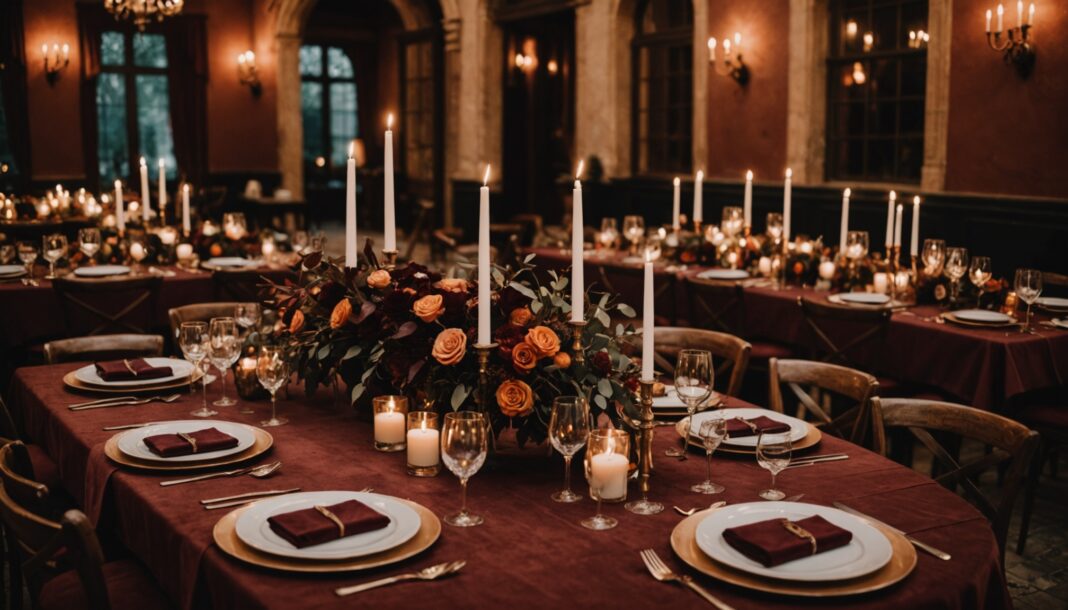
Long reserved for the months of May through September, wedding season now stretches much further into the year. More and more couples are deliberately choosing fall or winter to celebrate their union, and the bridal shows held in recent days all across France confirm the scale of this movement: several hundred visitors, sometimes more than a thousand, turned out in just a few days to prepare for a big day that is no longer seen as a fallback choice outside the traditional season.
A deliberate choice, not a scheduling accident
For a long time, getting married in November or January was seen as a compromise — due to a lack of availability in spring or for budget reasons. That's no longer quite the case. Industry professionals, present in large numbers at recent regional bridal shows, describe a clientele that now deliberately seeks out the cozy atmosphere unique to the cold season: softer light, less contested reception venues, and a schedule that's easier for loved ones than in the middle of summer.
Colors and materials designed for the season
This shift comes with a real aesthetic change. White is no longer the only reference color: burgundy, plum, bottle green, and navy are taking over in dresses as well as decor, for a more dramatic atmosphere than summer's pastel tones. Velvet is making a strong comeback in outfits, while terracotta and earthy tones — soft brick, warm ochre, caramel — are gaining ground on tables, alongside natural materials that ground the decor in the season rather than disguise it.
What this means in practice for couples getting married
Beyond aesthetics, choosing an off-season date also responds to very practical considerations. Reception venues, less in demand than during peak season, become more accessible and sometimes more affordable. Vendors — caterers, photographers, venues — have more availability, which makes planning easier and reduces pressure on the calendar. This observation echoes an underlying trend already seen among young couples, among whom marriage is enjoying a clear comeback after several years of decline.
A few pointers for anyone considering an off-season ceremony:
- Booking vendors earlier is no longer essential: availability is generally better than in summer.
- Plan for a covered backup option (indoors or a heated tent) to secure the reception in case of unpredictable weather.
- Lean into deep tones and warm materials rather than reproducing a summer palette out of season.
- Check the heating and lighting options at venues, which are often overlooked by places more accustomed to summer events.
This shift in practices is also part of a broader movement, in which couples are seeking more personal, less formulaic ceremonies — whether that means a phone-free ceremony to preserve the moment, or choosing more sustainable historic venues to host their guests.
Frequently Asked Questions
Does getting married in fall or winter really cost less?
In most cases, yes, particularly for venue rentals and certain vendors, whose rates are often tied to seasonal demand. The gap, however, varies a lot depending on the region and the vendor chosen.
Which colors should be favored for an off-season wedding?
Professionals recommend deep tones — burgundy, plum, bottle green, navy — paired with warm materials like velvet, rather than the usual pastel tones of summer.
Do special arrangements need to be made for a winter wedding?
Yes: a covered, heated space for the reception, lighting suited to earlier nightfall, and ideally a backup plan in case of bad weather.
Sources
Profil de l'auteur
Derniers articles
 DIY & Troubleshooting18 November 2026Dexter Sander Recall 2026: What Leroy Merlin and Weldom Customers Need to Know Before Using It
- Restaurants, Drinks & Food18 November 2026Flexitarianism in France: Less Meat on the Plate, but Not for the Reasons You'd Think
- Home Appliances & Equipment18 November 2026Washing Machine, Oven, Dishwasher: Which Brand to Choose for Appliances That Last?
- Nutrition, Diet & Weight Loss18 November 2026Pancreatic Fat: The Diet That May Help Reduce It




Trending now on legal streaming
FilmGodzilla Minus One
SeriesThe Lord of the Rings: The Rings of Power
This article was written with the help of artificial intelligence. Editorial policy
Table of Contents