
In short: Every January, millions of people make fitness resolutions, but about 77% abandon them before February. This trend is not due to a lack of willpower, but to a poor approach: goals that are too vague, overblown ambitions, and a lack of realistic planning. The key lies in adopting sustainable habits rather than making spectacular promises. By turning exercise into a daily routine, favoring pleasure over obligation, and progressing gradually, anyone can finally turn their fitness resolutions into a lasting way of life.
🎯 Why fitness resolutions fail from the start
There is a hopeful moment at the turn of the year when we promise ourselves mountains and wonders. Yet that initial euphoria evaporates quickly, giving way to frustration. The reason? We confuse a resolution with a vague intention. Saying “I’m going to do sports” is like wanting to bind a book without having chosen the paper, the cover, or even the content. It’s a promise without structure, without substance.
Achievable goals require precision. When someone declares they want to “run a marathon” while they have never once put on a pair of running shoes in their life, failure becomes inevitable. This all-or-nothing approach quickly turns motivation into weariness. The body exhausts, the mind gives up, and February arrives like a silent judgment. This phenomenon is not a personal weakness, but a result of poor planning.
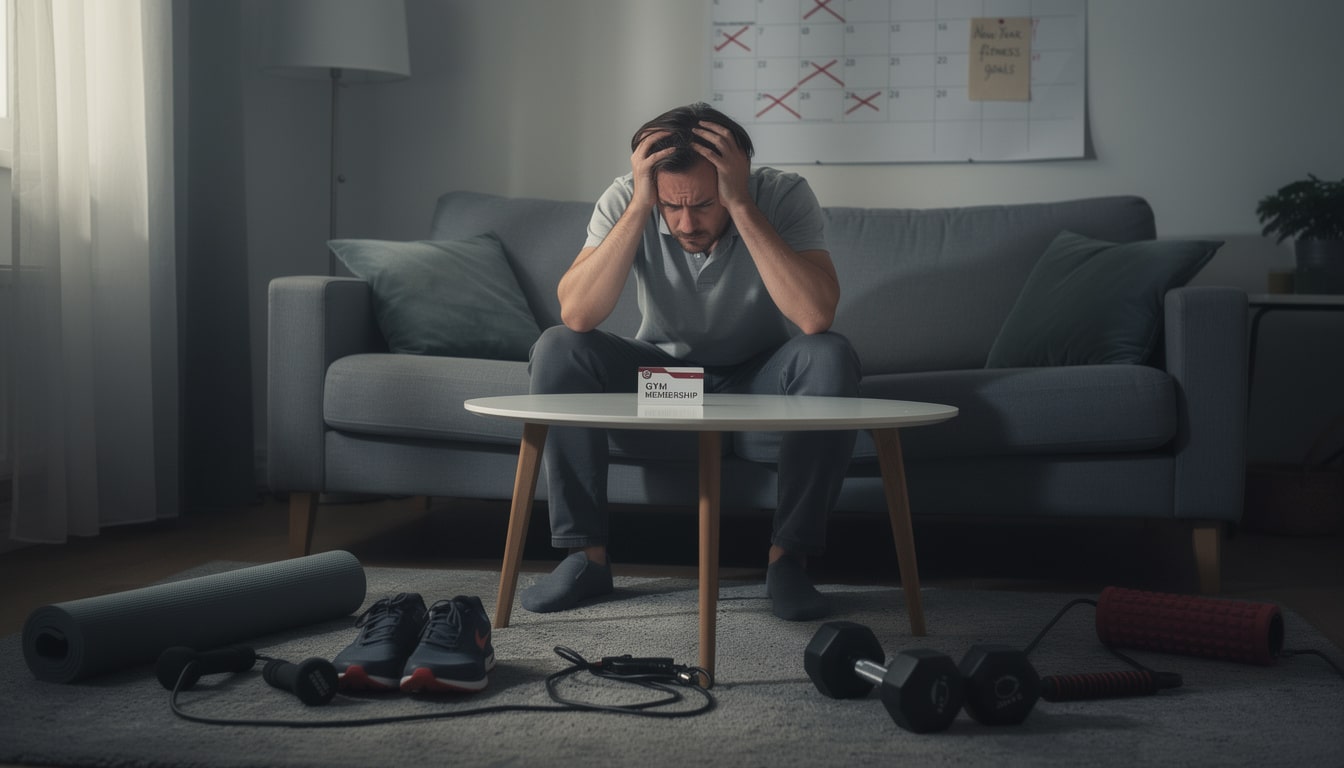
🚫 The illusion of ambition without gradual progression
Starting with disproportionate efforts inevitably leads to burnout. In a bookbinding workshop, you don't bind a 500-page manuscript overnight. You proceed step by step, page after page. Sport works exactly the same way. Increasing intensity, frequency, or duration all at once creates an imbalance the body cannot bear.
Procrastination then sets in, not out of laziness, but out of exhaustion. When every session becomes painful, when soreness dominates, when pleasure disappears, it is natural to postpone, then to quit. This negative spiral begins in the first weeks, even before healthy habits have had time to take root.
💡 Redefining the goal: from vague intention to precise action
The first step to succeed is to turn general statements into measurable actions anchored in reality. Instead of saying “I’m going to do sports,” specify: walk 30 minutes on Monday and Wednesday, or join a dance club on Thursday evenings. This clarity creates a solid mental framework, a setting in which commitment becomes tangible.
Each goal should answer simple criteria: when? how often? for how long? with whom? This precision eliminates excuses, because there is nothing left to negotiate. The action becomes as predictable as a page to be bound in a notebook: it has its place, its time, its role.
📋 Intermediate steps that give meaning
Aiming for a distant goal without intermediate milestones is like navigating without a compass. A sedentary person who dreams of running a 10 km race must first establish stages: 1 km in three weeks, then 2 km, then 3 km. Each small success builds confidence and creates real sustainable habits.
These steps also reassure the mind. They turn a distant dream into a series of achievable challenges. It is through this progression that discipline is truly acquired, not by brute force, but by patient and conscientious repetition. To explore practical methods of integration, see how to turn your good fitness resolutions into sustainable habits can offer concrete leads.
😊 Seek pleasure rather than penance
Running on a treadmill in the white noise of a closed gym doesn’t delight many people. Yet many force themselves, convinced that the absence of pleasure guarantees effectiveness. This is a fundamental mistake. Sustainable exercise must be enjoyable, otherwise it will forever remain a chore to be postponed.
An activity you enjoy is one you will want to continue. Whether it’s dancing, mountain hiking, swimming, cycling through the countryside, or climbing, everyone has a discipline that fascinates them. Finding that activity is as important as setting a goal. It becomes the ingredient that turns effort into a moment of self-care, even meditation.
👥 The social dimension as a motivational lever
Signing up for a club, joining a running group, or taking group classes changes everything. The conviviality, shared energy, and mutual encouragement create a context where perseverance becomes natural. You don’t run alone on a cold treadmill; you dance with other enthusiasts, you climb accompanied, you swim in a shared training atmosphere.
This social dimension also plays a regulating role. When you’ve promised your club friends you’ll be there on Tuesday night, you go. Collective commitment supplants personal hesitations. To discover proven approaches, tips for keeping your fitness resolutions often include this dimension.
🔄 Build routines, not constraints
A habit is an action repeated until it becomes natural, almost unconscious. That is the secret of successful athletes: they no longer ask themselves whether they will run, they run because it’s time. This transition from conscious will to automatic behavior is the mark of healthy habits embedded into everyday life.
To achieve this, you must integrate exercise into your immediate environment. Blocking a regular slot in your calendar creates an appointment you no longer postpone. Laying out your workout clothes the night before removes material obstacles. Pairing the activity with a subsequent pleasure—a good cup of tea after the session, a relaxing shower, a favorite episode—strengthens the appeal.
⏰ The small rituals that anchor changes
Lasting behavior changes do not happen by magic. They result from repeated gestures, an accumulation of similar moments that eventually redefine our relationship to the body and effort. Preparing your sports outfit the evening before, setting a precise time, creating a motivating playlist: these seemingly minor details structure the action and make it unavoidable.
Perfection is not required. If you miss a session, start again without guilt. What matters is long-term regularity, not short-term excellence. This pragmatism tempers expectations and maintains the psychological balance essential to perseverance.
📈 Progress in an intelligent and realistic way
The most common mistake is wanting to give everything at once. Going from zero sessions to five sessions a week in a single week leads straight to physical and mental overstrain. The body accumulates fatigue, the joints protest, the muscles burn. Psychologically, you feel overwhelmed. It's logical to quit.
An intelligent progression respects the natural rhythms of adaptation. It gradually increases intensity, duration, or frequency, allowing the body time to adjust. This measured approach prevents injuries, maintains interest, and ensures that each step is firmly in place before moving to the next.
🛠️ Tools that structure training
There are many supports to guide this progression in a healthy way. Training plans found online or in magazines offer a tested structure. Fitness apps allow you to track your progress in real time, creating motivating feedback. Personal coaches or group classes provide professional guidance that prevents mistakes and inspires confidence.
Choosing the right tool depends on your preferences. Some need an app that records every detail; others prefer the human support of a coach. The important thing is that this tool becomes an ally, not an additional source of stress.
🎪 Adapt the approach to your real life
Everyone navigates a singular life context. Single parent, chaotic freelancer, employee with strict hours: obstacles vary infinitely. There is not one single right method, but as many variations as there are people. The art is to identify, in your own schedule, the slots where exercise can fit naturally.
Someone busy could turn their commute into bike commuting. A parent of young children could use the lunch break for a quick stretching session or a run. A person with time but little motivation could join a club to benefit from social structure. Personalized adaptation is the key.
🌍 Overcome excuses without denying realities
It is legitimate to have a busy life, responsibilities, and fatigue. That does not mean exercise is impossible. It means you must calibrate it to your reality. Two short and enjoyable sessions, done regularly, will beat a promise of five sessions never kept. Discipline lies in being honest with yourself about what you can realistically accomplish.
Accepting your constraints and working with them, rather than against them, frees up precious energy otherwise wasted on guilt. This kindness toward oneself creates a psychological environment where perseverance becomes possible.
🌱 Sport as self-care, not as duty
Giving meaning back to physical activity means placing it at the heart of overall well-being. Sport is not a punishment for eating a cake, nor a race against the clock to reach an ideal weight. It is a moment offered to your body, a way to thank it, nourish it, and listen to it.
This refocusing changes everything. A walk becomes a meditation, a dance session becomes a form of self-expression, a swim becomes a moment of relaxation. The numerical goal exists, of course, but it gives way to a lived experience, to a time for oneself, sacred and protected from daily hustle.
💭 Mental well-being alongside the physical
The benefits of exercise go far beyond toned muscles or a transformed silhouette. Regular physical activity boosts self-confidence, soothes anxiety, improves sleep quality, and clears the mind. These positive side effects, often invisible at first, soon become as important as the physical results.
Recognizing this holistic dimension provides additional reasons to continue. You persevere not only for a physical goal, but because you have begun to feel an inner peace, a serenity, a grounding in your body. It is a transformation far deeper than a change in appearance.
To deepen strategies for integrating well-being into a fitness routine, the resources on maintaining good resolutions offer comprehensive paths for a holistic approach.
🔮 The path toward a sustainable lifestyle
True transformations never occur in a few weeks. They require months, a quiet patience, and acceptance of the natural pace of change. Like in bookbinding work, where each gesture finds its place within a larger architecture, each exercise session helps build a new identity—the identity of someone who takes care of themselves.
Stopping making impossible promises and embracing what is achievable is already a victory. It's the beginning of a new story with your body, with your time, with yourself. A story that is kinder, more honest, and more alive.
Profil de l'auteur
Derniers articles
 Smartphones & Mobile Phones14 October 2026The loyalty penalty on your mobile bill: why staying put costs you more
- Family, Babies & Children5 October 2026Airline family seating fees: what the planned ban will change for parents
- Everyday Life & Society23 September 2026Consumer confidence index: what the monthly mood check on British households really measures
- Agency, Webmarketing & SEO31 August 2026SEO : a Google bug skews visibility statistics in AI results




Table of Contents