
📌 In short
A two-year journey to explore what financial freedom really means. Between embraced frugality and strategic investing, it is less about renunciation than about realigning priorities. The lessons: financial management first requires personal clarity about your values, then daily discipline. Minimalism is not imposed austerity, but a path to the essential. Savings become sovereignty, the returns on your investments become peace of mind. Two years are enough to turn an abstract desire into tangible reality.
💡 When frugality becomes a form of conscious freedom
There is a persistent confusion around the word ‘frugality'. People imagine it as scarcity, a gray, narrowed life. Yet what emerges from this experience is quite different: a voluntary frugality, one that resembles less a regimen and more a deep revision of what matters. Like a bookbinder who stops collecting materials indiscriminately to select only the paper and leather worthy of a durable work, you begin by asking the unavoidable question: what are we really buying?
The first two weeks of this rigorous financial planning often reveal invisible habits. Daily coffees, clothes purchased out of boredom, forgotten subscriptions that keep charging. Once documented, these leaks seem obvious. But beforehand, they remained shadows. That's when things change: not by deprivation, but by clarity.
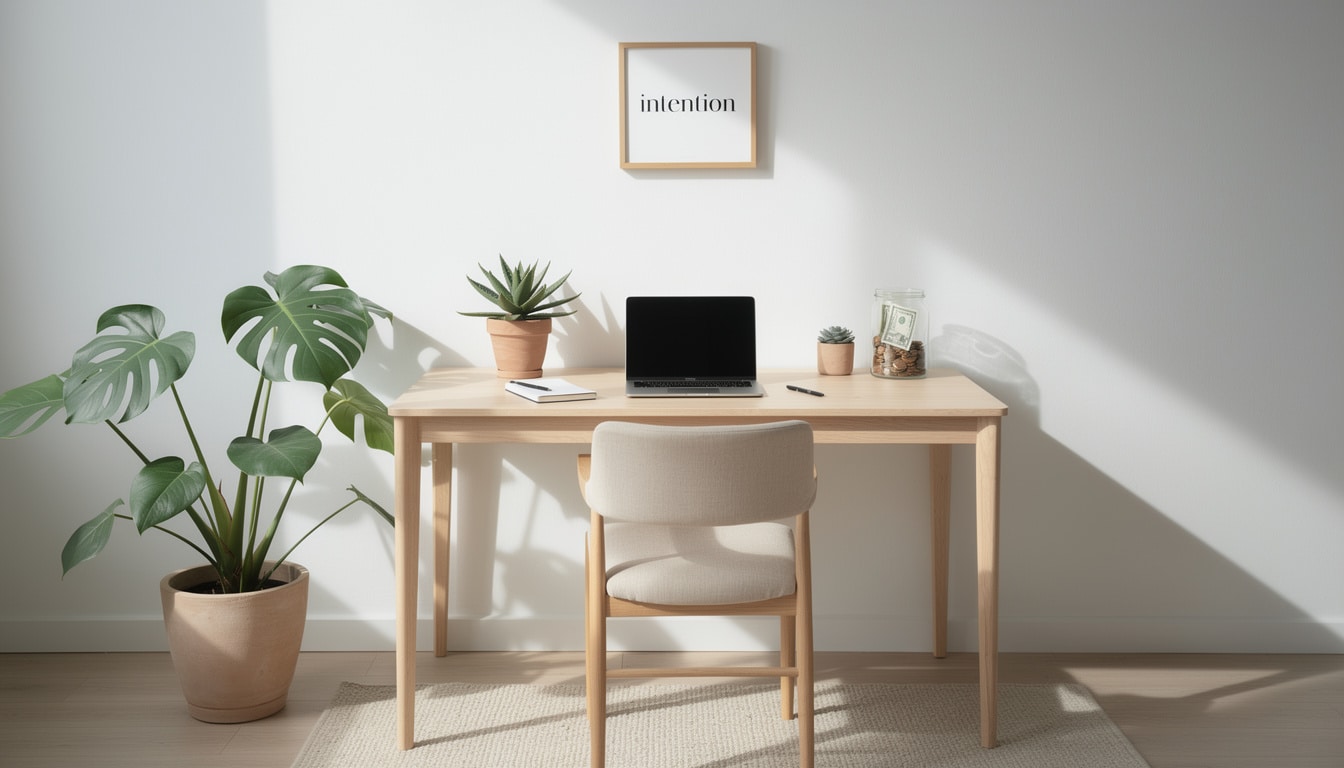
🎯 Saving as an act of personal power
Every franc saved is not a victory over yourself, but a vote for a different future life. Savings quickly stop seeming austere once they symbolize something concrete: three months without work, an impromptu departure, the boldness to change course. It is no accident that in two years, with thoughtful financial management and deliberate choices, it becomes possible to build a reserve that changes your relationship to emergency and fear.
That feeling of power — the power to say no, the power to take time, the power to face the unknown without trembling — may be the first taste of financial freedom. Not yet total independence, but a foretaste of it.
📈 Investing without illusions: how to turn savings into wealth
The fear of investing paralyzes many people. We dread financial terms that sound like learned jargon, the mistakes we'll regret, the unpredictable markets. And yet, leaving your money to sleep in a checking account is also a choice — the choice to let inflation quietly erode your purchasing power. Two years is enough to understand that investing is not a game, but patient arithmetic.
Starting modestly — an index fund that tracks the markets, a diversified life insurance policy — allows you to observe, learn, and reassure yourself without risking the essentials. It's like in the workshop: you don't become a bookbinder by touching everything at once. You learn the technique of a stitch, master it, then progress.
See the complete guide to achieving financial freedom and discover how to structure your investments progressively.
🏦 The mechanics of returns: when money works for you
The concept of passive income often raises doubts: how can an investment generate income without you watching it every day? Herein lies the beauty — and the patience — of capitalism: returns accumulate while you live your life. Some months you won't think about it even once. Other times you'll notice with amazement that compound interest has worked silently, gradually adding bricks to your financial freedom edifice.
Two years are enough to feel this mechanism: diversified investments, a cautious allocation according to your age and goals, and the discipline not to panic during market downturns. Here is the clarity on financial freedom and building a life without constraint that transforms a savings account into a tool of sovereignty.
🌿 Minimalism as a practical philosophy
Minimalism is not poverty, nor even degrowth. It's rather a question: what do I truly desire? It arises naturally when you start mapping your expenses. Suddenly, you realize you buy far more out of habit than out of genuine need. Clothes without harmony, gadgets discarded after three weeks, unread books, obsolete electronics occupying mental as well as physical space.
Once unpacked, minimalism becomes almost playful. You ask yourself: “Does this bring me joy? Utility? Will I regret selling it?” This sorting becomes ritual. It's a bit like the bookbinder's work examining each sheet before sewing it: attention to what matters, a re-foundation of the link between the object and its reason for being.
🛍️ Spend less, live better: the paradox of the conscious consumer
Spending less doesn't mean living worse. On the contrary: those who have made the leap often discover that a pared-down life is more joyful than a life overcrowded with superficial purchases. You know exactly why each object is there, you maintain it, cherish it, and truly use it. It's a form of luxury not immediately recognized: that of clarity, intention, and assumed ownership.
Explore how investment strategies and passive income transform your daily life by removing chronic financial stress.
⏰ Two years to take off: timeline of a transformation
No radical change appears all at once. What happens over two years is the slow crystallization of a new relationship with money. By month three, you simply notice that you've stopped reflex spending. Around month six, the first fruits: an emergency fund formed, a sense of security setting in. In months nine and ten, investments begin to produce their first visible returns. At twelve months, you've crossed a psychological threshold: you've proven you can hold steady.
The second year resembles deep learning. Markets fluctuate, you learn not to panic. You continue to save, but it has become as natural a habit as breathing. Dreams become more concrete: no longer “one day I'll have financial freedom,” but “how will I have it, and when?”
📊 The real stages of the journey
Months 1-3: Brutal inventory. You track every expense, confront your dreams with reality. It's uncomfortable, but necessary. Months 4-6: Changes become visible. Small leaks are plugged, regular savings accumulate. You begin to place the first amounts. Months 7-12: Financial independence becomes a tangible goal, not a utopia. Months 13-24: The real work begins — the absence of those two years of discipline would have been devastating; you continue, results multiply through patience and compound interest.
What makes these two years decisive is that they form a habit strong enough to withstand setbacks. A crisis, a job loss, an illness? The previous months of work have created a cushion, a margin of maneuver. You are no longer caught off guard; you breathe.
💭 The psychological cost: what is not often said
We rarely talk about the emotional price of this transformation. During these two years, while others let themselves go on nights out, you're calculating your budget. While they buy without thinking, you hesitate. It's not tragic, but it's tangible. A certain loneliness accompanies those who choose patience when the world shouts “consume now.”
Then comes a tipping point: there comes a time when you realize you no longer envy others' spending. The need to catch up, to possess, to prove fades. In its place, a strange clarity. What you were aiming for — financial freedom — begins to become tangible. Desires change. You no longer dream of an exhaustive wardrobe, but of a week without fear of a surprise bill, a sabbatical year, a project you've always postponed.
🧠 Resilience as a by-product
Two years of discipline also forge unexpected resilience. You learn to delay gratification, resist marketing solicitations, and discern true needs from false ones. These skills extend far beyond money. They infiltrate your relationship with time, attention, and mental clarity. By building your financial freedom, you also build another kind of freedom: that of intention.
Consider the essential tools that accompany your journey to financial independence to structure your strategy.
🎁 The silent rewards: beyond the numbers
When we talk about financial freedom, we often evoke numbers: a fortune, a savings amount, a rate of return. But the true rewards are gentler. It's the absence of the anxiety that used to wake you at three in the morning. It's the boldness to refuse a job without hesitation. It's the luxury of taking care of your health without counting. Above all, it's serenity: knowing that tomorrow is not a threat but a possibility.
After two years, you rarely measure your success only by what you have stopped fearing. No unexpected bill, no ruinous medical problem, no perpetual obsession with money. You also gain something invisible: time. Time to read, to create, to love, to rest — something no bank account could directly give us, but which financial freedom makes possible by removing distracting noise.
In this quest for an authentic first-hand account, understanding that financial wealth and personal wealth are not antagonistic but linked changes everything. You do not give up life; you simply stop believing that it is sold at a high price.
Profil de l'auteur
Derniers articles
 Smartphones & Mobile Phones14 October 2026The loyalty penalty on your mobile bill: why staying put costs you more
- Family, Babies & Children5 October 2026Airline family seating fees: what the planned ban will change for parents
- Everyday Life & Society23 September 2026Consumer confidence index: what the monthly mood check on British households really measures
- Agency, Webmarketing & SEO31 August 2026SEO : a Google bug skews visibility statistics in AI results




Table of Contents