📅 In brief
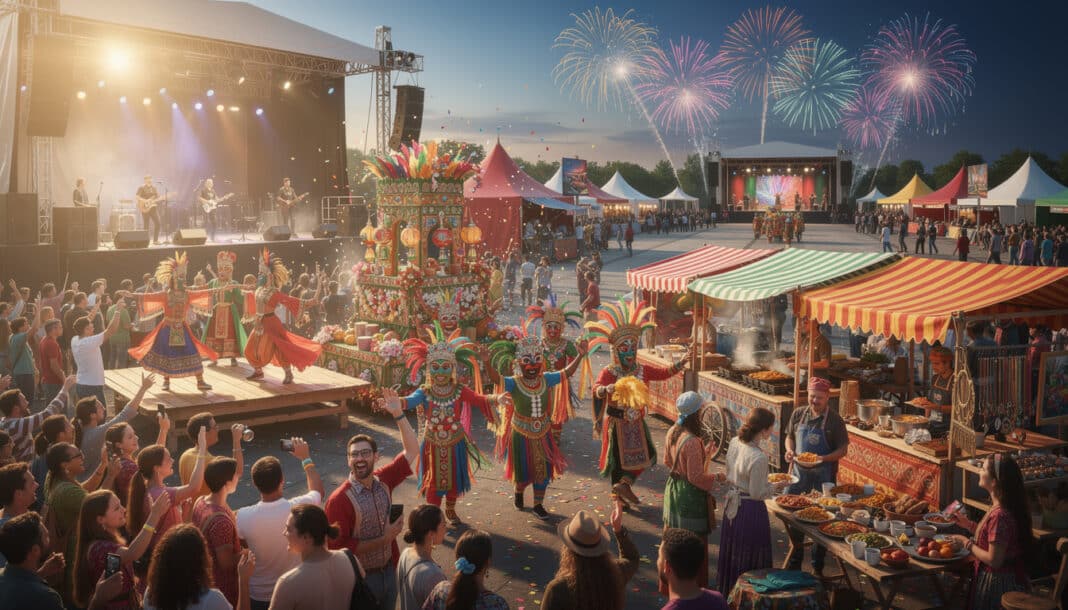
The year 2026 promises to be rich in cultural events and gatherings that paint a singular portrait of our collective concerns. From north to south, music festivals, arts festivals and cultural outings testify to a persistent thirst for meaning and connection. These cultural programming offerings provide far more than distractions: they are spaces where the cultural season reinvents itself, where know-how is displayed, where ties are woven. At a time when so many things are accelerating, these festival agendas invite us to slow down, to listen, to share. A festival calendar conceived as an invitation to rethink our relationship to time and to transmission.
🎭 Arts festivals and the rediscovery of forgotten gestures
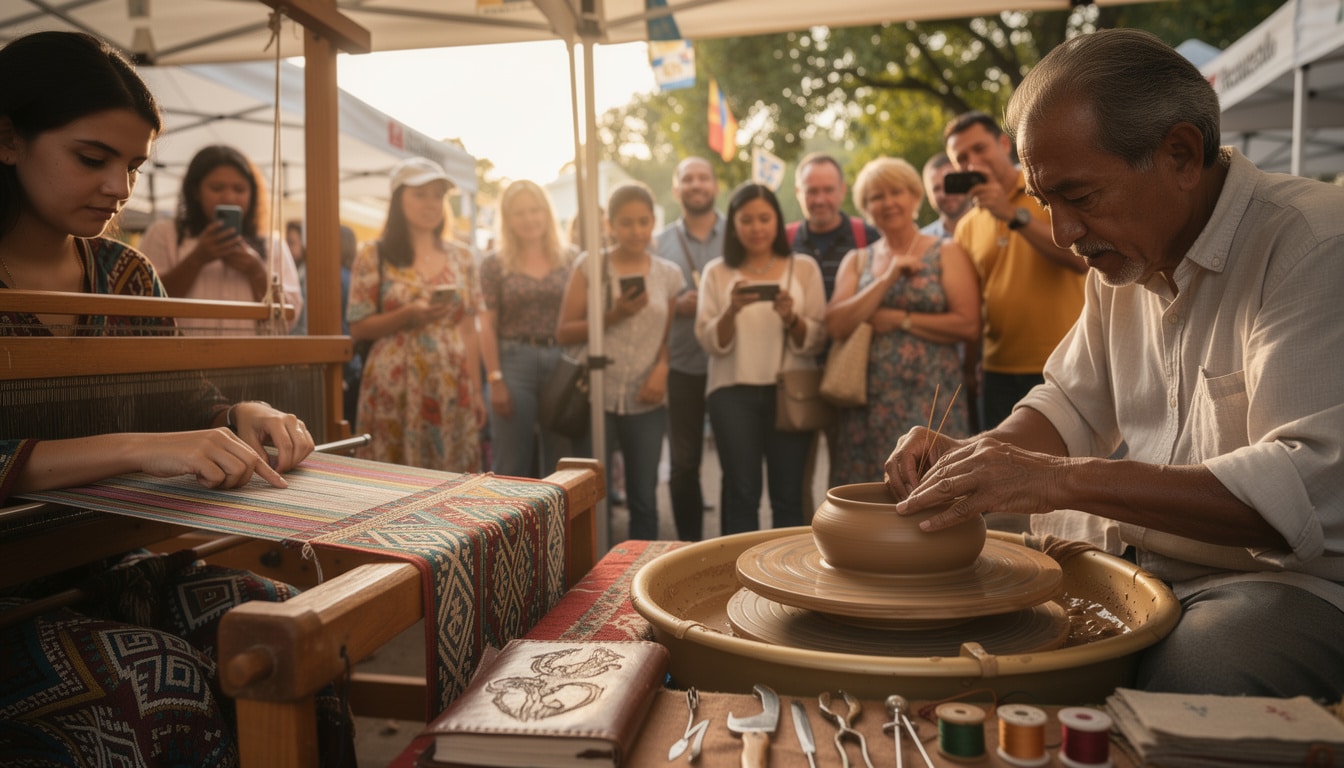
Something is changing in the cultural air. The arts festivals that punctuate the festival calendar 2026 no longer aim only to amaze or to fill halls. They return to the essential: showing hands that create, techniques that demand time, artisans who refuse standardization. It's a bit like when you restore an old book in the workshop—every gesture counts, every detail speaks.
This year, cultural gatherings give a new place to the crafts, to open workshops, to live demonstrations. One discovers ancient bindings displayed alongside contemporary installations, weavers who share their secrets with generations who no longer knew them. This movement reflects a fatigue with glossy images, a quest for authenticity that is emerging in our cultural choices.
The cultural programming of 2026 finally recognizes that art exists only through its material, through the gesture that carries it. Cultural events thus become spaces of transmission, where watching is also learning to see.
🎵 Music as a common thread: music festivals and collective identity
Browsing the music festivals of the 2026 calendar is like reading a score of our anxieties and hopes. These cultural outings are no longer limited to isolated concerts, but to experiences where genres converse, generations cross paths, and musical borders fade.
Across France, festivals in France offer agendas that embrace a multiplicity of voices: world music, experimental electronic, introspective jazz, songs rooted in local histories. This diversity says something about our era—we seek the universal without denying the particular, the global without losing the sense of place.
The musical cultural events of this year also carry a growing responsibility: that of creating inclusive, sustainable spaces where the audience is no longer merely a consumer, but an actor in collective creation.
🎼 Cultural programming: between tradition and reinvention
Where there is cultural programming there are also choices, commitments, a vision. The curators of these arts festivals and music festivals compose their offerings as one binds a book: thinking about narrative progression, the balance of energies, the moment when the reader—here, the visitor—looks up and breathes.
This year, many have chosen to mix established artists with emerging talents, classic formats with immersive experiences. It is a way of saying: here is the past that feeds us, here is the future taking shape. Cultural gatherings become dialogues between different temporalities, where everyone finds their place.
🌍 Cultural outings as an experience of slowness
Going to a festival in 2026 also means choosing to withdraw, if only for a day or a weekend, from the tyranny of instantaneity. Cultural events become oases where time unfolds differently—where one can sit for three hours in front of a performance, where one can talk with an artisan about their work, where one rediscovers the pleasure of fertile boredom.
This philosophy of slowness is gradually being incorporated into the festival agendas: less dense programming, more space for spontaneous encounters, conversations that linger, small shows discovered by chance. We return to the festival's original function—gathering, sharing, creating connections in suspended time.
Cultural outings thus regain their dimension of ritual, of an almost ceremonial act, where going somewhere physically, mingling with others, becomes an act of gentle resistance against prevailing virtualism.
📍 Redrawing regional landscapes through the cultural season
The 2026 cultural season confirms a trend: festivals are no longer concentrated in major metropolises. Small towns, rural areas, heritage sites rediscover their potential for hosting and creating. This decentralization is not an accident, but a conscious strategy: bringing culture back to where it was forgotten, giving meaning back to territories, valuing local heritage.
On the festival calendar, one thus observes a new geography where Avignon sits alongside Alsatian villages, where the Breton coast hosts cultural programming as sophisticated as those of Paris. This democratization of culture creates a denser, fairer territorial network.
🎨 Towards a new conception of the cultural event
Around 2026, one certainty emerges: arts festivals and cultural events can no longer ignore their ecological footprint, nor their social responsibility. Cultural gatherings are rethinking their model, seeking sustainable partnerships, looking to reduce waste, to highlight local creators.
This transition reflects a new maturity. Audiences of cultural outings expect culture to be consistent with the values it proclaims—that it preaches humanity while respecting people and nature. It's demanding, certainly, but that very demand is a sign of democratic health.
💚 Cultural engagement as a political act
Attending a festival in 2026 also means voting with your feet, your presence, your money. The festival calendar is drawn as a map of our convictions. Which music festivals should we support? Which arts festivals should we visit? What kind of cultural programming deserves our attention? These questions, seemingly banal, actually embody our societal choices.
In this respect, festival agendas become political documents, statements about the place we give to beauty, to transmission, to meeting, to freedom of expression. Participating in cultural events is participating in the construction of a possible world.
As we go through an era where so many digital intermediaries come between us and the real, the 2026 festival calendar offers us a pause, a breather—moments when we can finally ask ourselves: what do we really want to transmit? What do we want to keep alive? And who are we, together, when we stop scattering ourselves?
Profil de l'auteur
Derniers articles
 Everyday Life & Society23 September 2026Consumer confidence index: what the monthly mood check on British households really measures
- Agency, Webmarketing & SEO31 August 2026SEO : a Google bug skews visibility statistics in AI results
- Tech & Multimedia29 August 2026Earbuds that transcribe your meetings without a smartphone : how Plaud One changes things
- Home Appliances & Equipment28 August 2026Home appliances: the durability index extends to four new appliances




Table of Contents