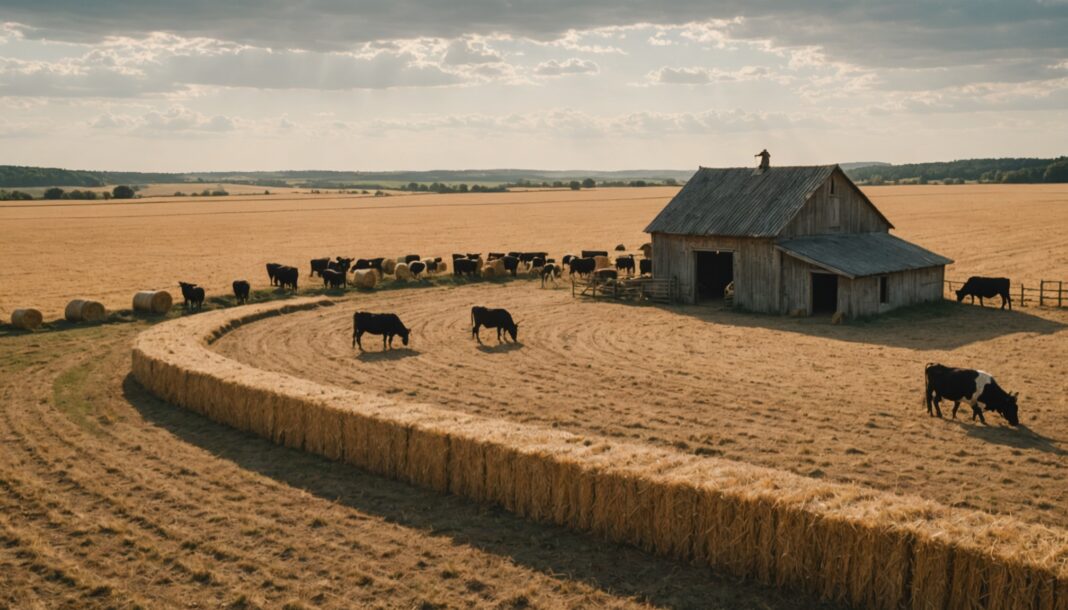
After a summer of 2026 marked by repeated heat waves and a drought that withered pastures, many French farmers are heading into fall with feed reserves already largely depleted. In response to this situation, the French state has put forward a farmer aid plan worth more than one billion euros, with a clear goal: to prevent a cash-flow crisis on farms from turning, within a few months, into higher prices on store shelves.
An Emergency Plan Called CASI
Announced in early August by the Minister of Agriculture, the “Canicule – Sécheresse – Incendies” (Heat Wave – Drought – Wildfires, CASI) plan aims to secure the finances of the hardest-hit farms and quickly restart production. In practical terms, it is meant to let farms restock on feed, seeds, and plants, so that a poor 2026 harvest doesn't turn into a structural production loss that would weigh on several growing seasons. This isn't the first time the livestock farming sector has gone through a difficult year, but the combined scale of the heat and the water shortage sets 2026 apart from previous episodes.
Feed Stocks Already Half Empty
On the ground, the situation is concrete and well documented: some farmers had already used up nearly half of their winter feed supply before cold weather even arrived, due to insufficient regrowth on the pastures. To prevent shortages, a nationwide effort is organizing transfers of straw and feed from less-affected regions to areas under strain. Affected farmers must apply for aid through the AléaNat platform, providing their SIRET business registration number and their PACAGE farm identification number, an administrative step that determines whether support payments are released.
- Easier restocking of feed, seeds, and plants to limit the damage to the 2026-2027 growing season.
- Organized straw transfers between surplus regions and farms under strain.
- Applications filed through AléaNat, using SIRET and PACAGE as key identifiers.
- Closer monitoring in the most exposed sectors, particularly cattle, sheep, and poultry.
What Impact on Household Budgets?
Beyond the farming world, this is the underlying question causing concern: could this strain on livestock farms translate into higher prices for meat and dairy products on store shelves? Animal farming sectors already took a hit this summer, with higher-than-usual mortality observed among some farm animals during heat peaks and a year-over-year drop in poultry slaughter numbers. If the agricultural sector manages to absorb the shock thanks to the aid, the effect on retail prices should remain limited and gradual rather than sudden. But the issue adds to an already long list of spending categories under watch for households, somewhat like what was recently seen with the quiet inflation that has pushed up the price of several everyday products without it always being obvious at checkout.
A Sector Already Under Regulatory Pressure
This climate crisis adds to regulatory changes already underway, such as the new thresholds that determine which administrative regime applies to a farm — declaration, registration, or authorization — detailed in our article on the new ICPE thresholds applicable to livestock farms. As a result, farmers must now contend with both more complex procedures and an unpredictable climate.
Household Budgets Already Under Strain
This agricultural news story isn't an isolated one: it fits into a broader context in which purchasing power remains a sensitive issue for many households in France, including those with no direct connection to farming. This can be seen, for example, among retirees, for whom every pension adjustment is closely scrutinized, given how fragile their budget balance remains. Any pass-through, even a limited one, of animal feed costs onto shelf prices would therefore add to an already tight equation for many households.
Frequently Asked Questions
What is the CASI plan announced for agriculture?
CASI stands for “Canicule – Sécheresse – Incendies” (Heat Wave – Drought – Wildfires). It is a support plan worth more than one billion euros, announced in early August 2026, designed to support the cash flow of French farms affected by this summer's weather events and to quickly restart production.
How can a farmer apply for aid?
Applications go through the AléaNat platform, where the farmer must provide their SIRET number as well as their PACAGE identification number. This application is what allows the financial support request linked to weather-related losses to be processed.
Will the drought drive up food prices?
No price surge has been confirmed at this stage. Strains on feed supplies and animal production could put upward pressure on some meat or dairy prices, but the aid measures put in place are specifically meant to limit this effect by preventing a lasting decline in production.
Sources
- French Ministry of Agriculture – CASI Climate, Adaptation, Drought, Wildfires Plan (September 2026)
- Réussir – Drought 2026: Emergency Measures for Farmers
- BDOR – The French Livestock Farming Crisis and Food Inflation
Profil de l'auteur
Derniers articles
 Agency, Webmarketing & SEO19 November 2026Search Console API: Three New Features for SEO Agencies
- DIY & Troubleshooting18 November 2026Dexter Sander Recall 2026: What Leroy Merlin and Weldom Customers Need to Know Before Using It
- Restaurants, Drinks & Food18 November 2026Flexitarianism in France: Less Meat on the Plate, but Not for the Reasons You'd Think
- Home Appliances & Equipment18 November 2026Washing Machine, Oven, Dishwasher: Which Brand to Choose for Appliances That Last?




Trending now on legal streaming
FilmSacrifice
SeriesVisionQuest
This article was written with the help of artificial intelligence. Editorial policy
Table of Contents