
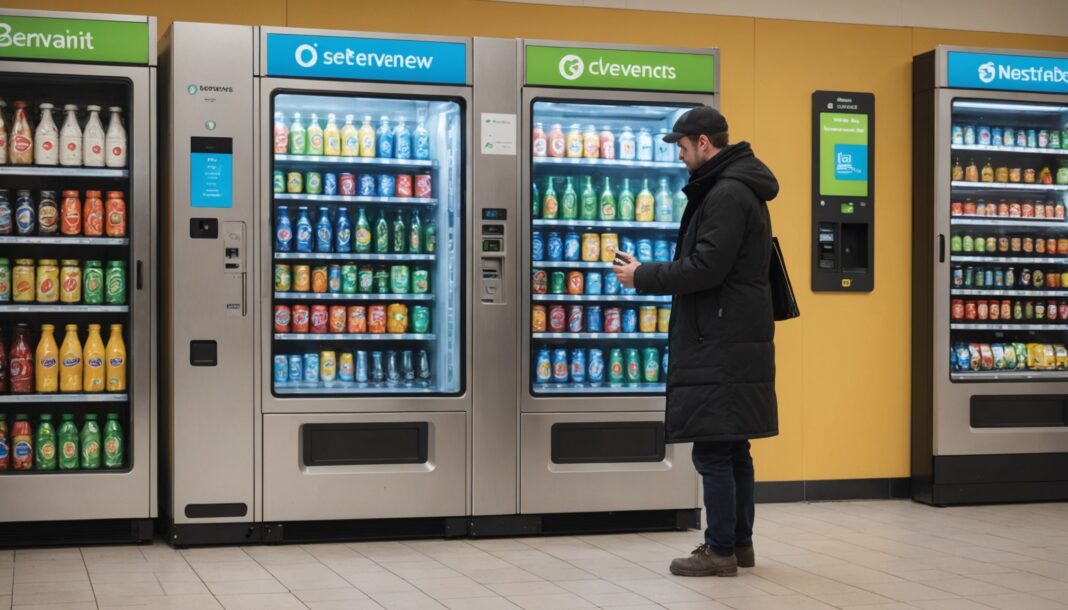
A small charge is on its way to almost every fizzy drink, water bottle and energy can you buy. From 1 October 2027, England, Scotland, Wales and Northern Ireland will all launch a Deposit Return Scheme, adding a refundable 20p deposit to most single-use drinks containers. You will pay it at the till and claim it back when you hand the empty container in. Here is what will change, and what you can usefully do before it starts.
What the Deposit Return Scheme will be
The idea is simple and already familiar in Germany, Norway and the Republic of Ireland: give every container a cash value and far fewer of them end up in a hedge, a bin or a river. Rather than relying on your kerbside collection alone, the scheme will put a price on the empty itself.
All four UK nations plan to go live on the same date, 1 October 2027, with a single flat deposit of 20p on every container in scope, whatever its size. The scheme will be run by a not-for-profit deposit management organisation called Exchange for Change, appointed to collect the deposits, pay them back out and handle the logistics behind the scenes. Its logo, unveiled at the start of 2026, is the mark you will learn to look for on a label.
It is the biggest change to how household drinks packaging is handled since recycling collections themselves, and it arrives at a time when household recycling rates have stopped improving and ministers are looking for something that shifts the numbers.
Which containers will carry a deposit
Not everything in the drinks aisle will be included. In England, Scotland and Northern Ireland, the scheme will cover single-use drinks containers between 150ml and 3 litres made of PET plastic, steel or aluminium — so most plastic bottles and almost all cans.
Glass is the big difference between the nations. Wales has chosen to include glass bottles in its scheme; England, Scotland and Northern Ireland have not. If you live near the Welsh border, that is worth remembering, because a bottle bought on one side may not carry a deposit on the other.
Containers in scope will be labelled so that both you and the machines can identify them. Milk, cartons and glass outside Wales will sit outside the scheme, as will anything smaller than 150ml or larger than 3 litres.
How you will get your 20p back
You will return the empty, unopened-at-both-ends and reasonably intact, to a return point. In practice that will mean a reverse vending machine in or outside a larger supermarket, or a manned counter in a smaller shop, with your deposit handed back as cash or as a voucher to spend in store.
Shops that sell drinks in scope will generally be expected to take them back, but there will be exceptions. Retailers in urban areas with under 100m² of retail space will be exempt automatically, while urban shops of 100m² to 199m² and rural shops under 200m² will be able to apply for an exemption. Return points will be paid a handling fee for the trouble — 3p per container for manual return points, with the rates tiered according to how many containers a site gets through.
What it will mean at the till
Expect shelf prices to look higher from October 2027, because the deposit is charged on top of the drink. A four-pack of cans will cost 80p more up front; a weekly shop with a dozen containers in it, £2.40. None of that is a price rise in the normal sense — it is your money, held until you bring the empties back — but it will land alongside the kind of quiet increases that have already reshaped the cost of everyday basics.
The practical consequence is that unreturned containers become a real, if small, loss. Households that already separate their waste carefully will barely notice. Those who drink on the go, or who tip everything into one bin, will be paying a few pounds a month for the privilege unless habits change.
What shops are doing now
Preparation is already under way, which is the clearest sign the date will hold. Registration for grocery retailers wanting to host a return point opened on 30 September 2026, and producers, importers and brand owners must be registered with Exchange for Change by 9 July 2027, twelve weeks before launch. Grant funding has been promised to help smaller independent shops meet the cost of hosting a return point.
Labels, barcodes and packaging lines are being reworked across the drinks industry to suit, part of the same wave of packaging rules that brought us the ban on plastic wet wipes. For now, nothing is required of you: no deposit is being charged yet, and no container you buy today can be redeemed.
Frequently asked questions
Will I be charged the deposit on drinks bought before October 2027?
No. The deposit will only apply to containers sold once the scheme is live, and only those carrying the scheme label will be redeemable. Containers bought beforehand should go in your usual recycling.
Do I have to return a container to the shop I bought it from?
No. Return points will accept in-scope containers regardless of where the drink was bought, which is the point of a single UK-wide deposit.
Will glass bottles carry a deposit where I live?
Only in Wales, which has included glass in its scheme. In England, Scotland and Northern Ireland, glass will stay outside the Deposit Return Scheme and continue to be collected as it is now.
Sources
- House of Commons Library — Deposit return schemes
- The Grocer — Registration opens for deposit return scheme
- Exchange for Change
Profil de l'auteur
Derniers articles
 Ecology & Environment25 November 2026Deposit Return Scheme: What the 20p on Bottles and Cans Will Mean for Your Shopping
- Home Appliances & Equipment13 November 2026Product recalls: how to check whether something in your home has been pulled
- Moving & Transport4 November 2026The £2 bus fare cap returns: what it will mean for passengers
- Everyday Life & Society23 October 2026Subscription traps: the new rules that will make cancelling easier




Trending now on legal streaming
FilmGodzilla Minus One
SeriesCampus Drivers
This article was written with the help of artificial intelligence. Editorial policy
Table of Contents

