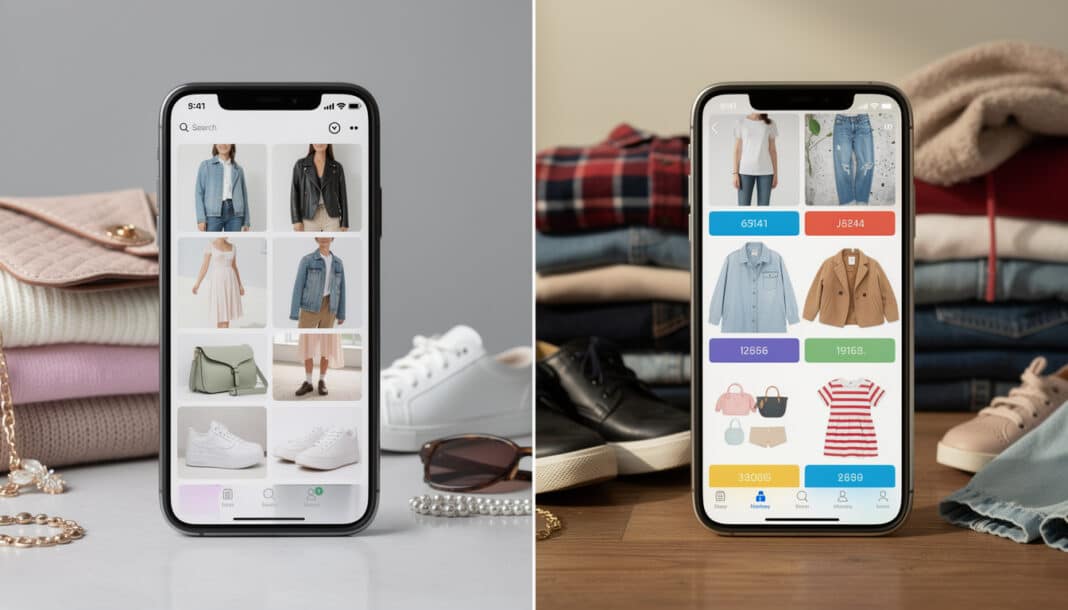
In short: Choosing between Vinted and Leboncoin depends on your selling goals. Vinted has established itself as the undisputed leader for second‑hand fashion with zero seller fees and an engaged community, while Leboncoin offers remarkable versatility for selling all types of items. In 2025-2026, Vinted recorded spectacular growth with a net profit exceeding €77 million, confirming the platform's popularity with one in three French people. Shipping costs remain advantageous on Vinted (from 2,88€) compared with Leboncoin (from 3,49€). Transaction security, ease of use and the timing of publication play decisive roles in the success of your sales.
🎯 Vinted versus Leboncoin : two distinct worlds for two different needs
Vinted and Leboncoin embody two radically opposed philosophies of online commerce. On one hand, Vinted has built itself as the temple of circular fashion, concentrating its exclusive offer on clothing, shoes, accessories and beauty products. On the other, Leboncoin operates like France's digital car‑boot sale, offering household appliances, cars, real estate, services and many other unrestricted categories.
This specialization on one side and this versatility on the other explain remarkably different performances. The fashion platform saw its revenue jump to €813 million in 2024, a dizzying increase of 36% compared with the previous year. At the same time, its profitability exploded with a net profit of €77 million, representing growth of over 330%. These figures testify to massive adoption: one in three French people now use Vinted, confirming the democratization of second‑hand purchases as a considered, even trendy, buying act.
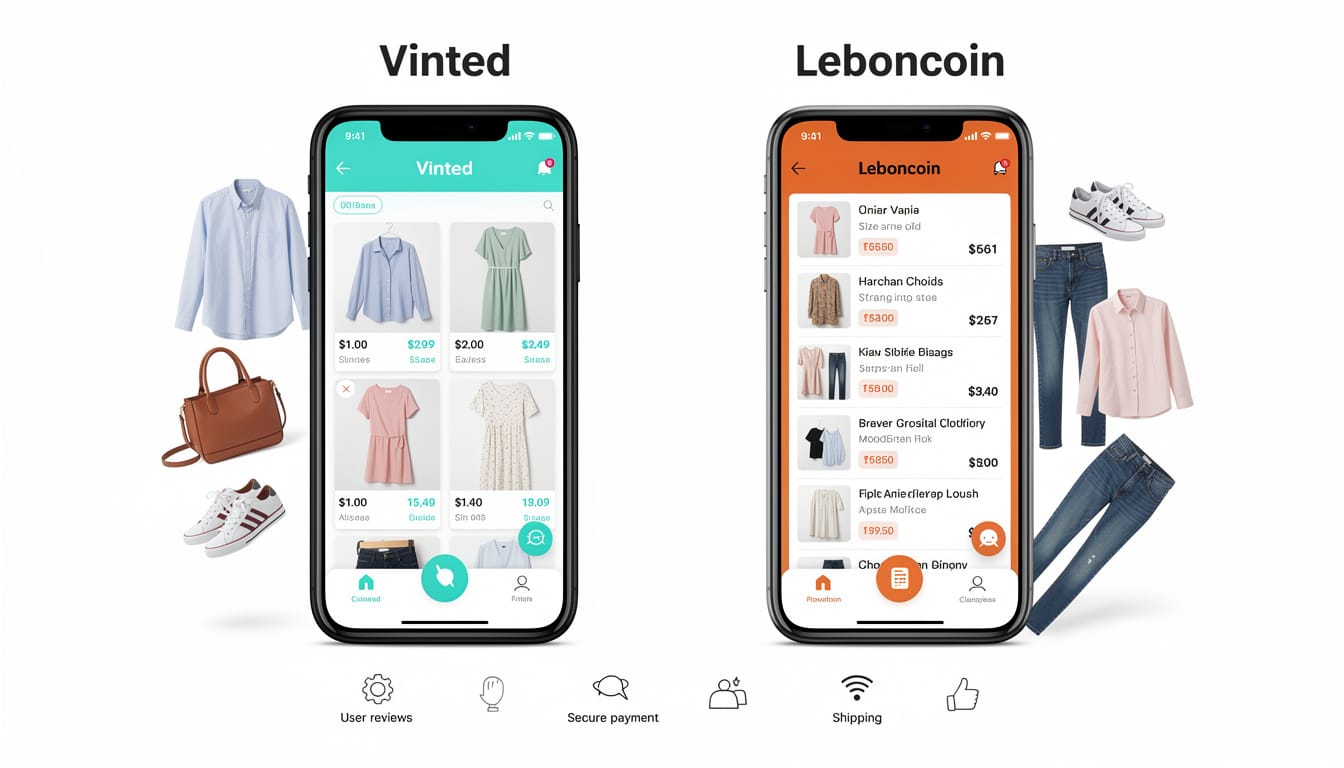
💰 The economic equation: fees, profitability and best price
On the crucial question of fees, the two platforms play diametrically opposed strategies. Vinted offers a simple policy: 0% seller fees, which means the full sale price goes directly to you. Shipping, however, still needs to be managed, with competitive rates starting at 2,88€ via its partners Mondial Relay and Colissimo.
Leboncoin also shows 0% fees on the transaction itself, but adds a layer of complexity: secured protection fees amount to €0.99 for a €10 item, or about 10% of the amount for the buyer. For a garment sold for €10 on Vinted, you pocket the entire amount, whereas on Leboncoin this protection reduces your profit to about €9 if you offer it. Shipping costs also start at 3,49€, slightly higher.
This difference in business model explains why occasional sellers favor Vinted for small items, while Leboncoin remains ideal for bulky objects where local pickup (no fees) becomes a decisive advantage.
🔍 Specialization versus versatility: choose according to your items
The first question to ask yourself: what do you have to sell? This answer will determine 90% of your platform choice. If your objective concerns your clothes, shoes or fashion accessories, Vinted is the obvious choice. The platform's interface was completely redesigned in 2025 to become faster and more intuitive, especially for regular sellers. Typical buyers, aged 18 to 35, look for trendy pieces at gentle prices with a marked sensitivity to ecological and ethical aspects.
Leboncoin excels in the opposite: furniture, household appliances, collectibles, vehicles, real estate services. If you are clearing out your attic or moving house, this generalist platform offers a far larger audience for these categories. It also hosts professional sellers and services, creating a hybrid ecosystem where individuals and small businesses coexist.
A notable feature of Vinted in 2025: the addition of an ecological filter allowing buyers to sort items according to their estimated CO₂ impact. This innovation reflects growing commitment to responsible consumption, turning reselling into an activist act.
⚡ Security and ease: who protects your interests best?
Trust remains the foundation of all online commerce. Vinted offers a remarkable turnkey experience: the platform handles all logistics with its official partners, holds funds until the item is confirmed received, and offers accelerated refunds in case of dispute. An automated mediation system intervenes if seller and buyer disagree, but you must provide solid evidence (photos, scanned tracking slips).
Leboncoin gives more autonomy, which is both an advantage and a risk. You can organize shipping yourself (appreciated flexibility for bulky items) or offer hand‑to‑hand pickup (no fees). However, payments remain your responsibility: cash, transfers, checks, PayPal. This freedom exposes you to potential scams (fake checks, fake profiles), hence the crucial importance of favoring secure payments.
Both platforms offer rated and reviewed profiles after each transaction, creating a progressive reputation based on each user's seriousness. Vinted automates this protection more, while Leboncoin puts responsibility on its users.
🕐 Strategic timing and ad optimization: the art of posting at the right moment
Knowing the optimal time to post radically changes your chances of a quick sale. On Vinted, 2025 data indicate that the best slots are Sunday evening between 7pm and 10pm, as well as Wednesday afternoon. These hours correspond to browsing peaks: especially Sunday evening when users are relaxed on the couch, phone in hand, exploring new arrivals.
Vinted's algorithm favors recent listings and active profiles, creating a dynamic where publishing regularly directly influences visibility. Leboncoin works differently: the best times vary by category. Furniture sells faster on Saturday mornings, video games in the evening, household appliances during weekdays when families plan purchases.
Beyond the initial timing, reposting an ad regularly (every three days on Leboncoin) repositions it at the top of search results. This simple gesture, often neglected by sellers, can double your chances of closing quickly.
👥 Who actually buys: understanding your audience
The Vinted buyer embodies a distinct profile. They are generally a young person sensitive to aesthetics, the quality of photos and the precision of descriptions. They ask precise questions: “Is it high‑waisted?”, “Can you send me a photo worn?”. This clientele values transparency about the item's condition, even minor flaws. The ethical dimension plays a decisive role: a cotton garment labeled organic or an item specifying its ecological impact benefits from a psychological premium at purchase.
The Leboncoin buyer proves more heterogeneous and pragmatic. Retirees looking for an armchair, young couples moving in, DIYers hunting bargains, families equipping a home: diversity reigns. This buyer negotiates more willingly, sometimes firmly. Expecting a price discussion is the norm on Leboncoin, whereas on Vinted this practice remains less common and generally more courteous.
Geographical proximity is of major importance on Leboncoin: buyers want to see the item physically, touch it, sometimes try it before buying. This direct contact reinforces trust but requires the seller's time availability.
📸 The secrets of an irresistible listing
The quality of listings determines your conversion rate far more than the listed price. On Vinted, image absolutely rules. Well‑lit items in natural light, photographed against a white or neutral wall, worn to give perspective, attract significantly more clicks. Julie, a seller from Lyon since 2022, transformed her sales by multiplying shooting angles and always using daylight.
Keywords also play a crucial role in surfacing in searches. Mentioning the brand, size, descriptive terms like “oversize”, “bohemian”, “new with tags” exponentially increases visibility. The description must be complete and honest: exact dimensions, particular strengths, minor defects if any.
On Leboncoin, descriptive rigor is just as decisive, with the addition of logistical information: specifying that the item is for pickup, offering wide time slots reassures buyers and speeds up exchanges. Impeccable responsiveness to questions turns visitors into buyers: an unanswered question cools interest, even temporarily.
🌱 Circular economy 2.0: an irreversible trend
Buying second‑hand is no longer a necessity or a compromise: it's become cool, socially valued, part of a broader circular economy logic. In 2025-2026, this psychological transformation is upheaving consumption habits. Finding your dress on Vinted or your desk on Leboncoin embarrasses no one; on the contrary, it shows smart consumption and environmental awareness.
Vinted has amplified this dynamic with its ecological filter in 2025, allowing buyers to visualize the CO₂ impact of their purchases. This innovation turns each transaction into a micro environmental commitment. At the same time, Leboncoin is exploring complementary services: automated price estimation, optional delivery insurance, integrated transport for bulky items.
This evolution reflects a major societal expectation: consumers in 2026 seek to consume differently, not only cheaper. Platforms that capture this trend thrive while others fade.
🚀 Advanced features and tips from savvy users
For regular sellers, Vinted offers clever shortcuts unknown to beginners. The “duplicate listing” function is revolutionary: if you regularly post similar items (t‑shirts of the same brand, for example), duplicating the previous listing, changing the photo and publishing takes 30 seconds instead of 5 minutes. The “favorites” option lets you see who bookmarked your item, a sign of interest that allows sending a targeted small discount to close the sale.
Leboncoin offers an interface dedicated to frequent sellers with detailed statistics, stock management and centralized messaging. The “alert” function allows monitoring competing prices in real time: before selling a bike, checking existing listings on the market refines your pricing strategy. This competitive monitoring proves decisive for optimal positioning without undervaluing your items.
Handling a dispute also requires strategy. On Vinted, the mediation system is automated but requires solid evidence (photos before shipping, scanned tracking slips). On Leboncoin, favoring secure payments above all avoids 90% of problems: checks, once common, now represent an unacceptable risk.
📊 Analyzing the market: the art of setting the right price
Selling at the best price requires understanding the market dynamics specific to each item. The condition of the product entirely determines price perception: a perfectly preserved, never‑worn garment justifies a high range. A slight flaw, a scratch, creates a notable price difference. Two nearly identical listings can show a 20% gap simply because one transparently reports a defect.
Regularly checking active and sold listings similar to yours reveals pricing trends. This analysis quickly indicates the acceptable range according to current demand and, above all, whether your product is rare or widely available. Rare items justify advantageous prices while over‑represented ones favor price competition.
Seasonality plays an underestimated role. Warm clothing finds takers in autumn‑winter, sports equipment and summer accessories as vacations approach. Adapting timing and price to the season maximizes chances of a quick sale without excessive margin cuts. This seasonal intelligence turns an occasional seller into an informed professional.
🎓 Platforms' marketing strategy: how they steer your sales
Vinted and Leboncoin are not neutral: their digital strategies actively influence your chances of success. Vinted builds its approach around a smooth and personalized user experience. The algorithm favors active and regular sellers, implicitly offering a visibility premium to engaged profiles. Continuous interface improvements, new features (short videos, ecological filters), ancillary services (loyalty space in testing) create an ecosystem where investment and assiduity pay off.
Leboncoin, a generalist platform, optimizes diversity and accessibility instead. Its algorithm encourages regular republication and rewards responsiveness to messages. Sellers who reply quickly and tweak their listings every three days obtain multiplied visibility. This dynamic favors participants engaged over the long term.
Both platforms understand that attracting quality sellers requires making their task easier. Integrated photo editing tools, guided descriptions, transparent rating systems, fraud protection: each feature communicates a message: “Here, selling is simple, safe and profitable.” This software investment translates into user engagement, the real value for a marketplace.
🔗 Which service to choose? A pragmatic orientation guide
Your final choice depends on three main variables. First, your product category: fashion and accessories require Vinted; all other items benefit from Leboncoin. Second, your seller profile: occasional? Vinted offers 0% fees and built‑in protection, ideal to avoid complicating your life. Regular? Both offer advanced tools, but Vinted provides a promising loyalty space while Leboncoin allows diversifying categories to maximize cross‑revenue.
Third, your priorities: maximum gain? Compare net fees after logistics (Vinted wins by far). Speed of sale? Vinted shows 11 days on average. Logistic flexibility and local exchanges? Leboncoin takes the lead. Engagement in a fashion circular community? Vinted turns selling into participation in a movement.
Final tip: exploring other sellers' feedback on these platforms enriches your perspective. Likewise, consulting specialized comparison guides offers additional angles before making a final decision. Both platforms succeed, simply for different profiles.
💡 Behind the scenes of success: real sellers' stories
Beyond numbers and algorithms live the stories. Julie, 29, from Lyon, paid for her plane tickets to Lisbon solely with her Vinted sales. Started by chance in 2022 to clear her wardrobe, she sold more than 300 items. What drives her? Simplicity: photo, price, quick shipping. The reviews even included little thank‑you notes, turning each transaction into a micro human interaction rather than a purely transactional act.
Karim, 38, from Toulouse, has used Leboncoin for over ten years. Car, fridge, video games, trampoline: he sold everything there. For him, it's a systematic reflex. The advantage? No packing, no drop‑off point: the buyer comes to pick up at his place, reducing logistics costs to zero for bulky items.
Both experiences illustrate how each platform fits a life, a situation. Julie values the fashion community and simplicity for light items. Karim appreciates variety and local transactions for bulky goods. Neither is wrong: they just found their ideal platform.
Profil de l'auteur
Derniers articles
 Electricity, Gas & Energy14 September 2026Gaz et électricité : ce que la hausse des tarifs va changer sur votre facture
- Agency, Webmarketing & SEO12 September 2026Fusion Omnicom-IPG : ce que la plus grande agence de publicité au monde change pour les marques
- Retirement & Senior Living10 September 2026Carte Avantage Senior SNCF : comment voyager moins cher en train après 60 ans
- Tech & Multimedia8 September 2026Objets connectés : la fin de la 2G et le nouveau Data Act vont rebattre les cartes




Table of Contents